It was entirely unexpected – the unease I felt, I mean, on entering the sodden weight of Asney Woods. I have never, to date, felt anything quite like it, and hadn’t thought I would. It never amounted to fear, but I rather suspect it might have eventually had I remained within the dark canopy of twisted together tree limbs. There was always just enough light to lift hope – an intermittent watery sunlight that seeped through the damp greenery. No, it was a disquietude of the spirit, a sense that the woods were looking in on me with a deep suspicion. I felt wholly surrounded by it and friendless.
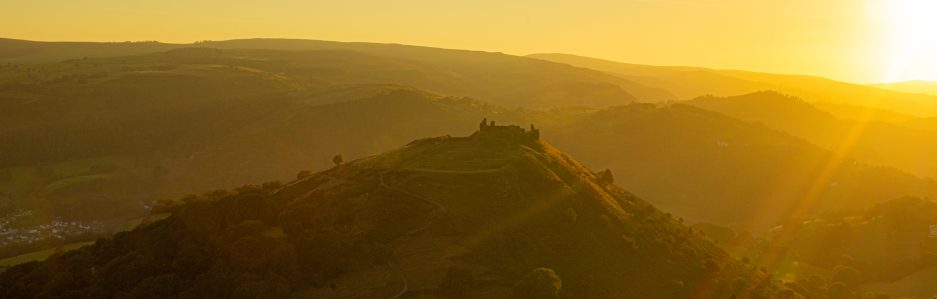
As I write these words, dawn in the Vale of Llangollen is there on the margins of the hills and I am reassured and wonder whether I am making too much of this – whether I am allowing my imagination to play merry with me. But, I don’t think so. I dream, to be sure, but I dream in the real, as well as in the fanciful, and I know the difference.
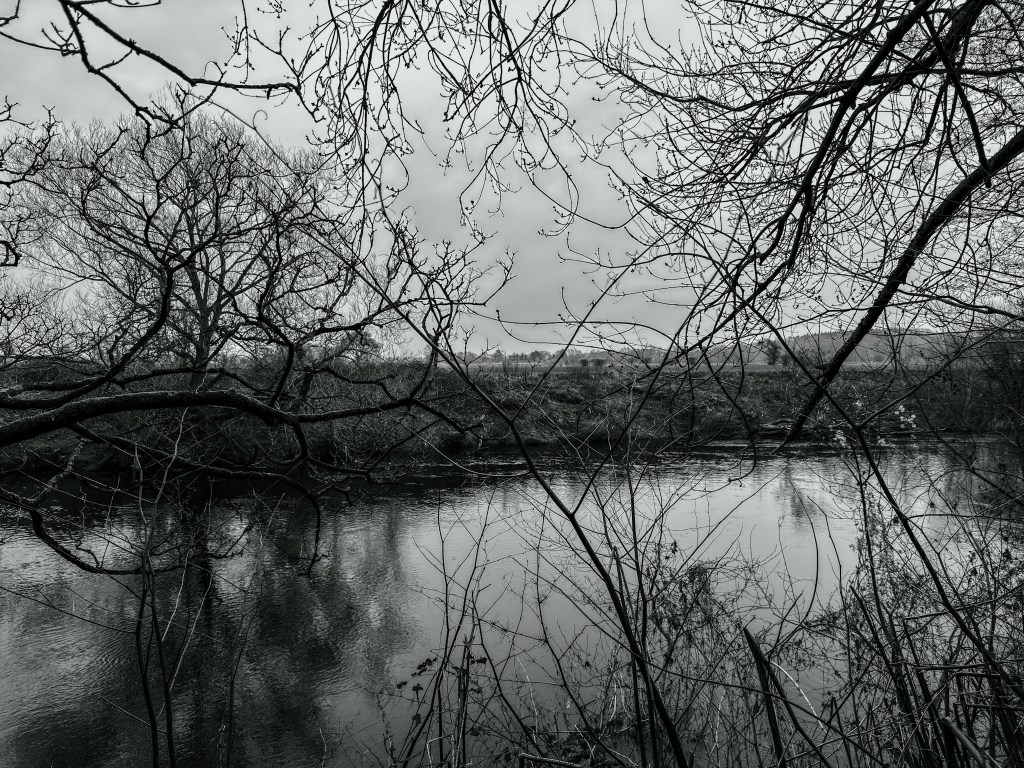
I had arrived at the fringes of Asney Woods on the hunt for some lumps and bumps – the remains of an 18th century folly, once within the grounds of Gwernheylod, from which a small cannon was fired on occasion of celebration. All was well, all was calm as the We and I followed the footpath along the Dee towards the woods. There was a mist on the river, and geese glided on the smooth, swift waters with misleading ease – deceptive bliss. But this sense of rural idyll was short-lived. Upon reaching the base of the hill upon which the remaining earthworks were said to be found, the We and I, the Border Terrorists in tow, were confronted with a scene of devastation. Much of the plane here, beside the Dee had been cleared of trees, but my immediate impression was that it had been shelled. In truth, it looked like something from the Somme of 1916 – a blasted, broken landscape of shattered tree stumps and seared earth. I would not have been wholly surprised to have seen zigzagging trenches and a seething mass of British squaddies within them.
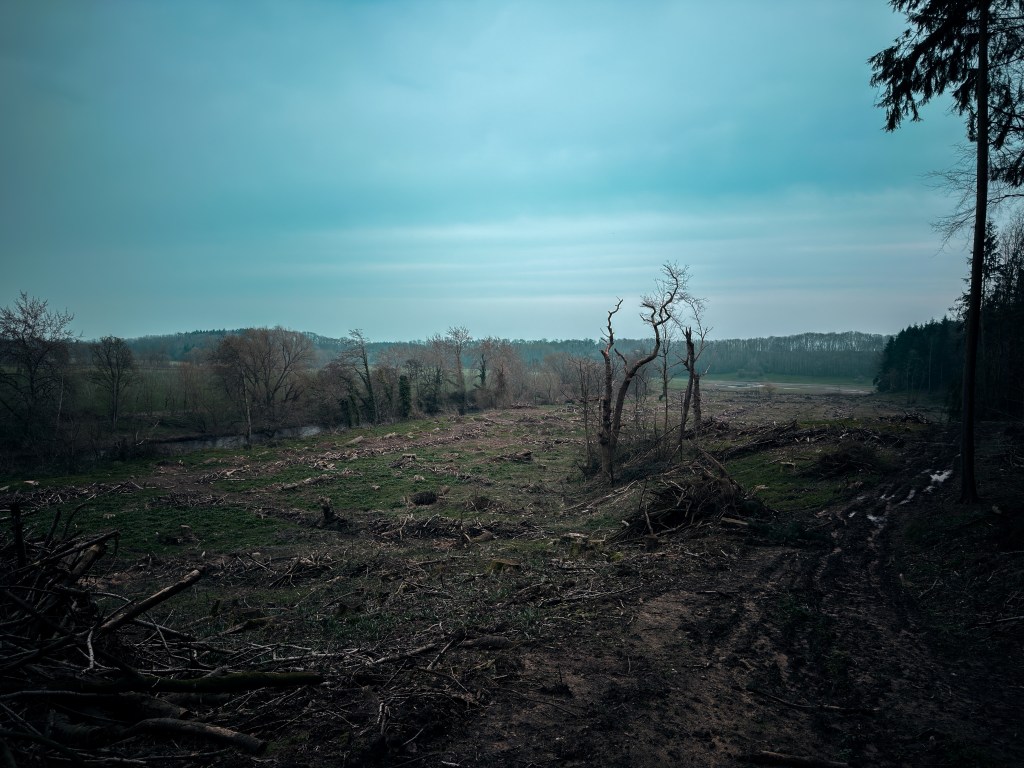
Logging had taken place, I assume, and while I don’t pretend to know the practicalities of the business, the scene that presented itself on the banks of the Dee here was frankly disturbing, a tortured landscape – traumatised. I know in saying this that I am opening myself up to all manner of accusations, ranging from accusations that I am ignorant of the ‘ways of the country’ to a wilfully overactive imagination, looking for drama where no drama exists. While the former is true to a point, and there can be little doubt that at times I can allow my imagination a long leash, I leash it nonetheless, and it ranges as far as I let it. I remain an Efrog at heart, northern pragmatist at core and I’m not one to leap to the bizarre before considering the mundane.
Still, I can only tell you how I felt on entering Asney Woods, and I felt immediately unwelcome. The path into the trees was somewhat precarious – a wild root broken and water scoured track. Stream rivulets were crossed by rotting pallets and branches. Rain from the day before was still draining from the tree canopy above, and even the soil beneath my feet was dishonest, treacherous – slough beneath my boots and liable to slip away from the tread in a moment. But I climbed nonetheless. Thick bramble will ever try to trip you – nothing new there, but its denseness seemed oppressive and malevolent – ankle and eye height, thorns and prickles dragging languidly across my skin. And all around me, the sense of being watched, and watched intently, avidly, angrily.
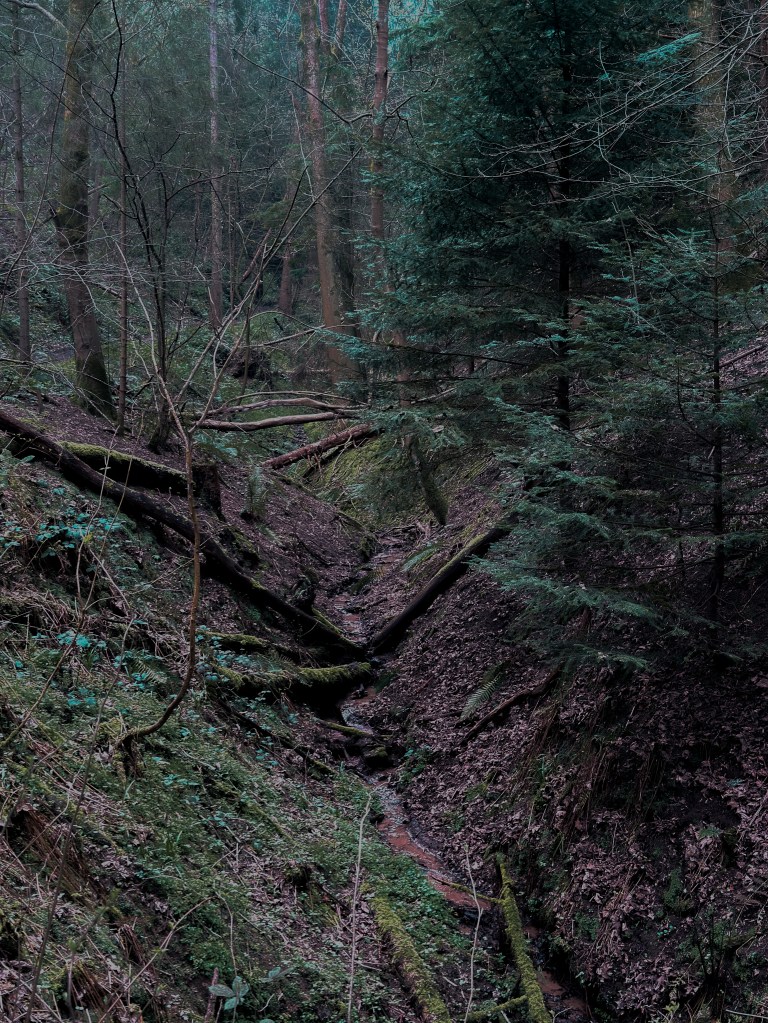
I had hoped that on reaching the height of the hill, I might find the sun as something more than slight light through a reluctant canopy. I was disappointed. If anything, the atmosphere was more sullen, as if the landscape was annoyed I had made it this far. Mindful that I had made this climb to see if the outlines of a fort like earthwork could be found, I began to ferret around. But, I jest not when I say I would find myself, without knowingly doing so, glancing over my shoulder every few moments.
I was unwelcome.
Now, I hear the naysayers right well. Having reacted emotionally to the logged out river plane below, with the dank, dampness of the woods about me, you’ll say I was in something of a febrile state, vulnerable and susceptible to suggestion. I would agree with you if you were right. But the force of this was something I have never met before. I tell you, it wasn’t fear – I didn’t feel threatened, or haunted. I felt disliked.
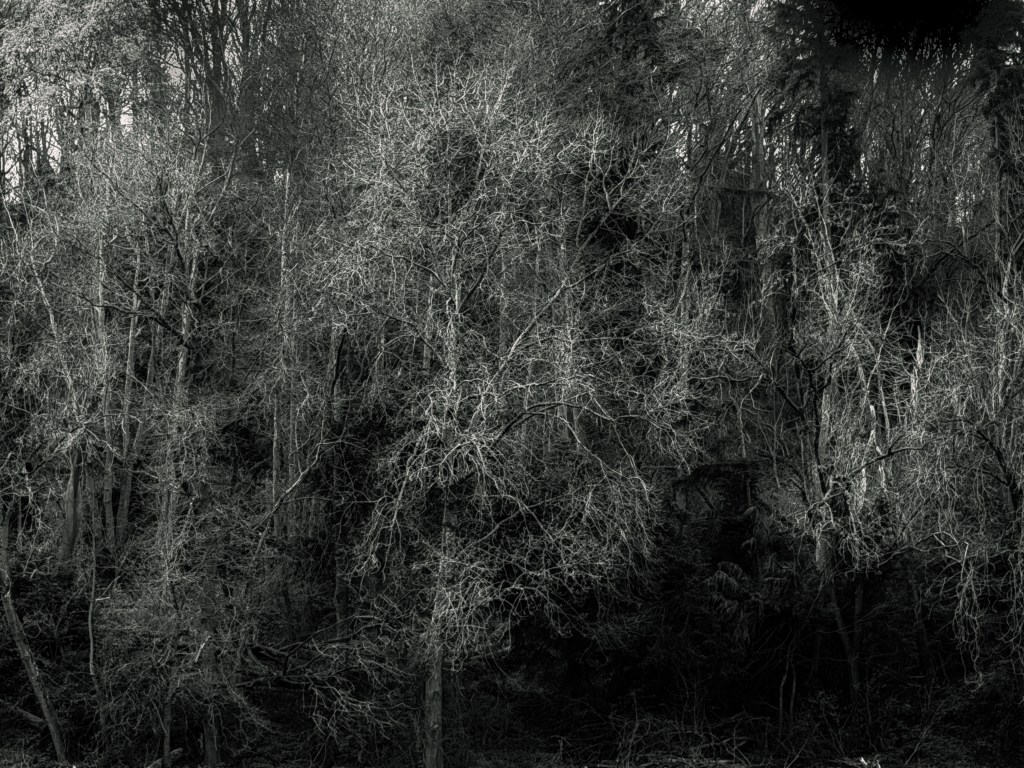
Still, I continued my hunt for the earthworks of Gwernheylod, but found very little. An embankment here and there, a suggestion of humps and lumps beneath the bramble. The Wood had reclaimed all else and was plainly dismissive of my efforts. I shan’t say I surrendered, but rather that I admitted that I was unlikely to find anything more than I had and began to make my way back to the We.
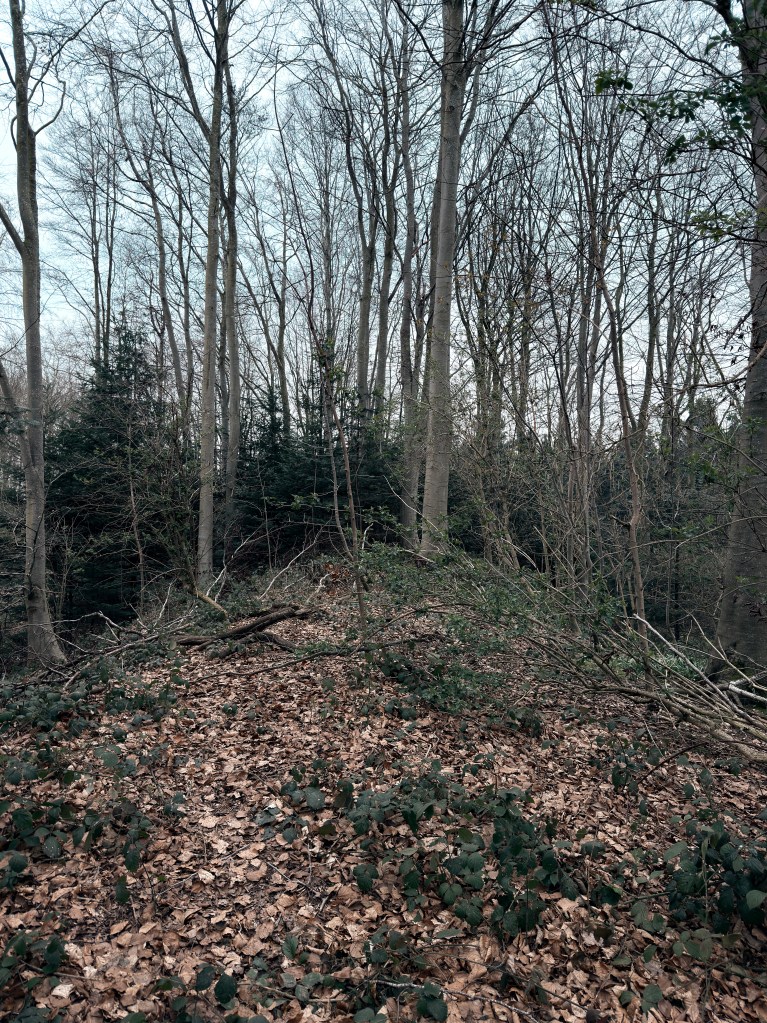
But, in one further little twist, I found I had lost my bearings and my internal compass had abandoned me. And that was unheard of – had, in fact never happened before. I have an exceptional sense of presence – and have never considered myself lost. Until that day in Asney Woods. It was the only time, the very only that I felt in any way directly threatened. It felt intentional. It felt malicious.
It was in fact the revival I needed, because I found myself a little irritated, a little angry. I realised I was tense, hunched and wary, poised and hyper aware. I stood up – tall. I straightened, I laughed out loud, I even winked. And I moved. Movement is everything. Movement is freedom. What way I went, I knew not – it was just a way. I recognised nothing, since nothing was memorable. Trees, bramble and scrub all looked the same. It was a little while, a time, but eventually I reached a ridge. The Border Terrorists sensed me before I heard them and began to bark. I moved towards the sound – mindful that the woods were dampening the sound of their barking. I made my way down the ridge, effectively surfing the last few metres upon the washed out slurry that served as an embankment.
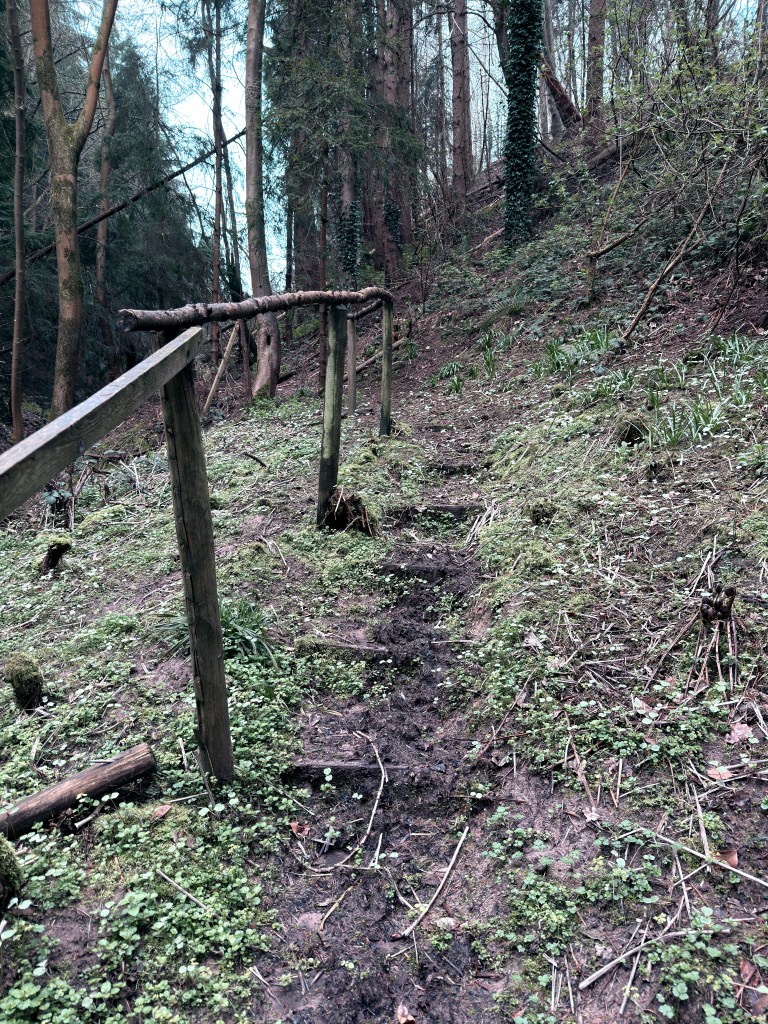
It seems the dogs had been barking for some time – I hadn’t heard them. I said nothing to the We until we were clear of the woods and in the fields on the way back to Overton – I think I was nervous to do so, I think I thought I was being overheard. I was strangely disappointed to find that she had felt nothing at the base of the hill. But then, I was the one that had climbed the hill, that wandered where I wasn’t wanted. The sense of unease remained with me for some time. In conversation with We, I made jest of it – leaning back upon a remembered stoicism. But as I write this, with the light in the Vale of Llangollen now fading away behind the western hills, the furrowed frown has returned and I wonder what it was that I encountered in Asney Woods. Maybe just myself, maybe something else.
I will return, I’m sure. But, not just yet…
New Articles
It’s been a while – apologies. The website progresses, with new articles added every month. It really is a undertaking that will never actually be finished.
The Hanmer Churchyard Cross
North East Wales is particularly lucky in having several churchyard crosses which retain their ornate tabernacles. Why this is the case is not known for certain, although its likely a combination of things, including the relative isolation of the cross and perhaps, as at Hanmer, that the crosshead, while badly mutilated, was re-erected as the heat of the Reformation began to fade. The medieval churchyard cross of Hanmer is thus proud in the grounds of St Chad’s – a wonder.
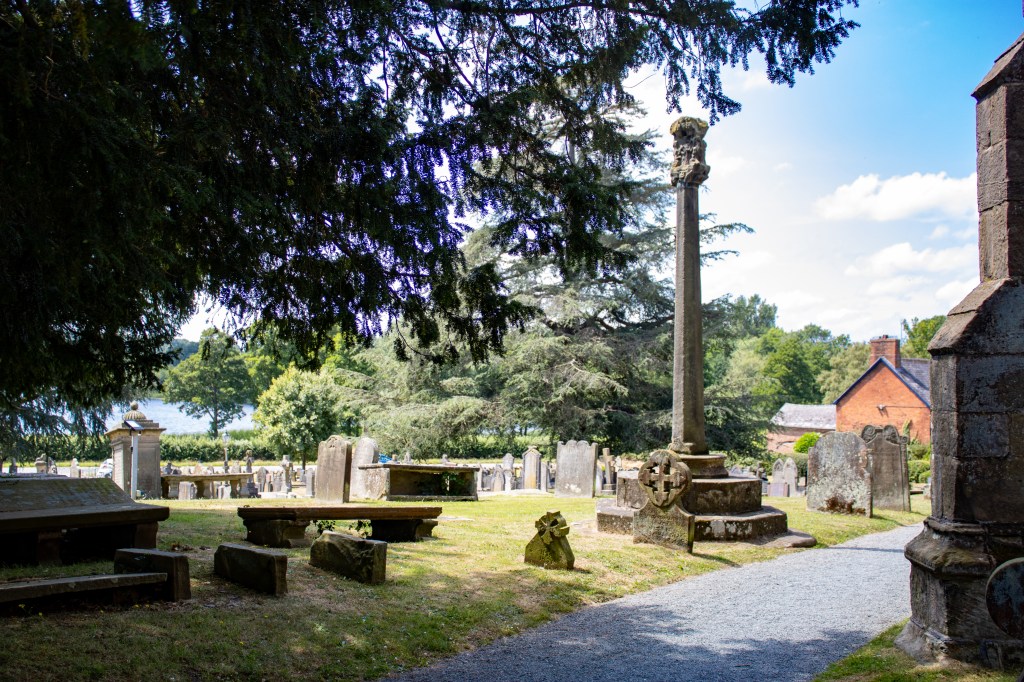
Much mutilated by Puritan mallets – but re-erected by the peoples of Hanmer Parish.
The Llyntro Moated Site
On the outskirts of Wrexham, in the old township of Esclusham is something of an oddity – a moated site. There are several of these curiosities in the English Maelor, a reflection of their siting on the ‘border’ between the English and Welsh geographies, but not so many here in Wrexham proper. But it’s a beauty, with little imagination needed to gain a sense of its layout. Goodness, there’s even a flow of water feeding at least one side of the moat and some extant stonework. It was said to have had buildings there until well into the 20th century. Still there, hidden away in the trees.
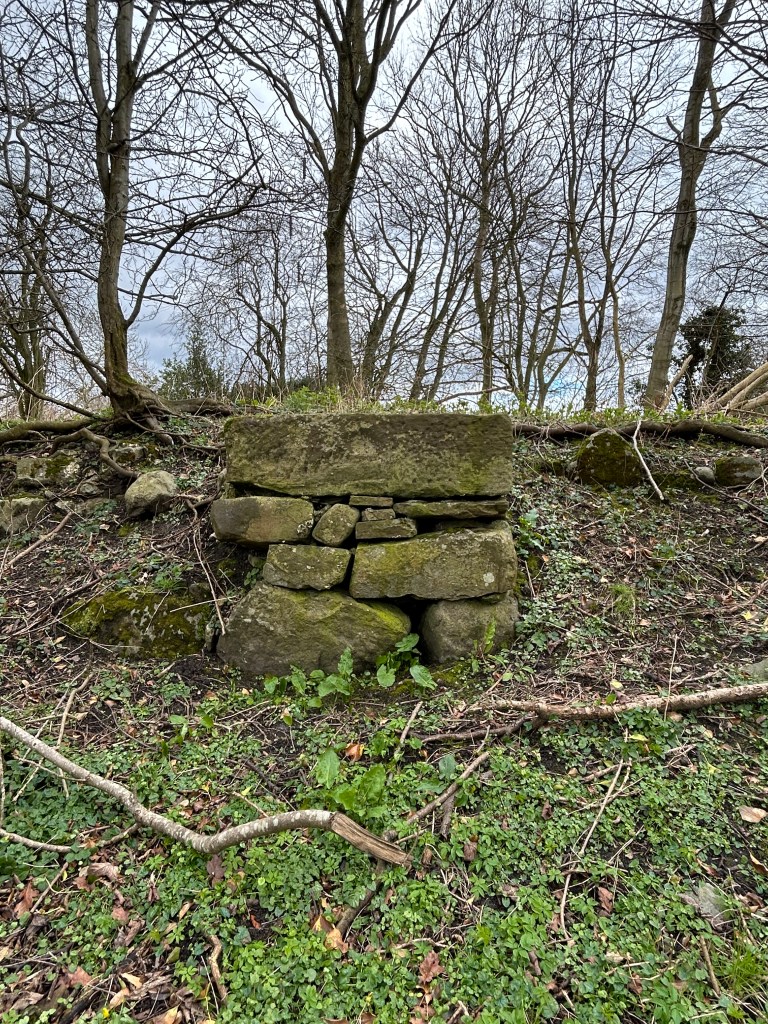
Some of the remaining stone of the Llnytro Moated Site.
Tomen Garmon
Tomen Garmon may well be a tumulus – it certainly looks like one. But it behaves a little differently, playing its time-made faint melody discordantly. Upon the mound is a curious stump of stone. It is said the St Garmon preached a new religion from this mound – Christianity, he memory of which is remembered in the stone. It is also said that Garmon never left Llanarmon Dyffryn Ceiriog, that taken with the peace and beauty here in the valley, he stayed.
You can see them, can’t you, the peoples of the Valley, gathered about the ancient mound to listen to this holy man speak of the Son of God, of redemption? Here, in little Llanarmon Dyffryn Ceiriog.
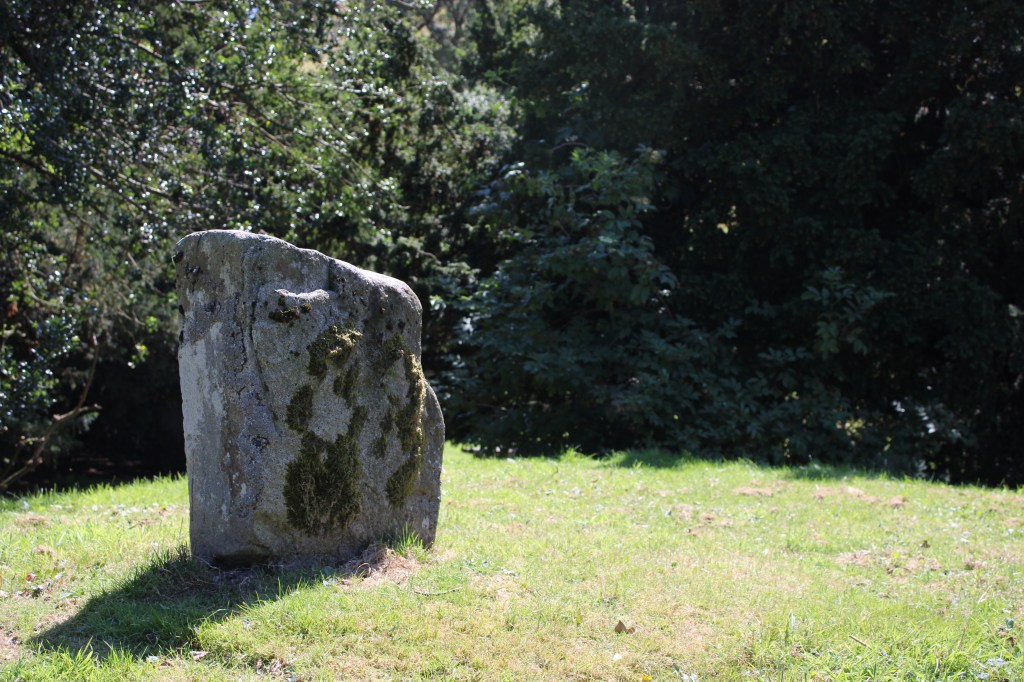
The curious stump upon what is possibly the remains of an ancient tumulus.
What else have I been up to?
Good question. I have family down south in Somerset. I visit them, because you know, I’m a good son/brother/uncle etc. But I do take my camera with me…
You might know that I have a love of photography. My heroes are Ansel Adams and particularly Don McCullin. I remember travelling back from Lancaster University back in the early 1990s, having visited to be interviewed for a place there studying History. I’d popped into Blackwells to have a browse before catching the long train back to Yeovil and picked up a copy of McCullin’s autobiography, ‘Unreasonable Behaviour’. I pretty much read that book cover to cover as the rickety old diesel engine slowly made it’s way south. I was staggered by the photography, utterly mesmerised by the ‘eye’ he had, and still has. I think now, that had someone given me a camera as a child, that perhaps things might have been different for me.
At Bruton, a little market town in South Somerset, Hauser and Wirth, the gallery there recently held an exhibition of McCullin’s photographs. How could I not visit? And he was there, of course, showing people around and discussing his work. I have been so star struck only once before (meeting Tony Benn on Platform 4 of Chester Station). I must admit to being a bit giddy. Did I have selfie with him, you ask. I did not. An irony? I don’t think so.
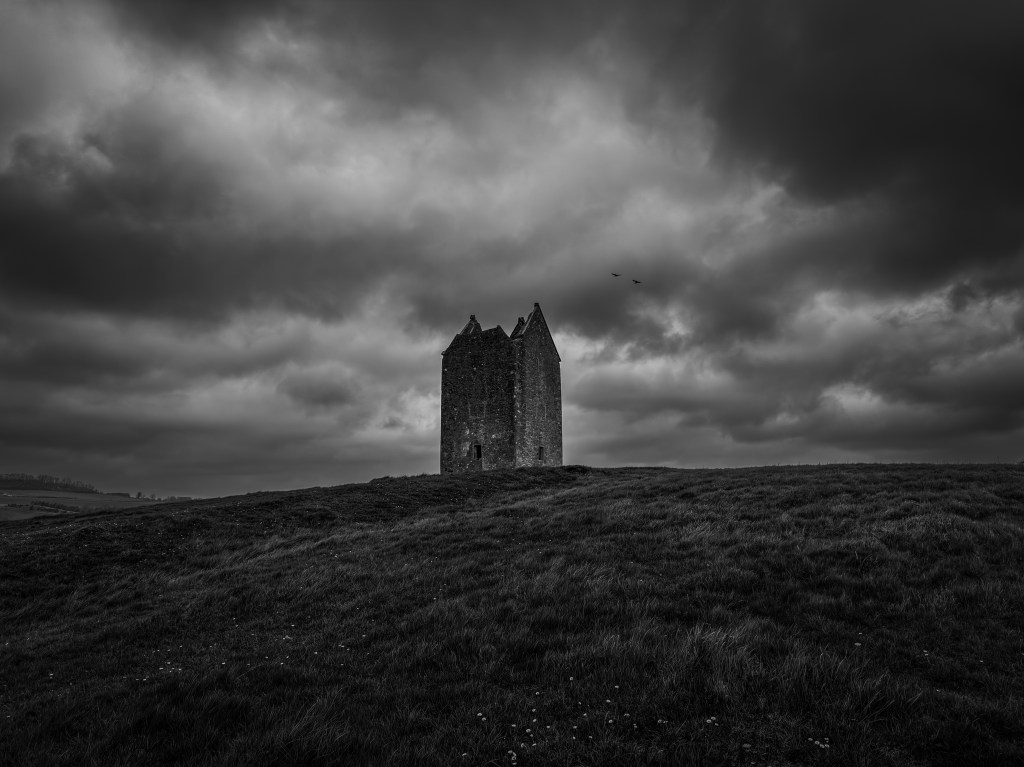
The Bruton Dovecote.
What’s Next?
Work continues apace on Wrexham. Much of old Wrexham town has been swept aside – and continues to be, what with the demise of Dennis of Ruabon, once a source of the famous red bricks that can still be found all over the world, as well has much closer in the buildings of Manchester and Liverpool. It does feel like something of a race to document and photograph the old town before the bulldozers arrive. But there is plenty to do in the countryside surrounding the town. Much to be done.
And while wandering around Wrexham, I shall find time to complete work on Buckley and Queensferry – the brickworks of the former (as well as a surprise or two) and the World War 2 pillboxes and 19th century jetties and wharfs on the River Dee of the latter. I’m also quite certain that I shall allow whim to move to me…
…and also…
Apparently, I do talks now. I was invited recently by the Historical Societies of Mold and Caerwys to talk about the Medieval Crosses of Clwyd. Now, you’d think after three decades of teaching, I wouldn’t be worried about public speaking. But then, these lovely people were actually interested in what I had to say, and they knew a thing or two. They were, however, absolutely wonderful…and welcoming. I like this you know – talking about the history of North East Wales. It does feel like something of a mission to ensure this little corner of Wales is brought into the light somewhat.
Anyway, should anyone out there wish me to present a slice of Clwyd to their history society or the like, drop me a line….


