On the matter of Respect.
May 2025

I’ve no idea what happens to us when we die. When we pass. I don’t. There are those that feel they do and there are those that are happy to share their belief with you should you wish them to do so. There are also those that feel it their calling to make you listen to their beliefs and damn you if you don’t. I will admit, my experiences of religion, organised or otherwise, have not been good. Frankly, they have been somewhat traumatic. But I have clung on, sometimes desperately to my open-mindedness, because I’m not one to close doors fully, since once closed, doors tend to stay closed. I just don’t know. But this I do know. Whether or not I believe what you believe, I believe you get to believe what you want to believe without fear of doing so. I respect your beliefs, even if I don’t share them.

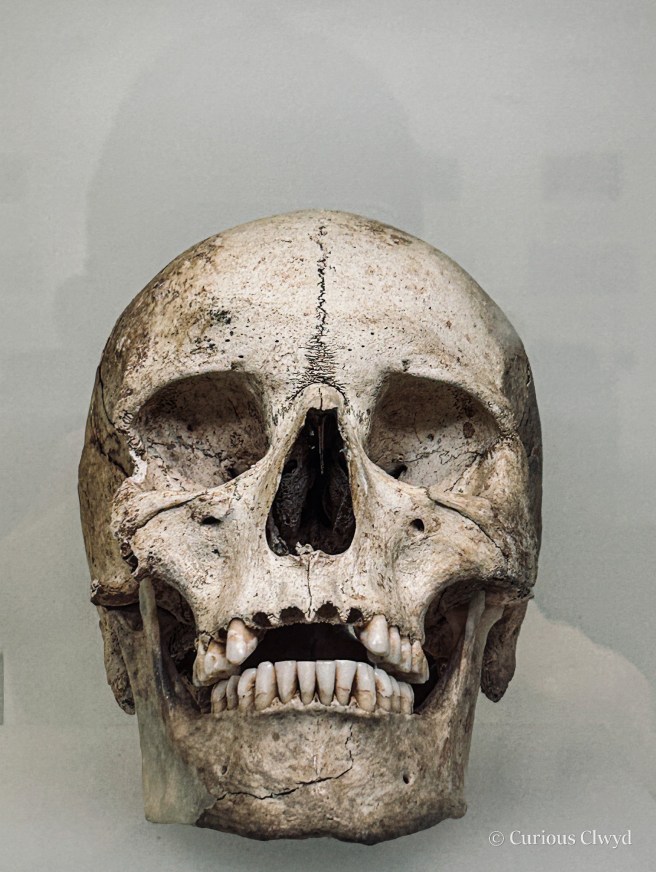
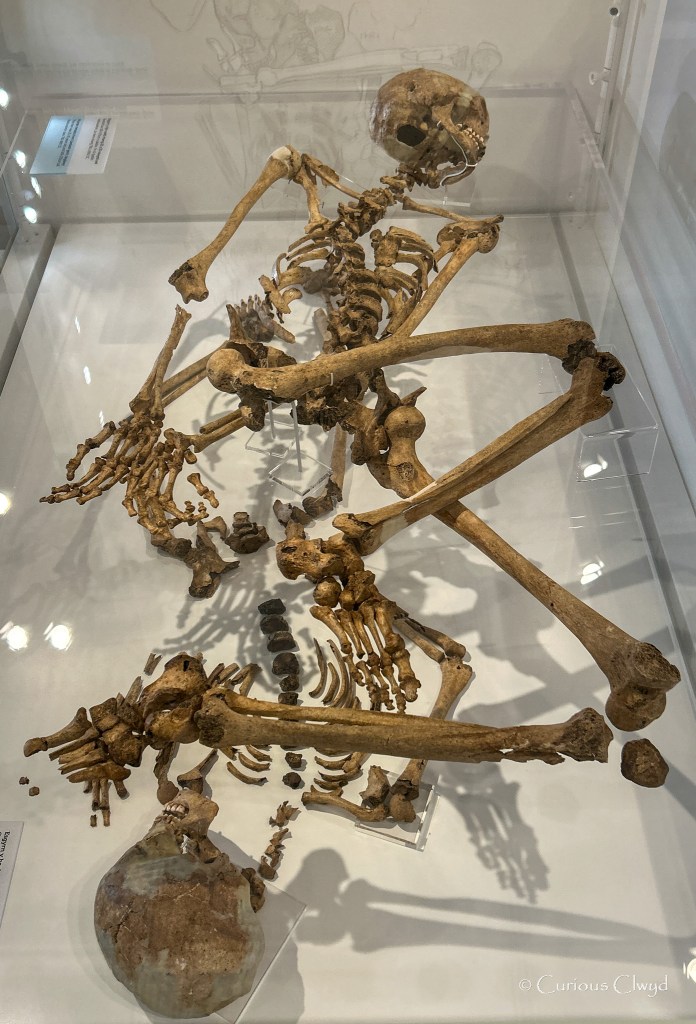
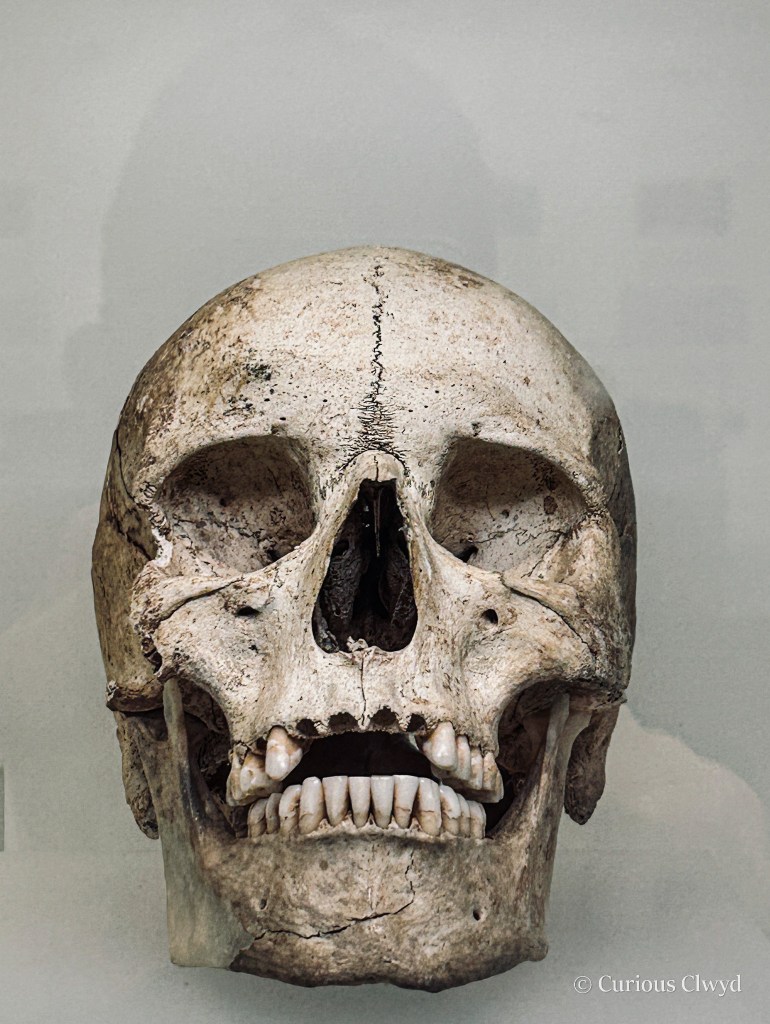
I was at the St Fagan’s Museum of National History some weeks ago, and I found myself staring at the skull of a Bronze Age man. Within a cabinet. Behind glass. I was fascinated. A little excited, to tell you the truth. I read the bit of blurb, nodded away in interest… felt I learned a bit, you know. And then a curious thing happened. I suddenly realised that I was in the presence of a person, an individual, and that this was not the place he expected to be 3000 years later. This didn’t feel like respect to me. This didn’t feel entirely right and proper.

I put up a post on social media on this point a couple of weeks ago, interested to find out what others thought. I didn’t think it would end up being my most controversial post – and controversy isn’t something I actively court,  but I think it has. Some of those that responded felt as I did, which was to advocate for a stronger show of respect for those whose bodies we dig up. Some were more firm than this, that the bodies of the ancients should never be dug up and recovered, while others quite frankly believed that the bones were of no import other than what we could learn from them. This last opinion disturbed me – left me quite emotional, to be honest. One correspondent, with an archaeological background, suggested that because excavated graves were often so disturbed that the recovery of the bodies had become something akin to ‘a game of pick-a-stick’, and that hence respect of the recovered body was not required or warranted. I had, it seems, stuck my hand in a wasps nest.

But I suppose I should try to define what I mean by respect, since it seems to me to be one of those words that people throw around without actually thinking about too deeply. My copy of the Concise Oxford Dictionary (1991), which has been at my elbow now for over three decades, defines Respect as,

Regard with deference, esteem, or honour.

I think that it is also a question of the direction in which respect travels. It can be an individual thing – from me to you, or you to me. It can also be a mutual thing, in which respect is reflected. It can, of course, be both of these. There is also the question as to whether something is worthy of respect – a person or ideology, to which the answer is that, most assuredly, not everything or everyone is in fact worthy of respect. But here’s the thing – it’s also a question of being someone willing to show respect, willing to give the time and consideration to the possibility that a person or ideology is worthy of respect, even if at the end of that process, you may refuse to entertain the thought of assigning ‘deference, esteem or honour.’ Respect is, in truth, an exceptionally simple concept – but complicated by implementation and those that seek to dismiss its worth, largely for the obstacles it places against our desires.

Those responses that seemed to suggest that the bodies and bones of the long gone were not due my respect or that of others, seemed to press on several fronts. Ironically, none seemed to have any basis in respect.

There was an obvious sort of intellectual snobbery at play. Concerns were dismissed as a lack of knowledge or even intelligence. Who was I to question the practices of universities and museums, heritage bodies and organisations? What could I possibly know of such things – an amateur historian, peddling his wares on the internet, on social media, if you please? It seemed to suggest that if I actually knew of such things, I would be a member of the universities, the museums, the bodies that recover the bodies – a part, in short, of the establishment. I have always despised this pompous sentiment, and have had to work hard to reign in my teeth gritting rage at such nonsense – a working class background can easily fester into a blind and self harming anger at anyone ‘further up’ the pyramid. But the real danger of this attitude is how repellent it is. And by repellent, I mean just that, a repelling force, an attitude that rather than leading people to an understanding of a thing, pushes them away as they withdraw from the arrogance of its delivery. And it is an attitude that has nothing at all to do with open-mindedness or a belief that an exchange of ideas can lead us to a greater and deeper understanding. Those that express their opinions in such a fashion, have walked through a door and closed it behind them, never to consider opening it again – ever. And more to the point, they dismiss the opinions of those on the other side of the door without a thought of consideration on what they say – after all, if they were right, they too would have walked through the same door and closed it behind them, surely? It was an attitude that seemed to suggest that should I be a lot more experienced and a little more intelligent, I wouldn’t have a problem with digging up a few bones from where they had been placed with reverence, with evident esteem or honour and placed under glass in a museum or perhaps in a cardboard box in a storage unit somewhere. Well, I don’t happen to believe that respect is on a sliding scale, in competition with experience or intelligence.

Time was also used as a sort of crude cosh to bash me with. This argument seemed to suggest that some of the remains were so old as to make our notions of respect unnecessary, or irrelevant – the tooth of the proto-Neanderthal child found in the Pontnewydd Cave in the St Asaph area and on display at St Fagan’s is a case in point. It seems to say that respect has no place in the investigation of the very ancient. It might also be said to suggest that given the distance between us, we could not be expected to understand what these people considered to be respect, and hence we should not give it much thought. I find this argument nothing short of perverse and simply wrong. Why is it that we recover these bodies if not to try to understand them? Why do we dig if it isn’t to learn? Is it simply a matter of having the bones, the ashes? But if not, how is that in learning about these people we can so easily dismiss their culture and the respect they showed in burying their dead? Because one thing I do know is that what we have learned about these very ancient people shows that they did have lives worthy of our respect, however we feel about their rituals, their culture. Evidence of respect in the burying of the dead, in the rituals involved in the burying of the dead are so absolutely evident as to make this argument utterly nonsense. If we are to claim that distance in time makes these rituals irrelevant, then I say this says more about us than it does them. Where is the cut off point? At what point in the past does it become ok to dismiss the peoples of the past as not being eligible for respect. At point in the past does it become ok to take 

These people were our ancestors and what we are is a development of what they were – their culture, their beliefs and the rituals that surrounded them. Do we do things very differently today? Where is the cut off point? At what point in the past does it become ok to dismiss the peoples of the past as not being eligible for respect. How ancient does a body have to be before it becomes ok to take the bodies and place them behind glass in a museum somewhere?

But what of those bodies of peoples that have simply died – without ritual or evidence of respect at the point of demise? Does this really mean we get a free hand with their remains? Of course not. Dying without ceremony does not mean that under different circumstances they would not have been given the respectful rites of their culture. Obviously. And what of the suggestion that because some of these bodies retrieved from the earth have been disrespected in the past then we are free to do as we wish with them, the bodies perhaps of those that breached the accepted norms of their society – murders, heretics and the like? There is much evidence that graves have been robbed out, sometimes destroyed altogether – antiquarians were often at fault here. There is evidence that graveyards have been simply ignored in later developments, the bones either removed and disposed of without a thought or simply built over, buried beneath housing developments and factories. The frightening speed at which an expanding Britain developed from an agrarian to an industrial nation caused much damage to graveyards, both ancient and more recent. Piles of bones, the bodies of dozens, sometimes hundreds of people gathered together in heaps and simply disposed of or reburied elsewhere with little concern or thought. Catastrophic events such as the Black Death led to mass graves, and one wonders as to how this impacted on the rituals of death and burial. And then what of those remains of victims of ritualised death in which individuals were sacrificed? Should we be allowed to show little or no respect because they died in such a fashion. The example that leaps to mind, is that of Lindow Man, an Iron Age, possibly Romano-British male violently killed and buried in Lindow Moss in Cheshire, preserved then in the peat – why he was killed, we don’t know and the theories are legion. You will find his freeze dried remains in the British Museum. Having visited the British Museum several times, and looked upon the remains of Lindow Man, my overwhelming feeling is now one of pity… and shame. What do I learn from these people under glass, that I could not, say from looking at a resin reproduction? I see no reason why we should absolve ourselves of respect for these people simply because others didn’t or wouldn’t.

Most amusingly, some of the criticism the post received was for seeming to shoe horn religion into a scientific endeavour – as if respect was the exclusive domain of religion. By suggesting that we should have more respect, I was, it seems, trying to bring a religious control over the efforts of archaeologists and historians. I was told in uncertain terms that these bones had no soul, and so there was no need to show respect, they were in effect a free-to-use resource. The arrogance of that. As if our opinions are worth more than the opinions of those buried. In my opinion, which is just another opinion amongst many, respect is not dependent on your religious beliefs. Respect, as I see it and define it, is a human quality – or should be.

Finally, the belief that because we may place little value on our eventual remains, then we are absolved from showing respect to the dead of the past is quite honestly, appalling. Some of the responses to my original post were so arrogantly dismissive of my assertion that respect should be shown based on this point. Well, that may be the case for you or I, but it most certainly was not always the case for peoples of the past. Judging our ancient ancestors by our standards can lead to terrible and awful misconceptions – and often very dangerous ones. I have not heard of any ancient bodies being discovered with disclaimers, pronouncing that future peoples may do with them as we wish. We may live in an age of opt-out organ donors, but we cannot assume such similar beliefs in the past.

So what is the alternative? My own argument is not that we should simply leave the bones and bodies of the peoples of the past in situ, since to do so does not ensure their safety from the knuckle dragging idiocy of the swivel eyed amongst us and thus risks a worse abuse of the respect I would argue the dead are owed as a matter of course. One has only to follow the ongoing court case of the two individuals accused of cutting down the sycamore tree at Hadrian’s Wall to be assured of that. And of course we should learn of the peoples of the past, both to understand them and us. Ultimately, this comes down to what must be considered understandably invasive investigative techniques, both of the graves and the bones themselves. And I see little alternative to removing the bones and storing them in some way, if for no other reason than for their safety from heritage criminals. There will always be those amongst us that have little regard for common decency, and it’s a vain wish to think it will ever be different. Making all sites safe from such base human desire is simply untenable.

My argument is that we should be ever mindful of the people that we find – mindful that these were once individuals with the same hopes and fears as ourselves, and that it is likely, perhaps more likely than us, that they had beliefs of a presence after death, that their corporeal existence was a part, but only a part of their showing in this world. To argue that their belief of an afterlife gives us then free reign with their earthly remains is just an excuse to play merry with the bones, and we should be honest with ourselves on that. And by mindful, I mean being aware that we are in the presence of an actual person, and no less of a person for the age of the remains, the context in which they were deposited, and our interpretation of the meaning of that context. I think that we should also give serious thought as to how we display these bodies that we find. I see no reason why the actual bodies should be displayed – resin reproductions, and these in a more engaging, educational context should suffice, I think. Why do we feel the need to display the dead like this? These are not the works of our ancestors – tools, cave paintings, weapons, stone crosses and so on, for which looking on reproductions can leave the viewer feeling a little underwhelmed, a little disappointed. These are actual people – however distant from us they may be. To give respect reflects well on us, and to give it freely should be something we aspire to and be proud of. 

Every man is to be respected as an absolute end in himself; and it is a crime against the dignity that belongs to him as a human being, to use him as a mere means for some external purpose.

Immanuel Kant, quoted in, Immanuel Kant, His Life and Doctrine, F. Paulsen, (339-341)


New Articles

Work on Wrexham County continues apace. There are two new articles this month, with several more in varying states of near completion. Ruabon and surrounding areas have been the focus, and hopefully a few further articles will be available by the end of May.

Pont Cysyllte

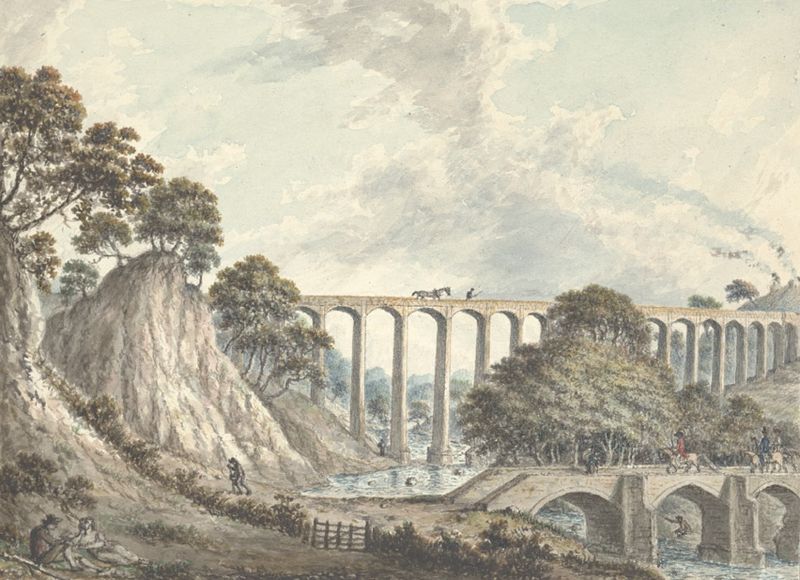
When at the end of the 18th and beginning of the 19th centuries, Telford and Jessop went and built the Pontcysyllte Aqueduct – the highest canal aqueduct in the world, it quickly became inundated with more artists than a wet paintbrush could be aggressively shaken at. But the thing is, see, when you look at those etchings and paintings and sketches and relax the eye a little, you’ll often notice the little 17th century Pont Cysyllte in the foreground. Well, I suppose you could say its there for scale, or perhaps to just add a little context and a dash of quaintness to a delightful view. But, I also think the old bridge is there in their work because on arriving, the artists realised that in visiting the new technological wonder of the age, there was architectural beauty and magnificence already present here – beauty that could be experienced without the pendro.

We went along it; the height was awful. My guide, though he had been a mountain shepherd, confessed that he was somewhat afraid.’It gives me the pendro, sir,’ said he, ‘to look down.’ I too felt somewhat dizzy, as I looked over the parapet into the glen.’

George Borrow, Wild Wales, (1862)

Pont Cysyllte ~ if you look very carefully, you may notice the Pontcysyllte Aqueduct in the background.

The Ruabon Lock up

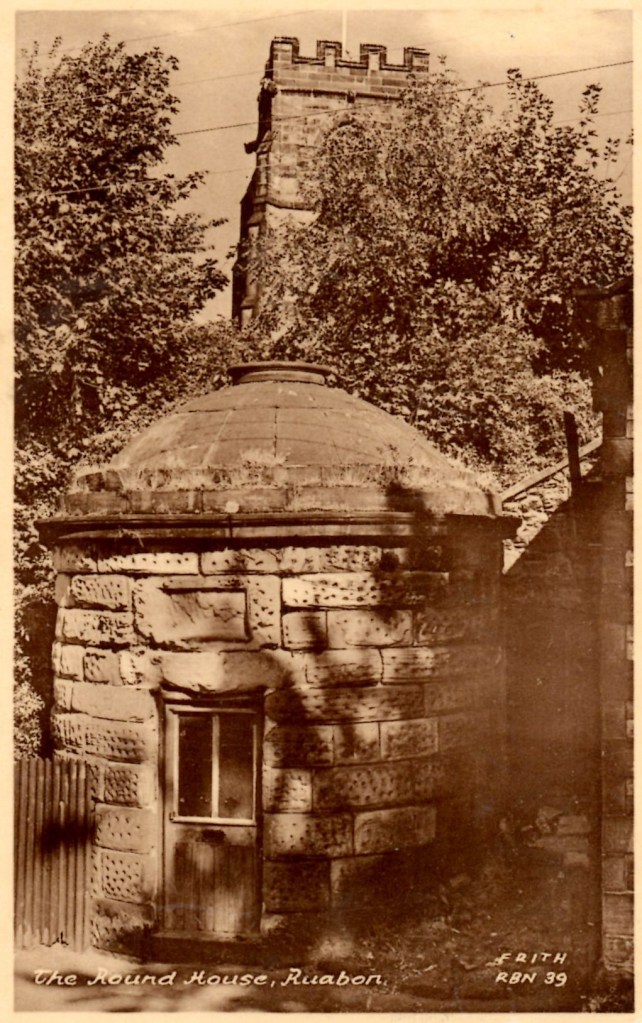
When I first moved up to North Wales, my soon to be wife and I bought a little two bedroom house in Ruabon – Bryn Street. I got a job at the Wynnstay Hotel serving behind the bar. I loved Ruabon. It reminded me a little of South Yorkshire – the accent was different, but the mindset was the same. And while I was familiar with churches and hillforts, both of which you can find in Ruabon, lock-ups were a new one on me. I was fascinated – especially with the look of them. For temporary prisons built to hold drunkards and the like, they seemed terribly likeable. I imagine it was a different experience for those held within them, but still…


Revised Articles

Just the one revised article this month – largely because I’ve spent much of the month wandering around the mysteries of Wrexham County. I began this site several years ago, and many of the articles still stand as good starts in learning about the wonders of Clwyd. But as my knowledge improves – which in itself has much to do with the ever improving quality of the source material, so does the need to look again at my earlier articles, some of which are desperate for a revisit. The following was a case in point…

In the early morning of April 1646, a mixed Royalist force of infantry and dragoons ventured south out of Denbigh Castle in a last desperate attempt to lift the siege of Ruthin Castle. The Parliamentarians caught them cold near the ford at Rhewl and utterly destroyed them. One of the Royalist captured there was a Captain Morgan, a man who was eventually to die single-handedly holding off the Commonwealth forces at Winnington Bridge in Cheshire in August 1659. The fierce, sharp engagement is likely remembered in the name of the bridge at Rhewl…


Visits

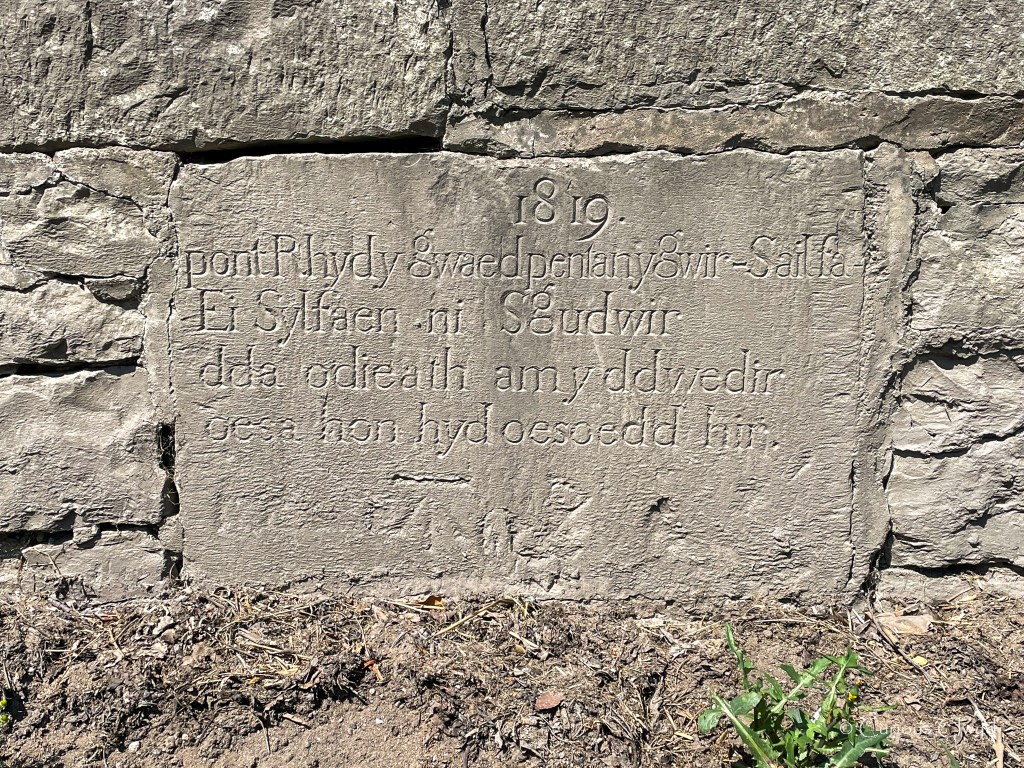
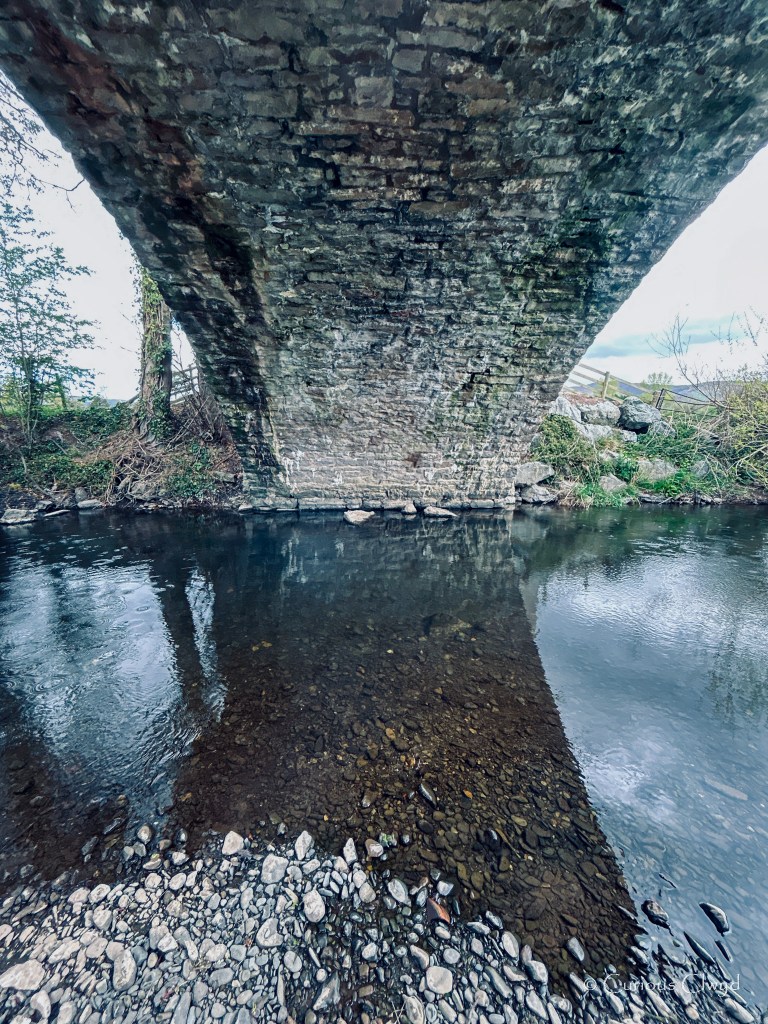
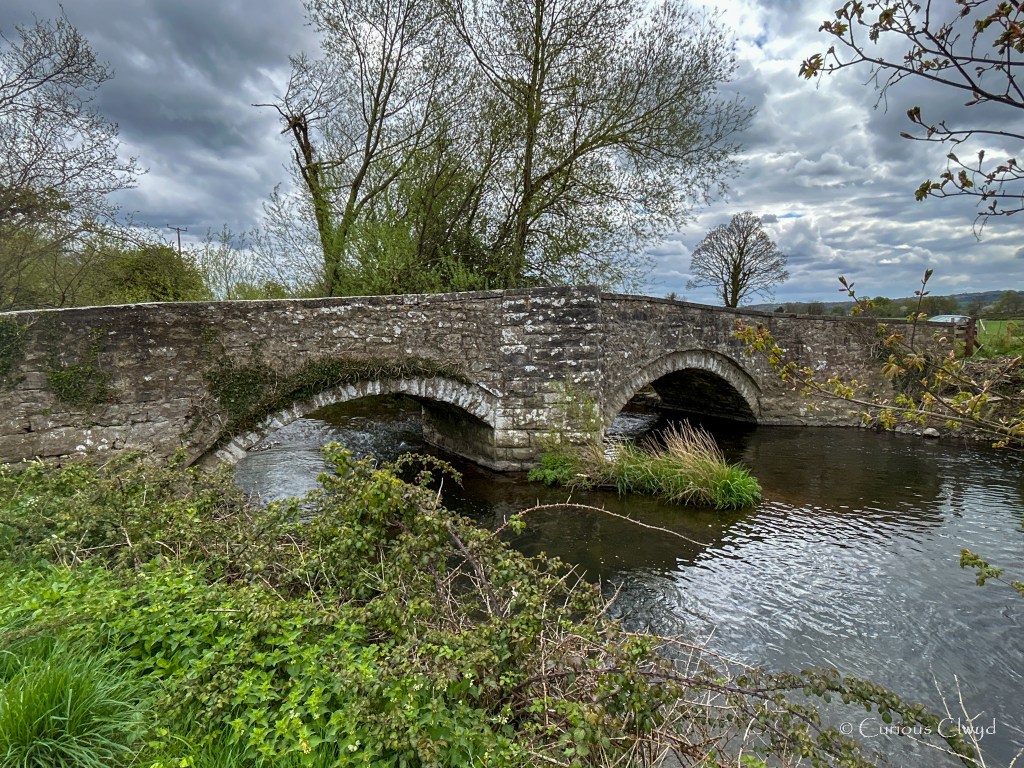
I’ve spent much of the month bothering Holt on the Wrexham, Cheshire border, and not just for the coffee and cake I’ve managed to shovel away at Cleopatra’s by the Cross. I think Holt might have its own weather system, since every time I’ve been it’s been a blistering kind of day. I imagine the Romans felt quite at home. But in having a recent look at the Pont Rhyd-y-gwaed, I got the bridges in Llanynys parish stuck in my head, and went a looking.

Bridges on the River Clwyd

Pont Llanhychan

Pont Perfa

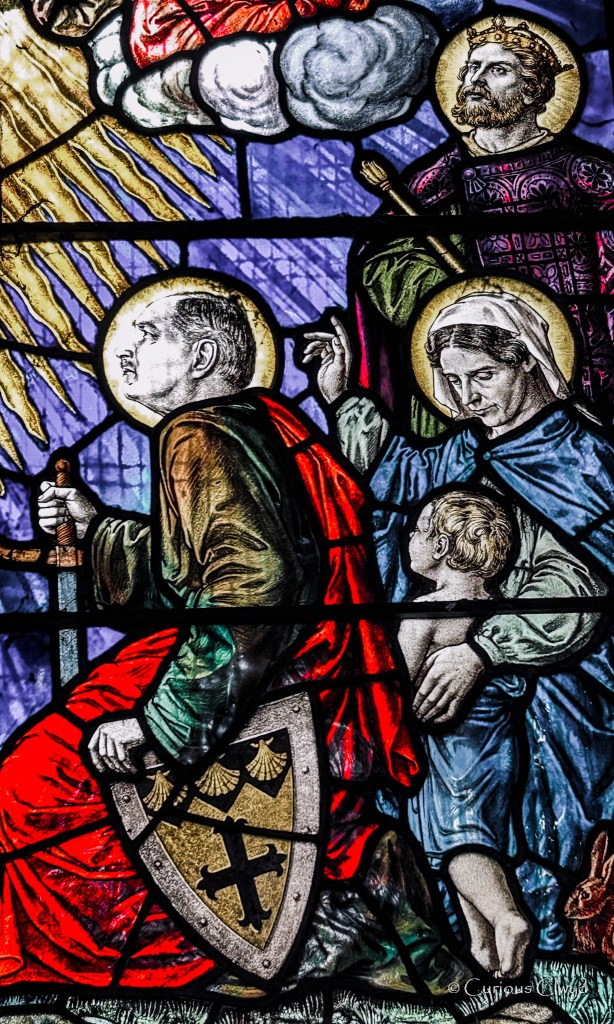
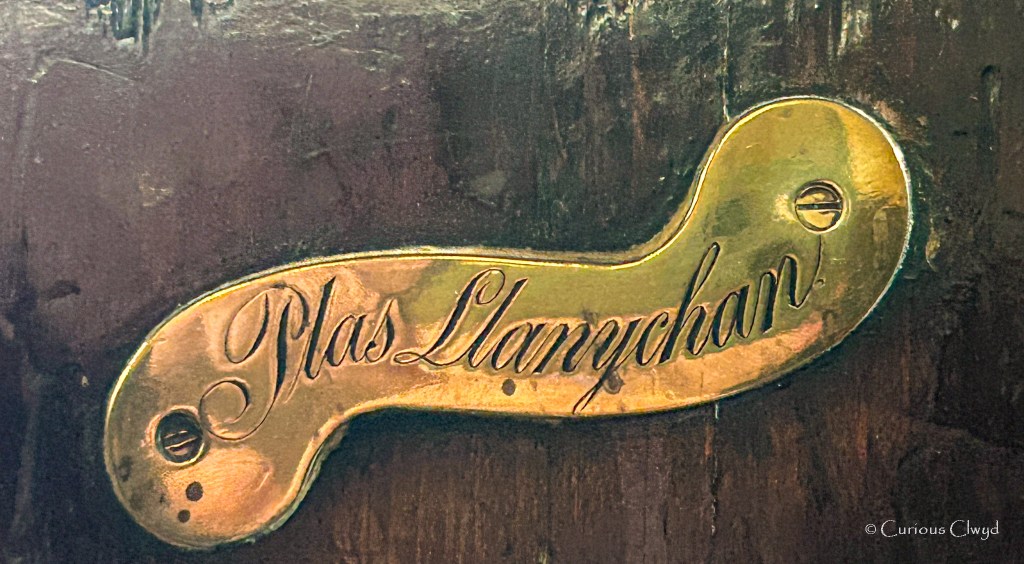
There are several more, of course. I also took the opportunity to pop into St Hychan’s in the village of Llanyrnog. Strangely enough, I’d never visited, so sought to remedy that little nonsense. It was a brief visit, I will admit, and I shall return of course, before writing an article. But what I saw was fascinating. It was described within as the ‘Posh Church’ because of the little brass name plates on the end of the pews. I was taken aback by the stained glass window above the altar – the donation of Sir Joseph Crossland Graham in 1925. I was struck by the halos both he and his wife are depicted as having, and must admit to thinking a little ill of the man as a consequence. But thankfully Fiona Walker put me right…

The East Window in St Hychan’s, Llanyrnog

‘The Posh Church’ ~ St Hychan’s, Llanyrnog

Lady Bagot’s Drive

The We and I went for a walk down Lady Bagot’s Drive. My post desperately needs a rewrite. I am what I am, and what I am is the kind of human that selfishly leaves his wife with the two Border Terrorists while he wanders off into the woods with a camera and a frown and emerges dishevelled and filthy from a bush some time later with photos and a deeper frown. I found some stuff though…

Here be dragons…

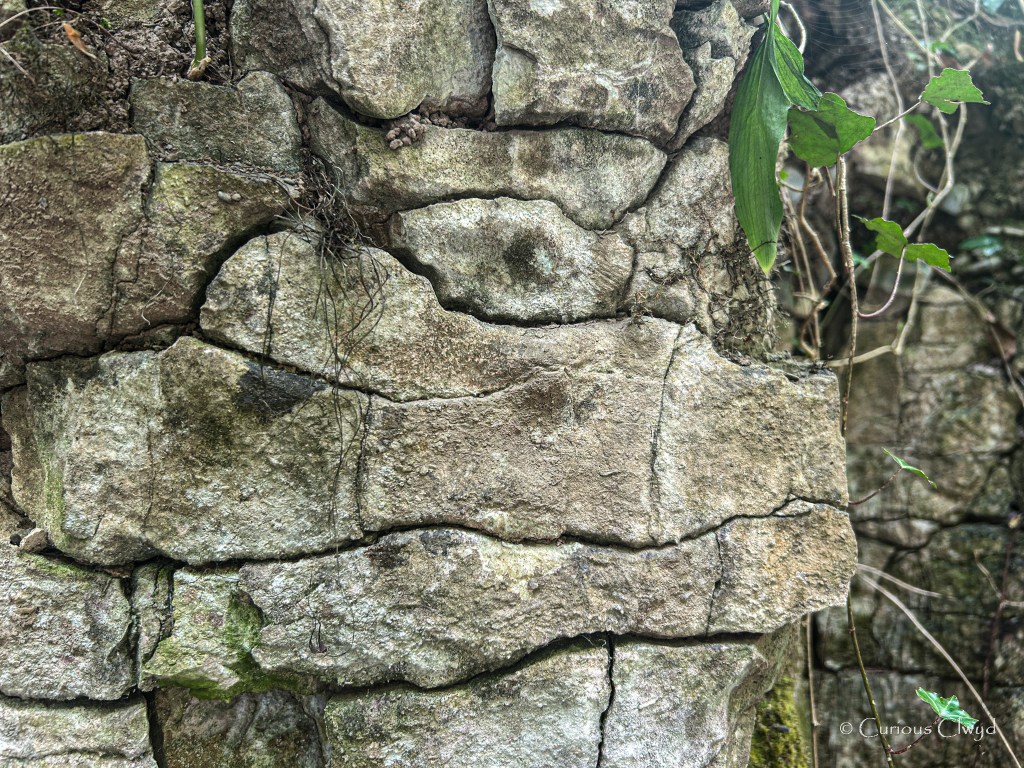
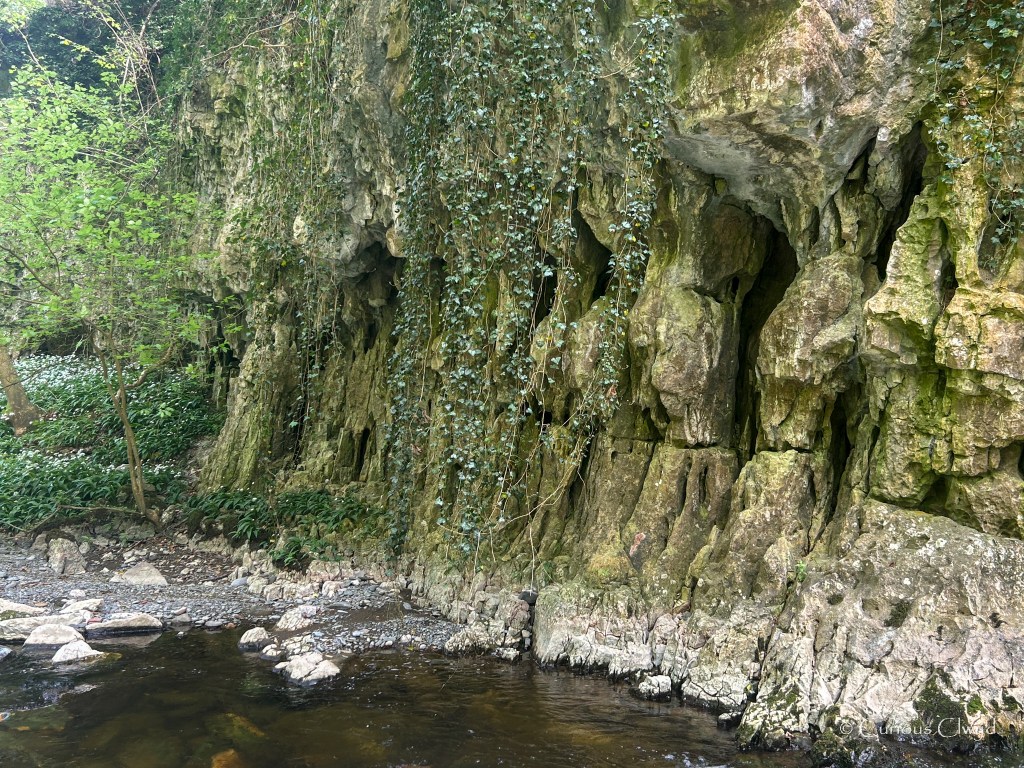
The work of water…

Florence

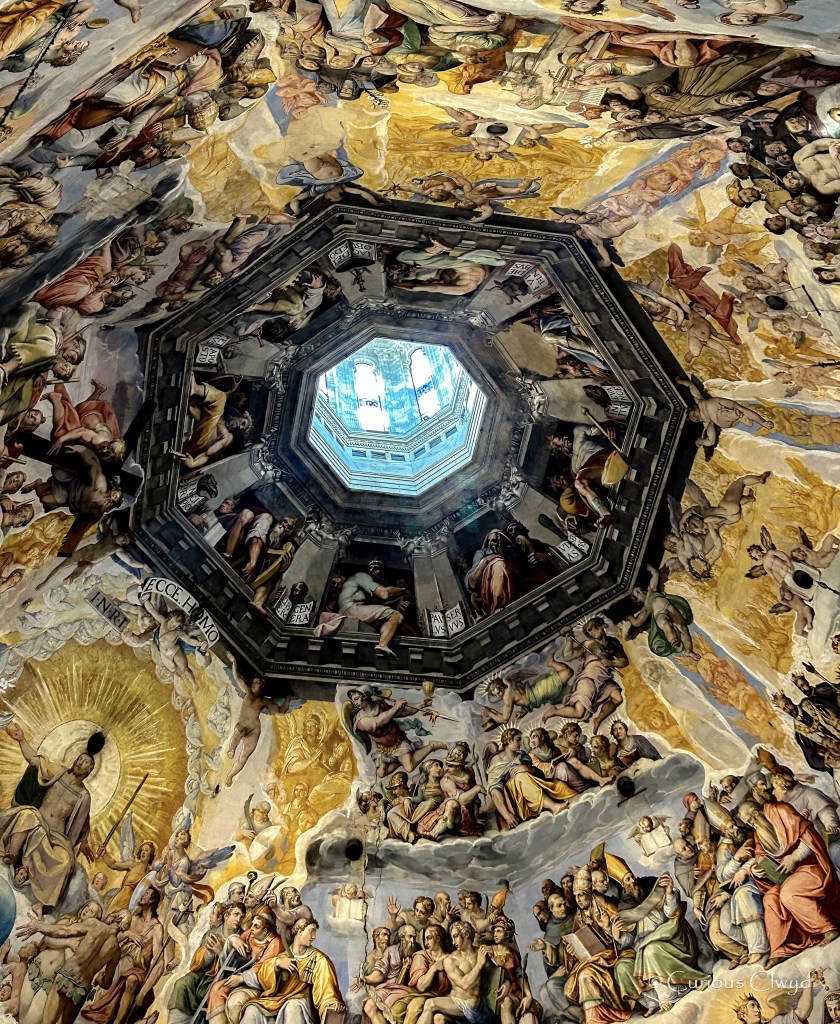
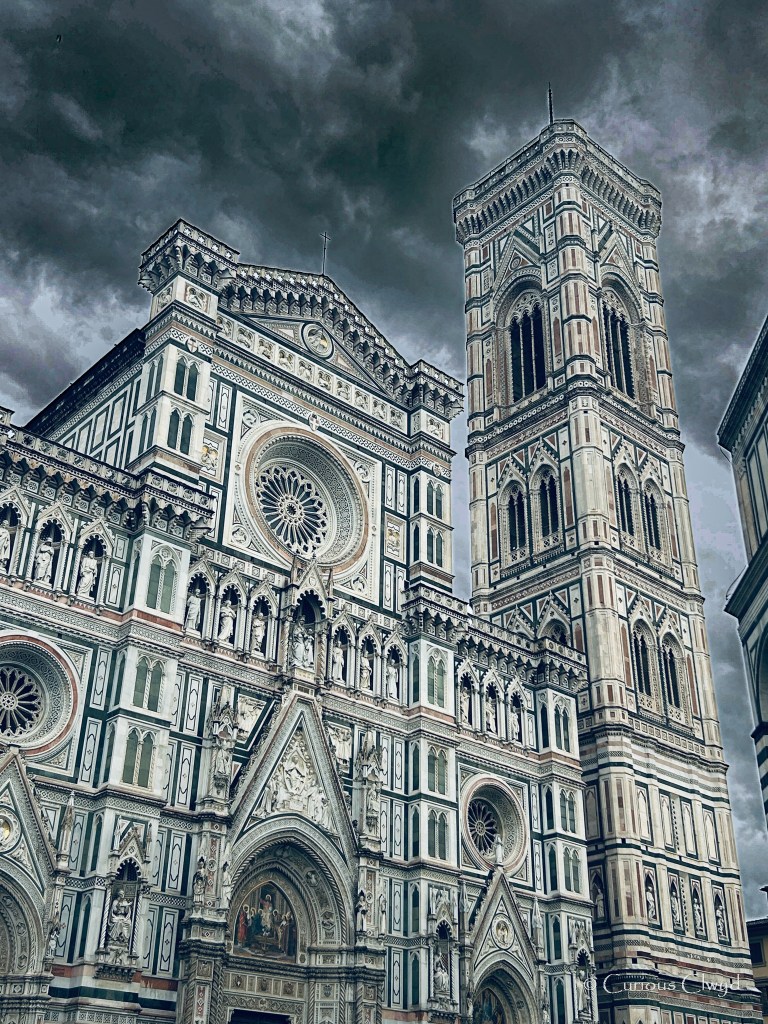
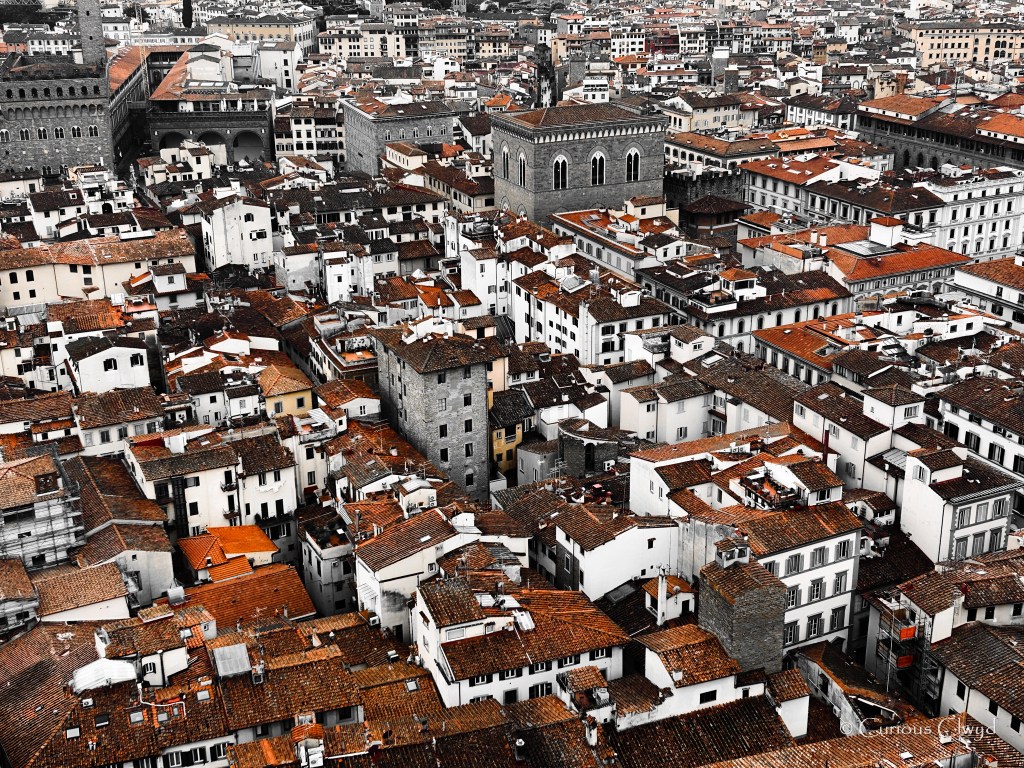
There was also the small matter of a visit to Florence/Firenze. E. M. Forster taught me to ‘read’ and Merchant, Ivory deepened what was already a love of cinema. But I had never visited Florence. The We remedied that. I was largely breathless for three days… and not just because of the 400 step climb to the dome of the Duomo and the same to the top of the Campanile – the latter in a Tuscan thunderstorm. I think that for as long as I live, I shall never forget the apocalyptic thunder in the Piazza del Duomo followed by the resounding bells of the Campanile – God spoke and Man answered…

The interior of the dome of Florence Cathedral… where do you start?

Florence Cathedral and the Campanile ~ the Tuscan thunderstorm approaches…

Florence from a height closer to the heavens than earth.


What’s next?

Oh, I don’t know, do I? I reckon I will be wandering out into Wrexham County somewhere. Still, I do have to chug up to Bagillt this month to find the lock-up, half buried somewhere up an snicket somewhere. But when the weather is as good as it has been of late, I don’t like to be inside. I needs to wander, to feel the sun on my face and an ache in my legs by the end of the day. I’ll let you know if I go anywhere fancy like…

I fancy my evenings, however, will be doing some desk top research on Connah’s Quay, Buckley and Queensferry. It’s so naughty that I haven’t done so earlier…

A Wander Around Llandrillo

March 2025

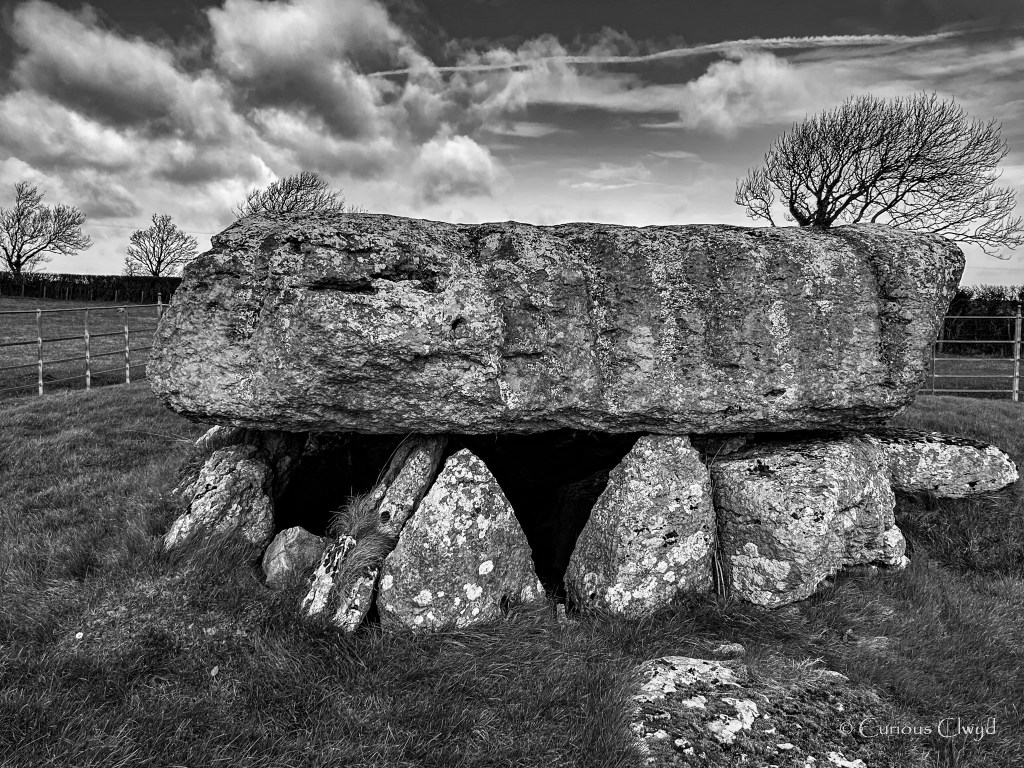
The little village of Llandrillo in the beautiful valley of Edeirnion is thrillingly, achingly ancient. I find myself returning to it often – haunting the chambered tombs and stones circles, raised in the hauntingly dim and distant past, in the valleys and on the slopes of the Berwyn Mountains. I have supposed to myself that it is the mystery of the place that brings me here – mysteries that gather in the valley, upon the heights and slopes of the mountains, and indeed in the streets of the village itself. For me, on visiting the village – that is to say, being present in the village for a length of time, the sense of the modern starts to fade, and if one is not altogether prepared for this vague bewilderment, a person can find themselves all out of kilter. If one was to simply drive through the village, perhaps on the way to an exciting elsewhere, you might find yourself glancing back at the place through the rear view mirror, perhaps with a frown. Llandrillo is really rather a place out of time – and perhaps all times.

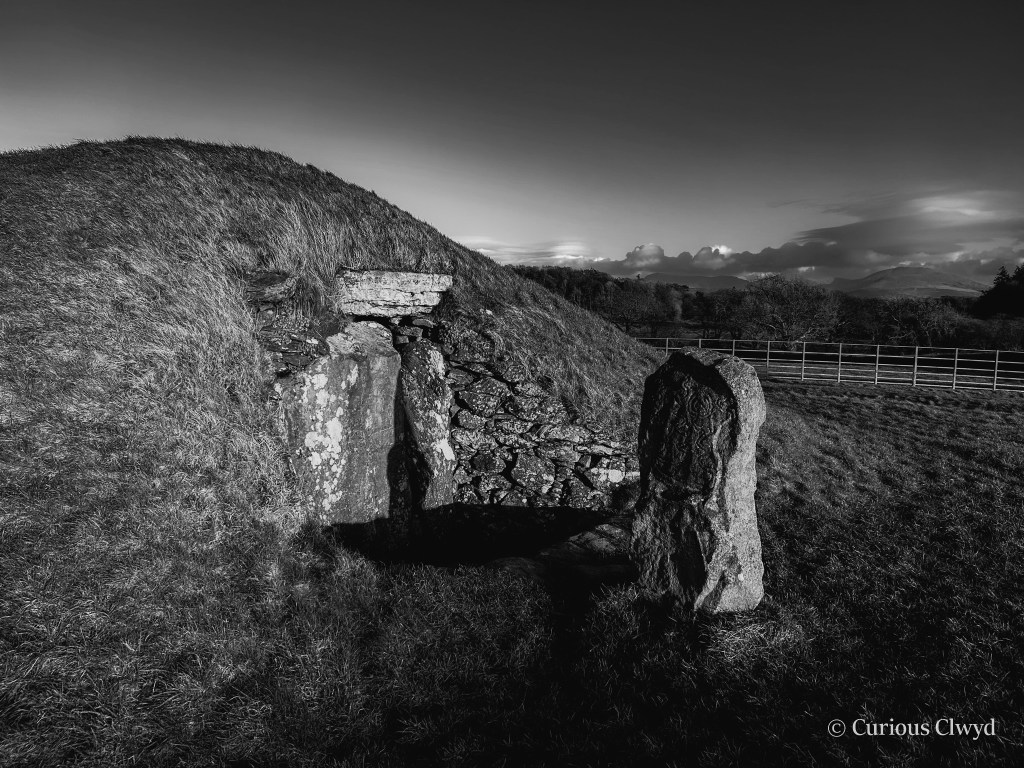
The Branas Uchaf Chambered Tomb ~ Llandrillo, Denbighshire.

They buried some, but not all of their dead here, at Branas Uchaf – who we cannot say. Were these individuals of some importance? Did they have a vital role in the communities of peoples that had settled in the valley? Were these chambered tombs the equivalent of the family vaults in churches, the chambers opened again in the many years following to add to their dark depths? Were they visited by loved ones, as we will visit the graves of our loved ones in the churchyards of this saint or that? Or were they forgotten? How long was it before people travelling through the valley on this errand or that, paused a while to look up at the weathering mound and wondered on the within – as we do today? And then there is this – where is everyone else? Where are those not deemed important enough to bury within these elaborate tombs?

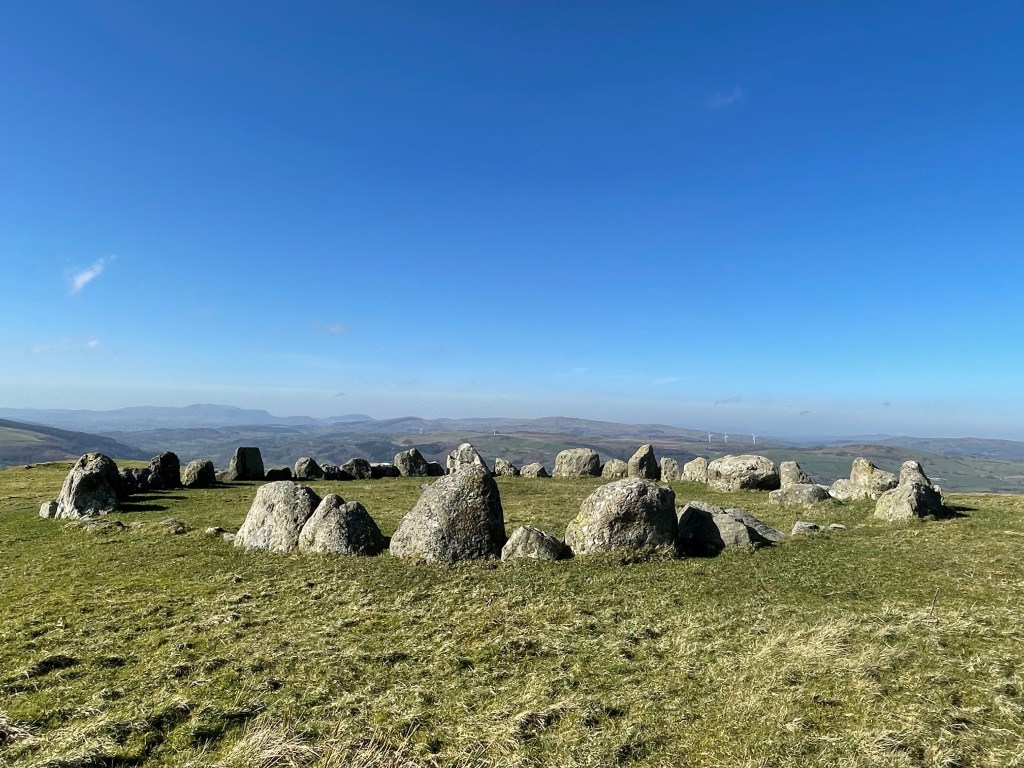
The Moel Ty Uchaf Stone Circle ~ Llandrillo, Denbighshire.

It’s an effort to get to – the Moel Ty Uchaf stone circle, certainly more so than Branas Uchaf. It’s a sort of pilgrimage, you could say, where the work of it is an essential part of the experience. But on taking the final rise, and seeing the stones for the first time, I felt the thrill in the tips of my fingers and the roots of my hair. Does everyone feel like this? Am I weird for this? This is what life should be, surely. Moments like this gather around me like bubble wrap, to counter the oomska of the world that weighs down on me. And when standing in the centre of the circle, I have the world before me, as did those that raised the circle at the point where the earth meets heaven. Our ancestors came here and felt the same, I’m sure of that. There’s a snippet of John Clare’s poetry that has stayed with me over the years, and returns to me when wandering on the breathless line of earth and sky.

So let me lie,  

The grass below; above the vaulted sky.

The Tyfos Stone Circle ~ Llandrillo, Denbighshire

I’m a little shy, in truth, so it took me a while to visit the Tyfos stone circle. While it can be seen quite clearly from the road, it’s actually on private property – the front garden of the farmhouse. No need to concern myself, however, since the farmer was a lovely fella. He seemed a little bemused at my wish to visit the stones – I imagine he’s had this conversation many times. But I like to be amongst the stones where I can, to be close to them. I’m not an Earth Magic kind of guy, mind you, though I have no beefs or squarks with those who are. I’m an Efrog still, at heart, a miner’s son who’s life still feels a little mapped by the coal blackened lay lines of my father’s skin, and a past lived in the dark of coal seams. No, I just want to be connected as far as I can be, to the peoples of the past. At Tyfos it’s no hard thing to sit within the circle and dream.

The Craig-yr-ychain hillfort and enclosure.

Llandrillo is a place out of time – I may have mentioned this before. From the Neolithic through the Bronze Age and to the Iron Age. Craig-yr-uchain is, it is thought, a hillfort and enclosure. I like a hillfort me, as you may be well aware since I don’t half go on about them. But Craig-yr-uchain is one of my little favourites. Oh, don’t get me wrong, I like the mighty fortresses of Pencloddiau and Moel Fenlli right well enough, but who doesn’t? But Craig-yr-uchain is so far away from everyone and everything, that it might have been put there solely for me and the We. I’m almost certain I could stay there all day and not see anyone else, and as much as I like a chat and that, I’m happy in my own company. As with all hillforts, its precise purpose is a bit of mystery. But that’s not really true, is it? See, we keep looking for a precise purpose, when really I don’t think there ever was a precise purpose. I believe they served all manner of functions, I fancy, of which defence was only one – an important one, no doubt, but just one. I know their purpose now, mind. Their function now is to raise me above myself, to lift me to a place where the light is brighter and the air cleaner and more rarefied.

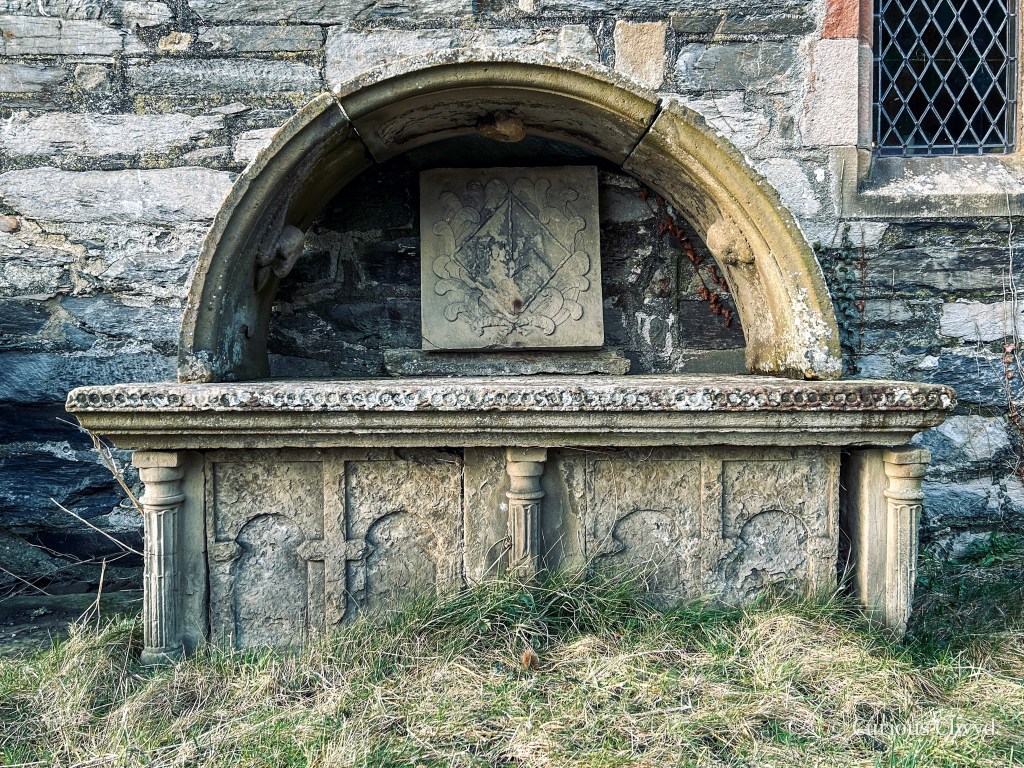
The hooded tomb of Katherine Wynne ~ St Trillo’s, Llandrillo, Denbighshire.

I live with a brain that aches with the stretch of reaching back into a past so very distant that whispers are all that may escape – and those barely heard and hard to grasp, wisps of meaning. And so sometimes I’m at risk of missing meaning in the more recent. I last visited Llandrillo in early March, and I’d tootled down to the village specifically to visit the Tyfos Stone Circle. The light was beginning to ebb at pace, and I’d popped in the local shop for a packet of mints, and left with a packet of mints and two bottles of ale. Wandering through the village on my way back to the car, I thought I’d pop into the church – a merry little bonus to what had been a successful trip. As I walked up the path towards the south door of the church, I saw a woman in the porch holding a mop. She glanced up at me, with a look which suggested,

tup thinks he’s walking mud in my church?

I chose instead on a tactful swerve to the right and a wander around the churchyard instead. I’m glad I did, since I might have missed the little wonder that is the hooded tomb of Katherine Wynne. These little gems are rare, and rarer still in good condition. The finest of these is undoubtedly the tomb of Grace Williams in the churchyard of St Mael and St Sulien’s in Cwm, but I’d forgotten that Llandrillo had its own, and so to unexpectedly come across it here, hit me like a freight train. I’m told they were a sort of compromise between the overtly ostentatious and the downright inconspicuous, and who am I to argue? But, I see something else. I don’t pretend to be a historian of any worth, and I know the truth of my failings here, since as I continue to wander and wonder, I find that I am increasingly allowing myself to give weight to how these lumps, bumps, ruins and remains make me feel – which is not proper form, for a historian. For all my Efrogesque (just get your head around that mashup of a mongrelised word) pragmatism, I do like the beauty of a hooded tomb. Yes, I must admit to that.

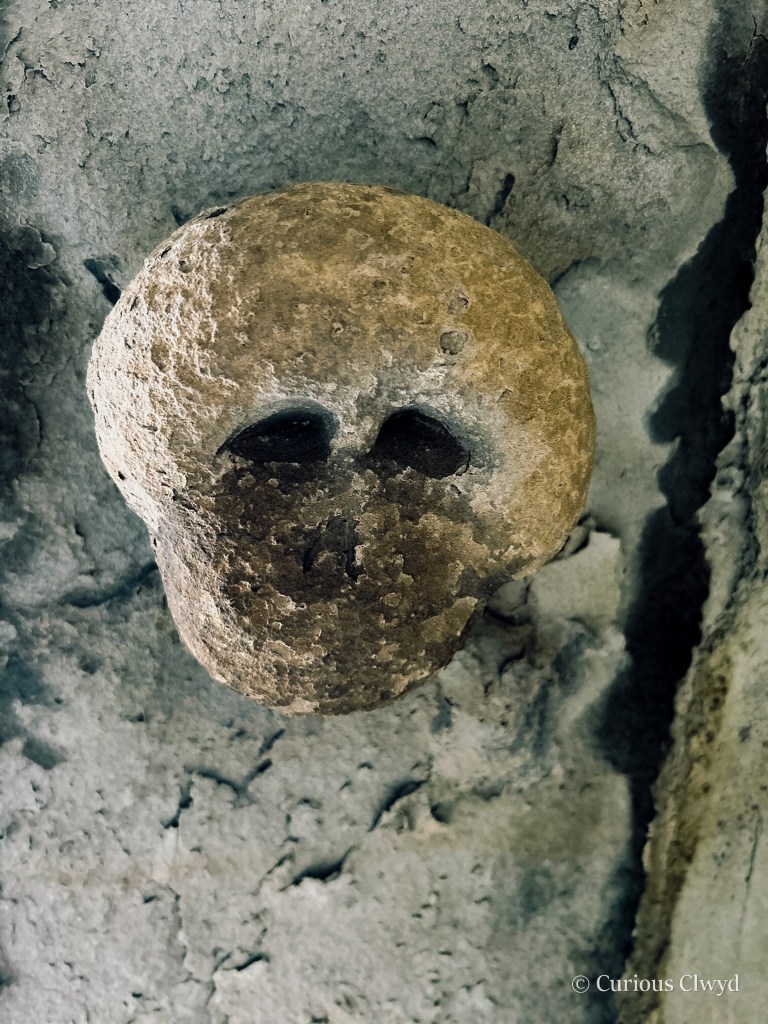
The much weathered remains of the skull and crossbones on the underside of the hood.

I shall visit Llandrillo again. Soon. I’m drawn to the Edeirnion Valley, I escape to the Edeirnion Valley. When the weight of things becomes too great, and I feel saturated with the ordinary awfulness of the world, I shall visit again and I will feel this burden scraped from my thinking. There are wonders to be visited again, and wonders to be yet found. I could spend what time I have remaining wandering along the mighty Berwyns and in the Valley itself, through the villages and blink-and-you’ll-miss-them hamlets, and it would be time best spent.


New Articles

The weather has been kind. This has been something of a surprise, since March is not to be trusted. March is the most perfidious of the months, in fact, liable to turn on one with a sudden rage. An appearance of the sun can suddenly be replaced with a return to winter – blizzards and gale force winds. Still, there have been entire days of brightness and some warmth, be praised. I caught the sun on the back of my winter whitened neck on a visit to Holt and a long walk by the Dee. It has meant that I have spent some wonderful days wandering and wondering. You will perhaps have read my mutterings above, of my most recent visit to Llandrillo, and my articles on the hooded tomb of Katherine Wynne and the Tyfos Stone Circle can be found on the Denbighshire page, but at long last I have begun work on Wrexham County. That’s not to say I shan’t return to articles on Denbighshire and Flintshire, of course, since there are glaring omissions that need to be addressed – Buckley, Connah’s Quay, Queensferry and so on. I shall get to them, I promise. But if I am to actually have a website that purports to give my readers a view of Clwyd before I die, then I must begin to write on Wrexham. And so it begins. It will take time, and patience, but it begins – with Gresford, Holt, Overton and Trevor.

The Gresford Wells

I think there’s a temptation to think that all wells must be holy, or miraculous or curative to be remembered and revered by the communities they are to be found within. Not so. While a well may be named after this saint or that saint or all saints, many are not known to be anything other than essential sources of fresh water to the peoples that relied upon them. And I would suggest that to these communities, fresh water would be considered miraculous, and certainly curative – just not by the definition that we have of those words today. But perhaps that too will change. In my article on the Gresford Wells, neither of them with a tradition, as far as I can tell, of miracles or saintly cures, I do rather go on a bit about how we should perhaps not take our water for granted. It does rather seem that the privatisation of the water companies has led to our rivers and seas becoming increasingly filthy and our bills ever increasing, all in the name of ever greater yearly dividend payments to ‘investors’, that we are expected to pour more and more taxpayers money into the insatiable maw of these rapacious companies if we are to expect clean water, and that we are, incredibly, expected to be understanding of their ‘plight’, to boot. How did we come to a place where the essential infrastructure of our Country was essentially given away to companies, many of whom have no care or connection to the communities they deem to serve, and to be so numbed and static to it all? Will we soon have to return to the same wells our ancestors relied upon to take the waters we need? An interesting thought.

All Saints Well ~ Gresford, Wrexham County

The Parsonage Well ~ Gresford, Wrexham County.

The Medieval Crosses of Gresford and Overton

There was a time when resplendent and magnificent crosses were a ubiquitous feature of the landscape. So common were they, that they became just that – common. Its curious and a little amusing that researchers and historians today struggle to find references to these medieval wonders, since it seems travellers and diarists and what have you simply took these architectural gems quite for granted. They would have been everywhere – crosses used to mark the ancient routes between this place and that, market crosses and churchyard crosses, all serving a purpose until the communities that lived about them chose other purposes for them. Wrexham, we are told had four – none of which would seem to be extant. Most were broken down or repurposed – largely in the 16th and 17th century religious vandalism otherwise known as the Reformation and the Puritan iconoclasm. But some remain – in varying states of preservation. You’ll often find them in churchyards still, an innocuous gnomon atop a stump, repurposed into a sundial. Some remain in something of their original glory – a Derwen, a Trelawnyd, a Tremeirchion. There are others where it takes just a twitch of imagination to see them as they once were – a Corwen, a Llanrhudd.

The worn and weary Overton Cross ~ Overton, Wrexham County.

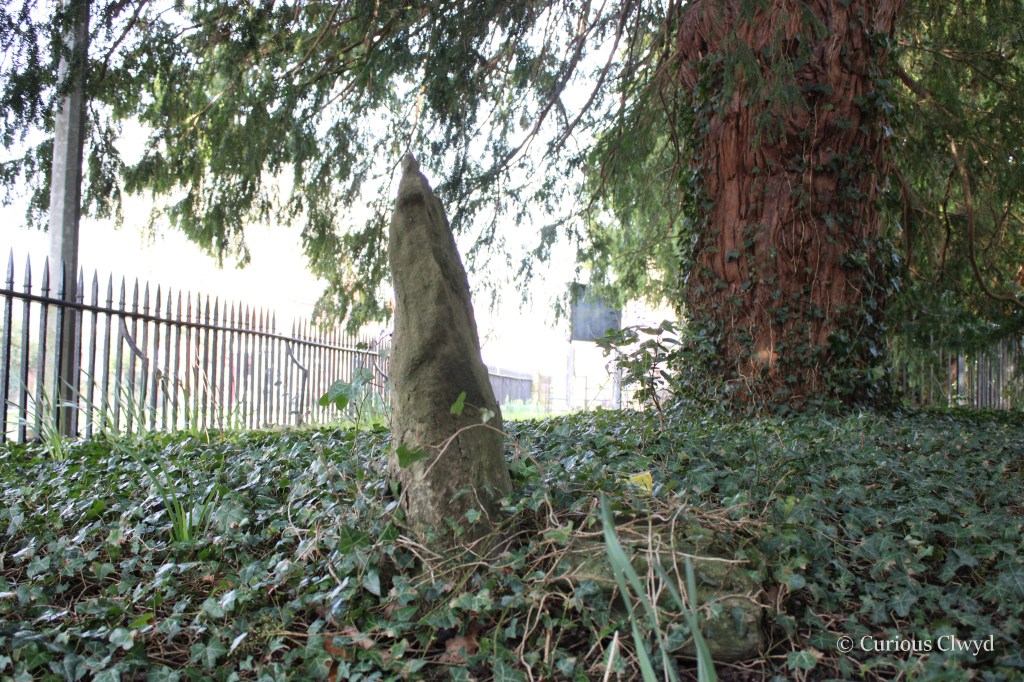
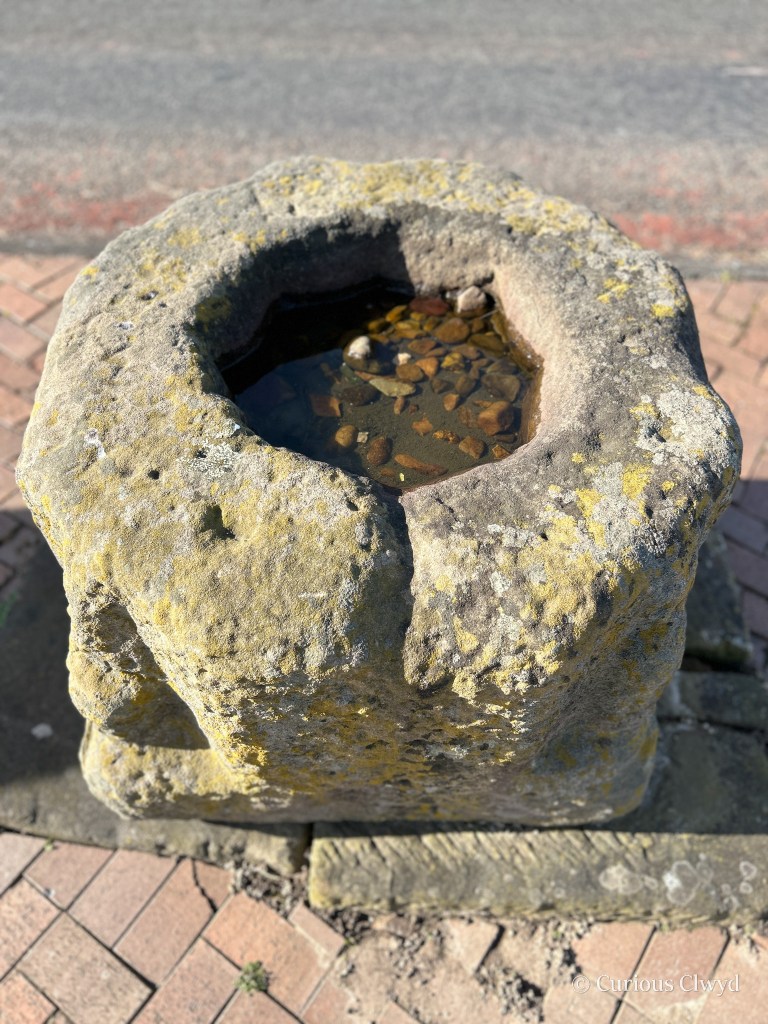
But for every Derwen, there is an Overton – a worn weary stump of a thing, to the extent that there are many that believe it to be anything other than a cross – a whipping post even. The Gresford Medieval Cross has fared better, with the plinth, base stone and some chamfering evident still. It sits at a crossroads on the Wrexham, Chester road – a blink-and-you’ll-miss-it thing. From its remains, it was originally a massive cross, a true wonder. But, how the mighty have fallen. It was probably moved back in the day, from somewhere to elsewhere. Did it originally stand within the churchyard, perhaps where the rather lovely column now stands? Was it raised on the original crossroads by All Saints’ Church? Who knows? That would be no one, it seems.

The remains of the Gresford Medieval Cross ~ Gresford, Wrexham County.

But I love them all – these medieval crosses. Whether it’s a Derwen or an Overton, I love to find them and when I do, I reflect. So, I suppose you could say, they serve their purpose still, however battered and broken they may be.

King William’s Tower ~ Trevor

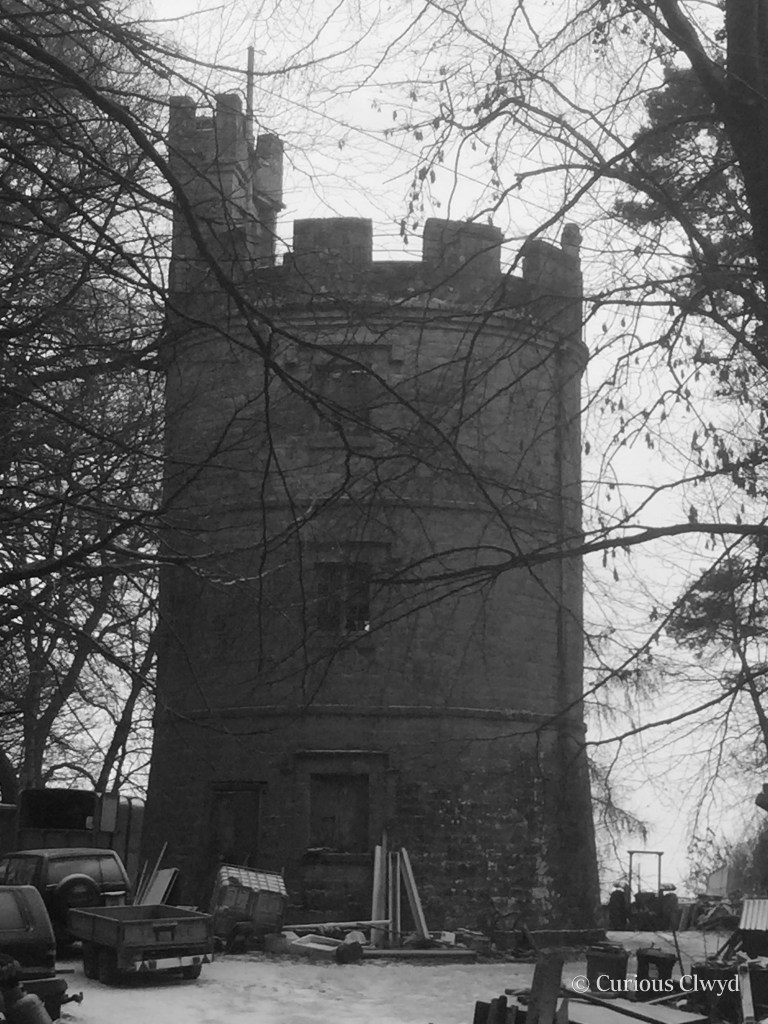
Hidden away amongst the pines above the village of Trevor is King William’s Tower. No one stumbles upon the Tower – you need to know where it is. When I say it’s hidden, I’m of a mind to think it doesn’t want to be found, unless it chooses to make itself known. Silly, I know, but I’m at least 30% nonsense and wild blueberry muffin at the best of times. It is often described as a folly, but unless that describes the swivel-eyed, chest beating anti-Catholic sentiments of George Whalley, for whom it was built in 1827, then it isn’t really accurate. It was built as a hunting lodge, or perhaps a summer house for the Peterborough MP who happened to own Plas Madoc estate, long before it became a housing estate. There are, as you would expect, tales that cling to the place like lichen, but it is known that it was used for meetings of the Orange Order out of Liverpool. There is a 1862 record of a drunken march of Liverpool Orangemen leaving Ruabon to wander around the countryside, with banners and placards.

King William’s Tower, hidden away amongst the pines ~ Trevor, Wrexham County.

It’s still there, amongst the trees, if you know where to look.


Revised Articles

Just the one this month, reflecting my attempt to begin to focus on Wrexham County… and my terrible procrastination in working on the caves of Clwyd, Llandegla et al. I have begun to swap over the fonts of existing pages – I’m not sure whether I just fell out with Linotype Didot, or whether I just needed a change. Ho hum. Anyways, welcome to Clwyd, EB Garamond.

Also, if you have visited the website recently, you may have noticed that I have begun adding site maps to various pages – including the Home page and Collections. Hopefully these will help visitors find what they are interested in without having to trawl through pages and pages of material. Let me know what you think.

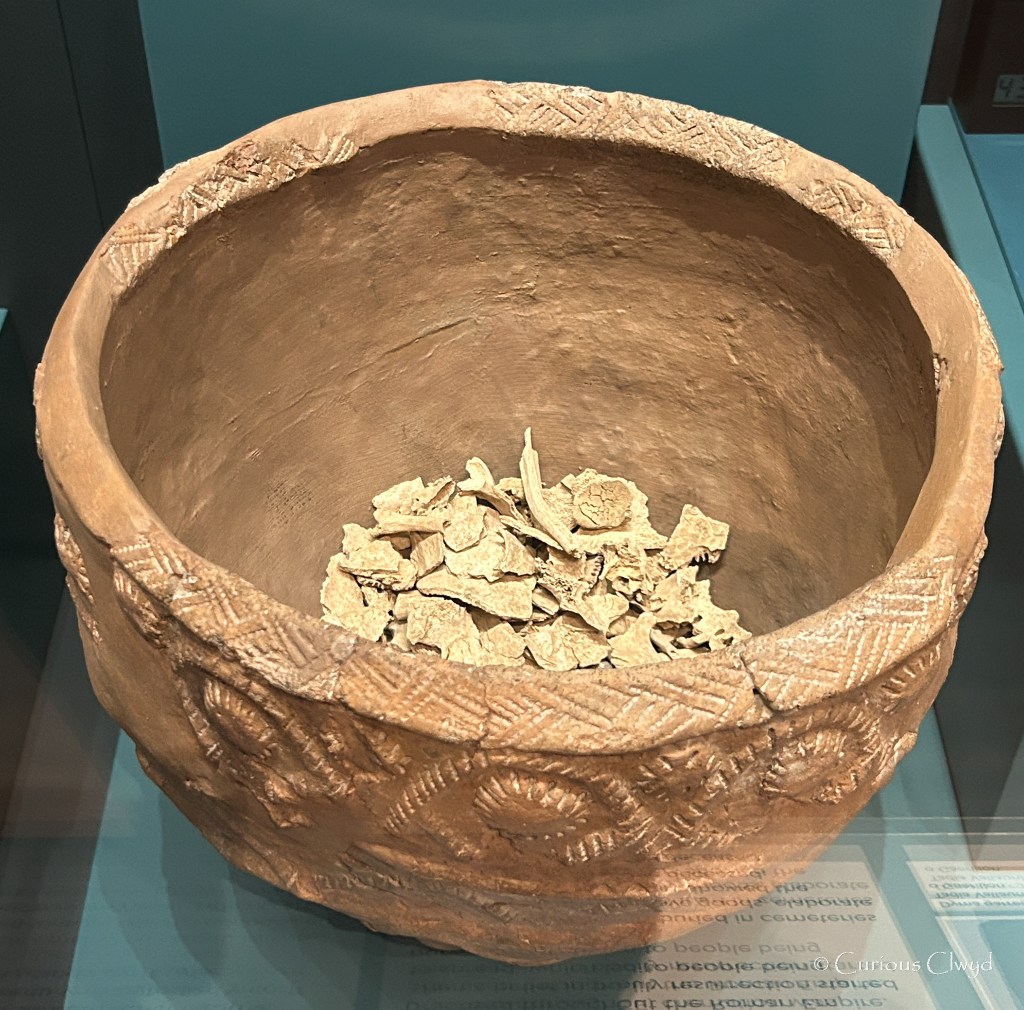
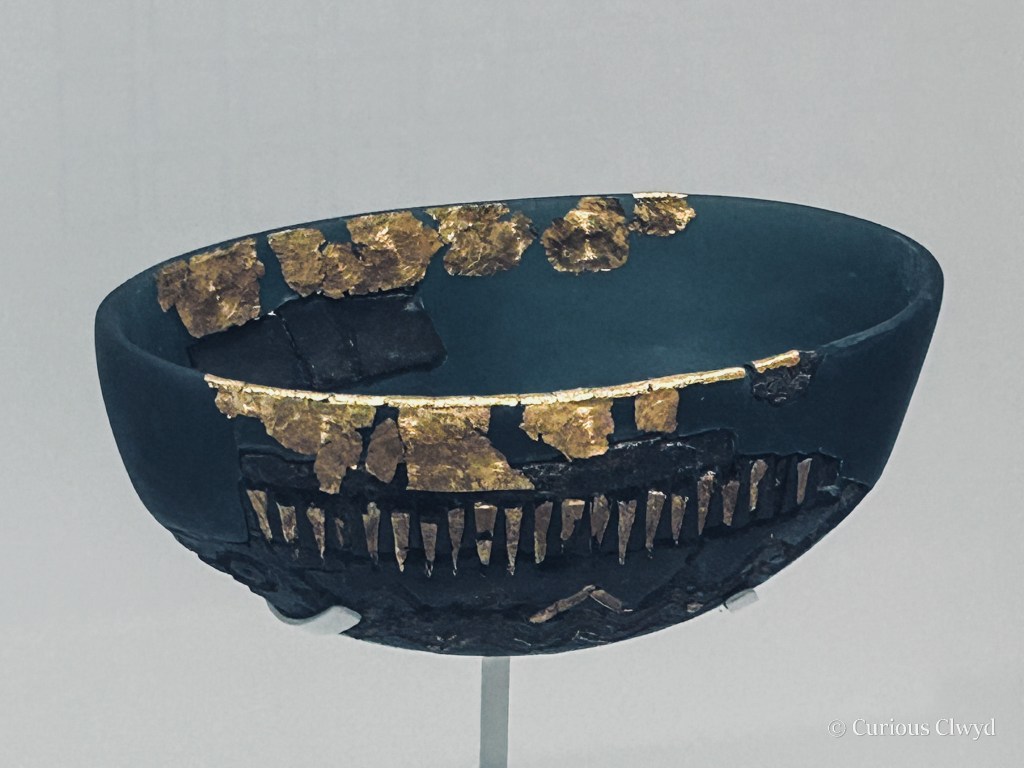
The Caergwrle Bowl

I’d been down to watch the Wales-England game in Cardiff on March 15th – meeting up with my best of friends. Two Welsh, two English – half of us thoroughly enjoyed the game. Making my way home of the Sunday, I thought I’d pop into St Fagan’s and have a wander. The Caergwrle Bowl is there you see, amongst other wonders from North Wales. Despite writing an article on the Bronze Age artistic representation of a boat, I’d never taken photos of it. Well, I remedied that. Every time I see it, I am amazed as to how small it is, how fragile – and how very beautiful.


Site Visits

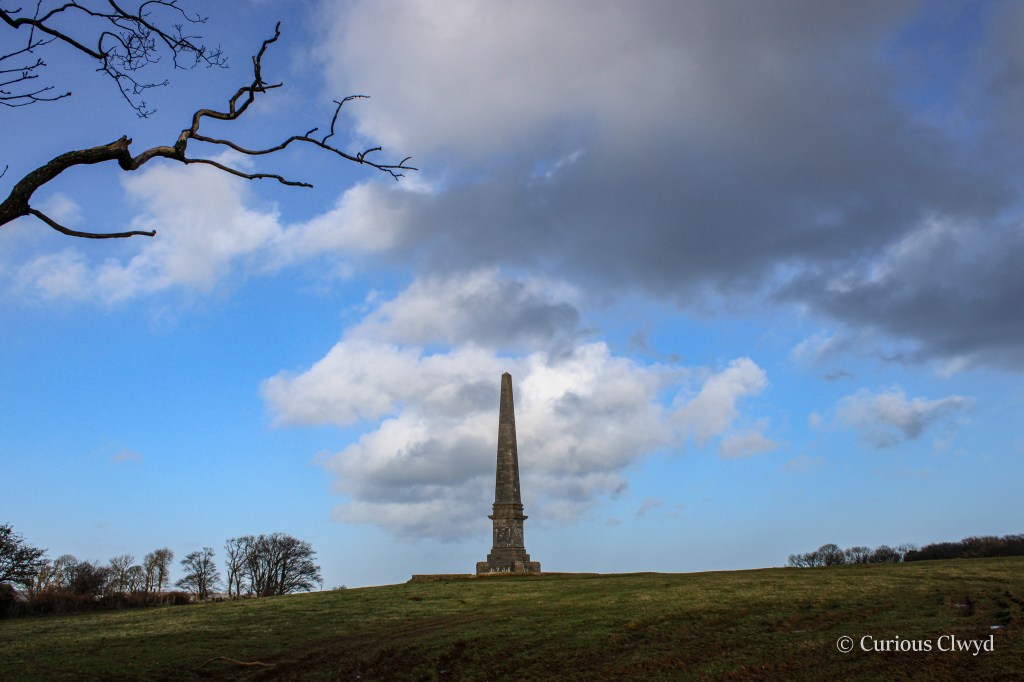
The We and I spent a few days in Anglesey recently. I wanted to visit the Bulkeley Memorial near Beaumaris, since there’s a connection with the hooded tomb of Katherine Wynne. We decided to make it a short holiday of it. If you’d like to know how patient the We can be, imagine a 54 year old, eyes wide open Efrog, leaning out of your car window, gesticulating at some random lump and bump in the landscape, every few yards or so while you’re trying to drive. That’s the We on Anglesey. In a whirlwind circumnavigation of the Island I saw as much as I could, and little of what I should. Still, it were memorable and I shall return.

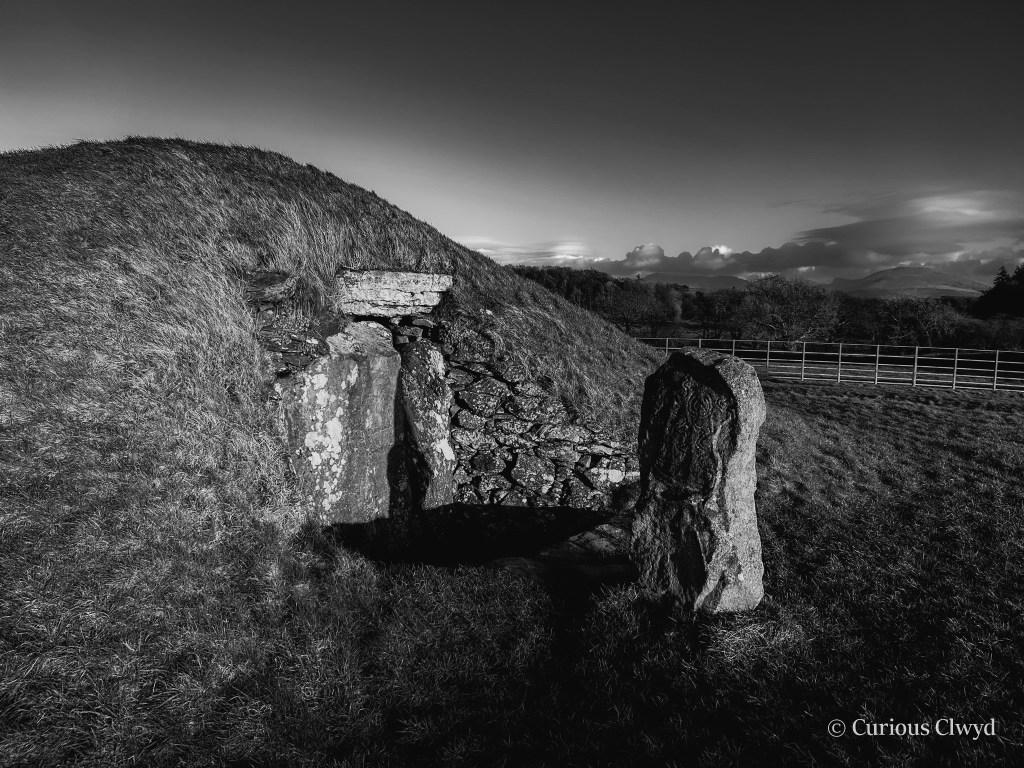
Bryn Celli Ddu ~ Anglesey.

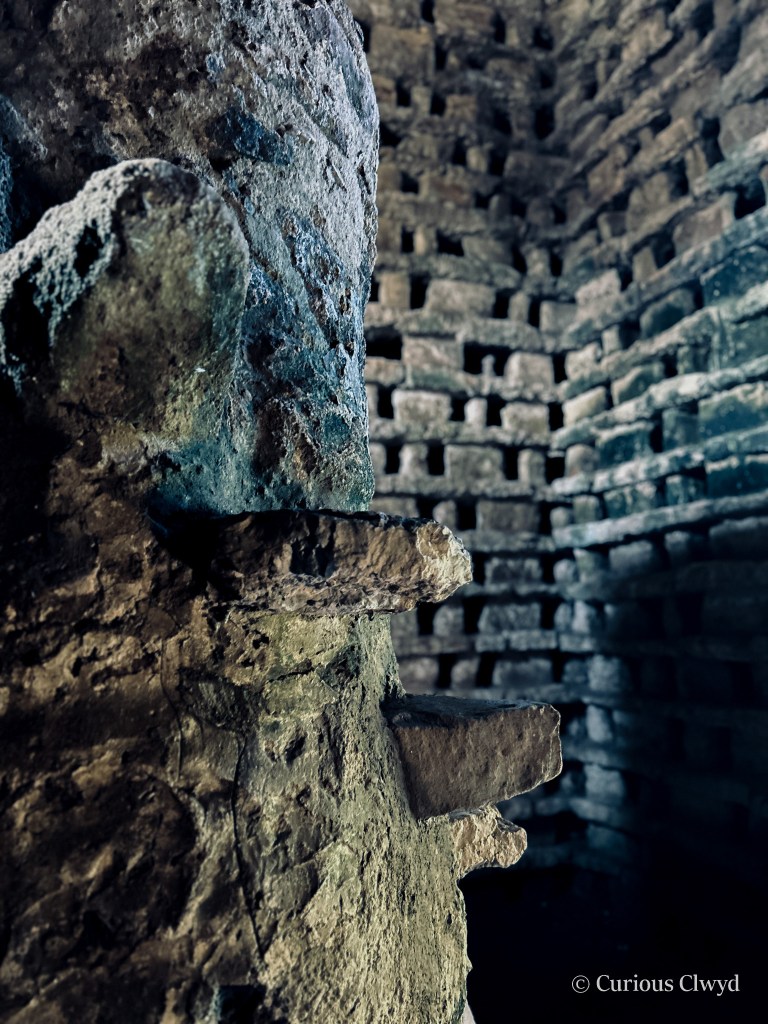
The inside of the 15th century dovecote at Penmon Priory ~ Anglesey.

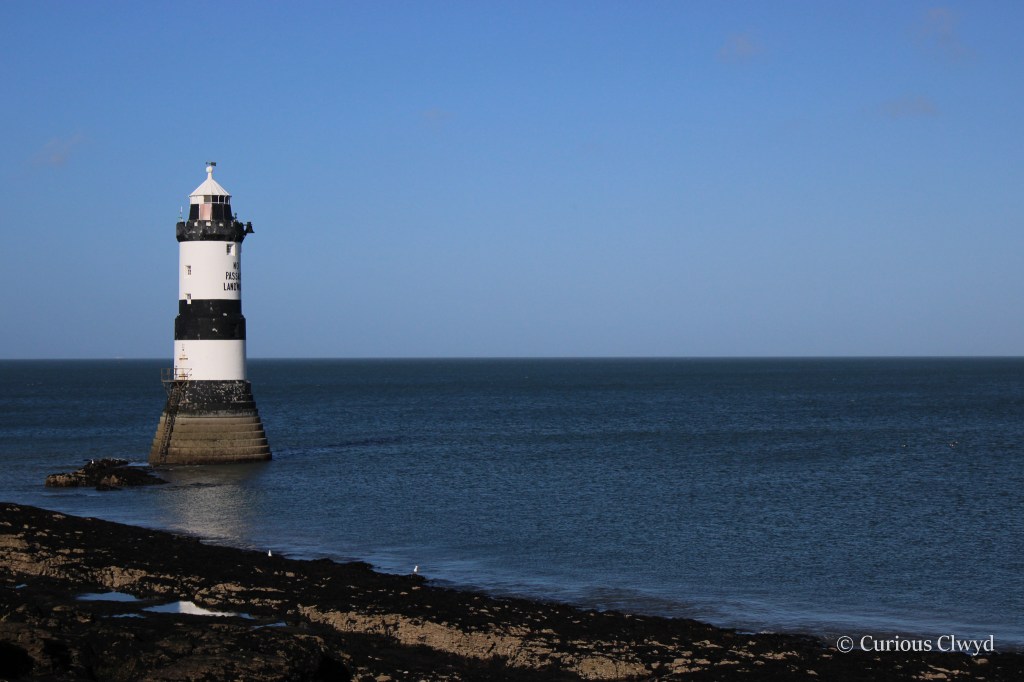
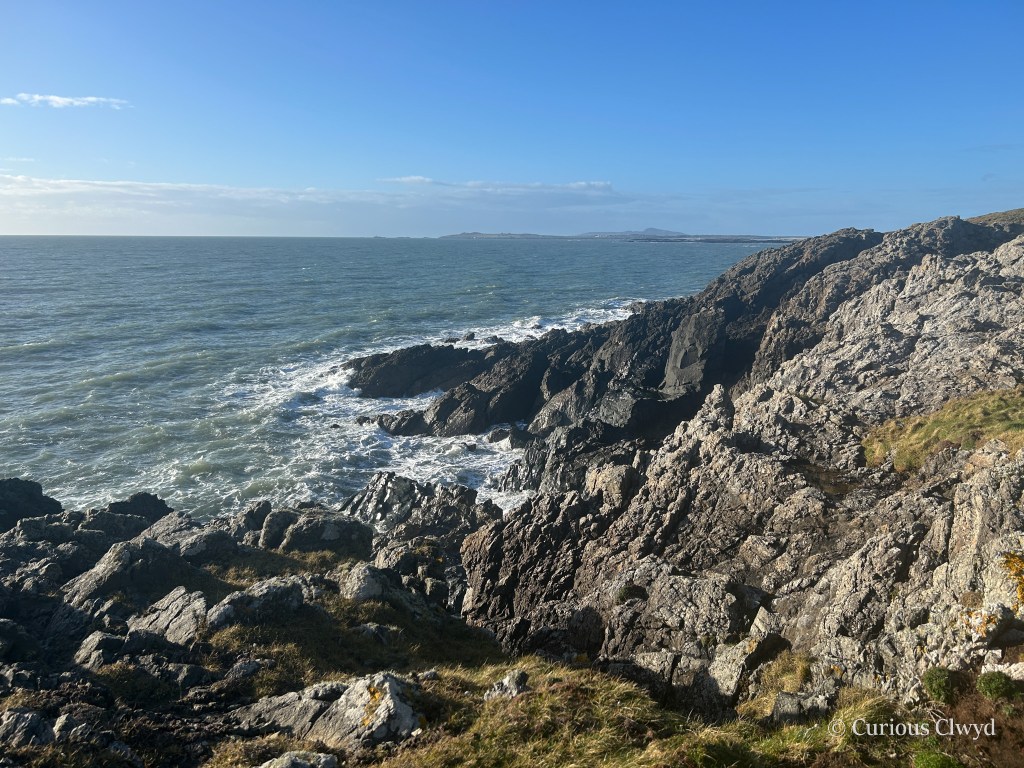
Trwyn Du ~ Anglesey.

The Bulkeley Memorial ~ Anglesey.

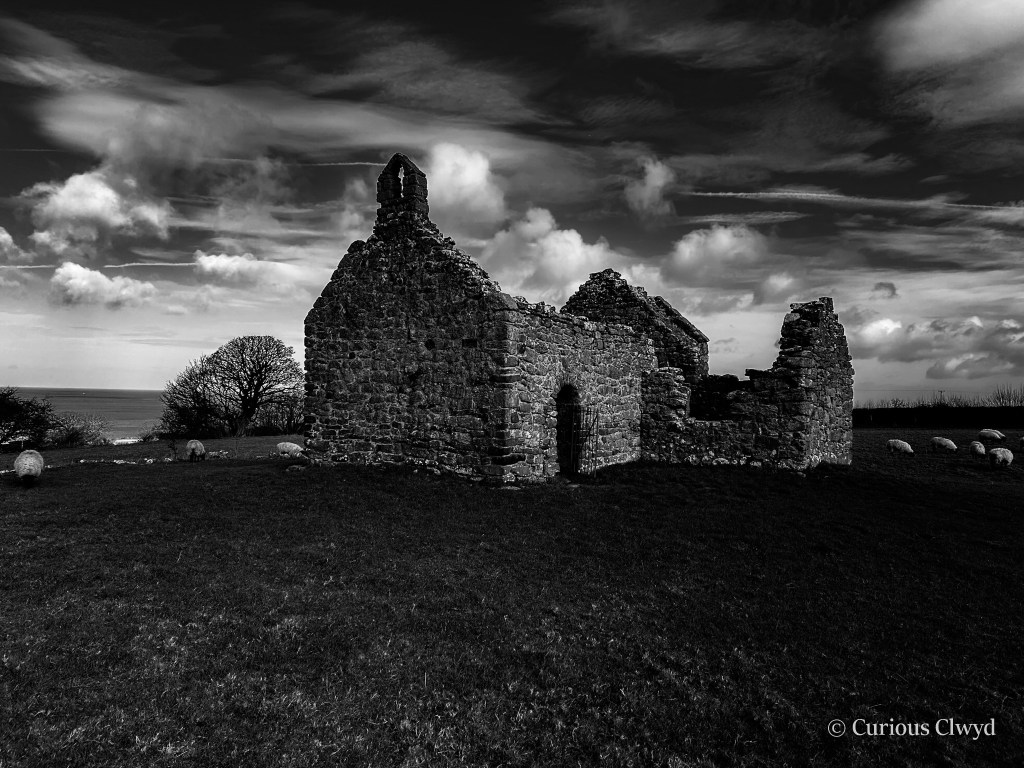
Capel Lligwy ~ Anglesey.

The coast at Barclodiadd y Gawres ~ Anglesey.

I think I mentioned that I visited St Fagan’s. They have lots and lots of Clwyd there – including the Caergwrle Bowl. I think most simply wander through the entrance and into the grounds, and quite right too, since the Denbigh Cockpit in all its splendour is there. But there’s plenty to see in the exhibitions.

The skull from a Bronze Age Burial ~ St Fagan’s, Cardiff.

Closer to home, I have managed to spend a couple of days bothering Holt – mithering the Castle, the Bridge, the Roman Potteries and even the rather lovely Medieval Fishponds. And yes, I did manage to shoehorn in a full English and several coffees at the delightful Cleopatra’s in the Square. The Bridge is going to get it first – absolutely fascinating.

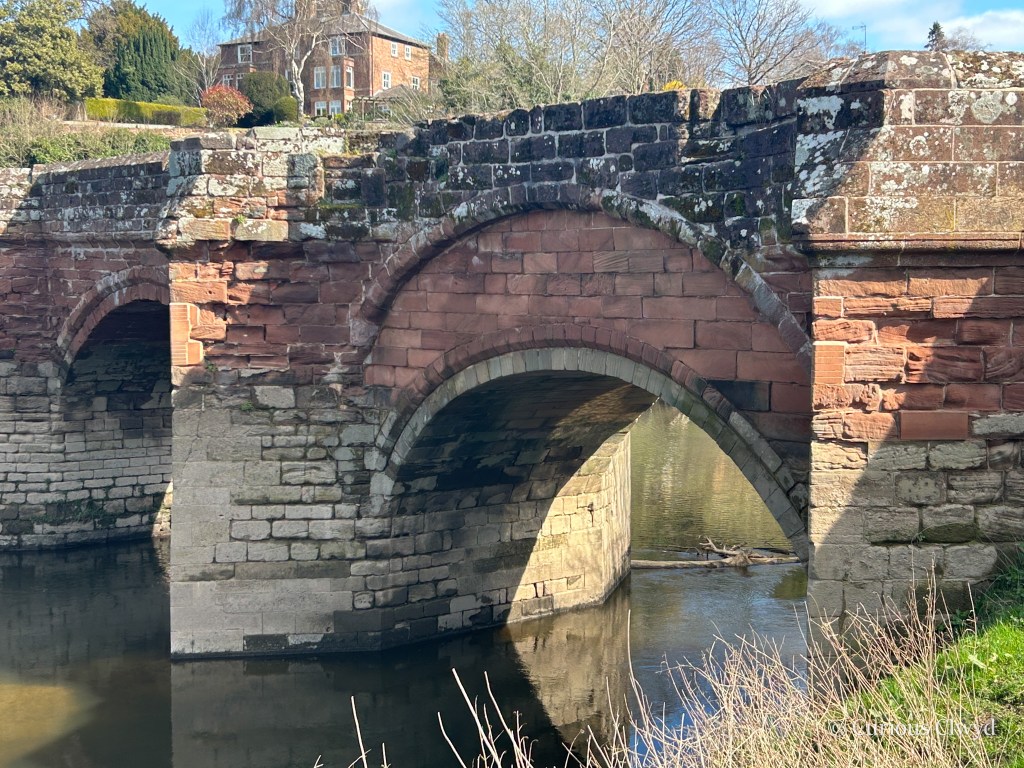
The Holt, Farndon Bridge, showing the reinforced arch for the tower demolished at the end of the 18th century ~ Holt, Wrexham County.


What next?

I would imagine I shall wander my way around Wrexham County, looking for the weird and the wonderful. For the sake of convenience, I shall be focusing on the wells, the crosses, the castles and bridges of the county, and of course, that means the the Pontcysyllte Aqueduct and the Cysyllte Bridge over the River Dee, just below Telford’s technological and architectural wonder. I’ve a mind to visit Ruabon. I lived there for a few years and what I don’t know about the place terrifies me. I shall start with the hillfort and the enigmatic lock-up, a rarity in Clwyd – look out for those in April.

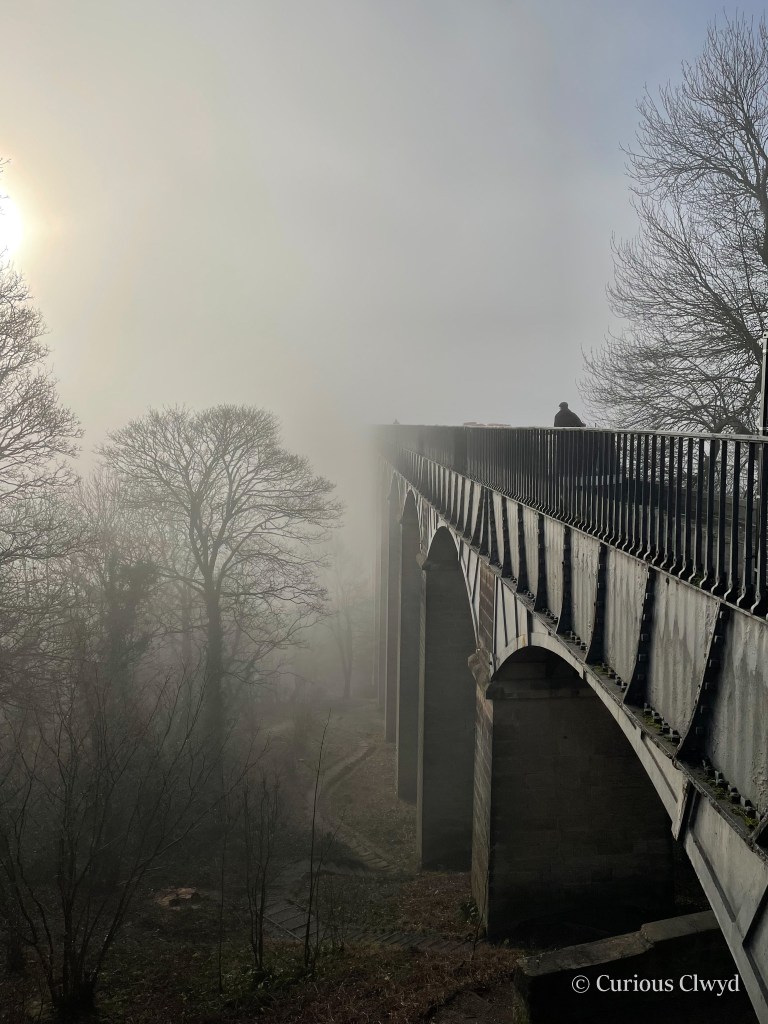
The Pontcysyllte Aqueduct ~ Trevor, Wrexham County

You may also be aware that I have had a couple of little articles published on the Bylines Cymru website, which is very exciting. What a wonderful and supportive community, Bylines is – an absolute delight and privilege to be part of this powerful journal, and a thoroughly fabulous read. I hope to have several more articles published in the future – I’ll keep you in the know. But do have a look and a read – you’ll not regret it.


If you would like to support Curious Clwyd, there’s no need to do it for nowt. Some of the photos I take I’ve deemed worthy (you may have a different opinion) to sell – as prints and stuff. Nothing there is going to break the bank. Pop along to my Picfair site and have a perusal. The support is appreciated.

Curious Clwyd Picfair

Is there something we have forgotten? Some precious thing we have lost, wandering in strange lands?

Arna Bontemps

Website Updates ~ January 2025

Revised Articles ~ January 2025

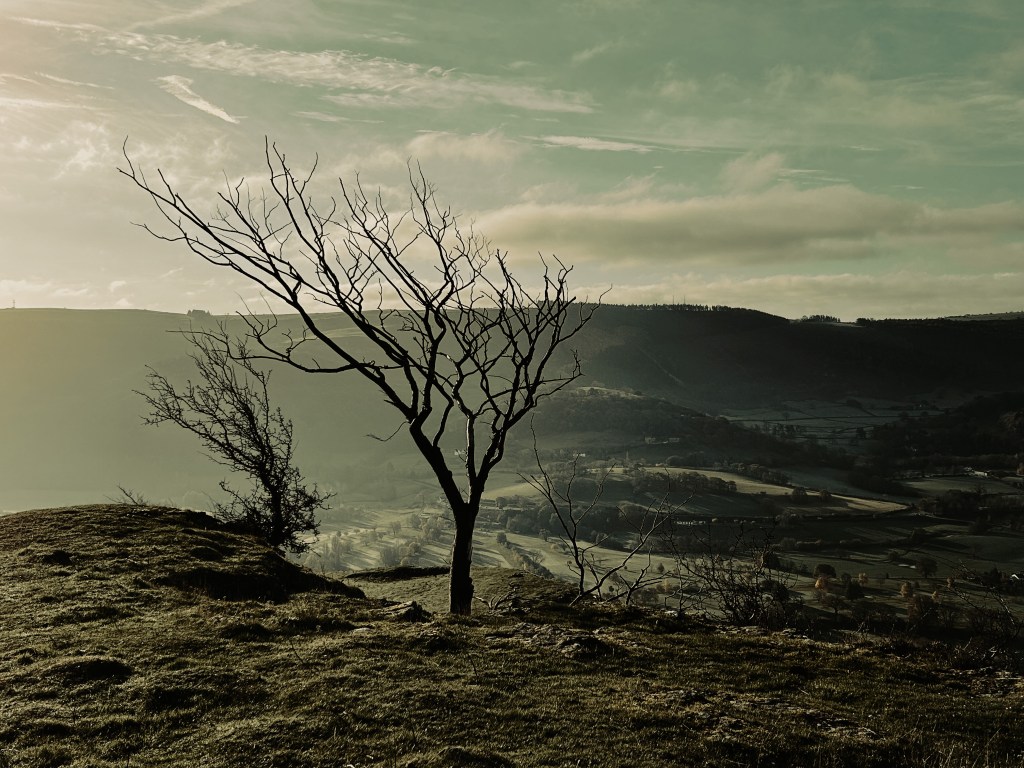
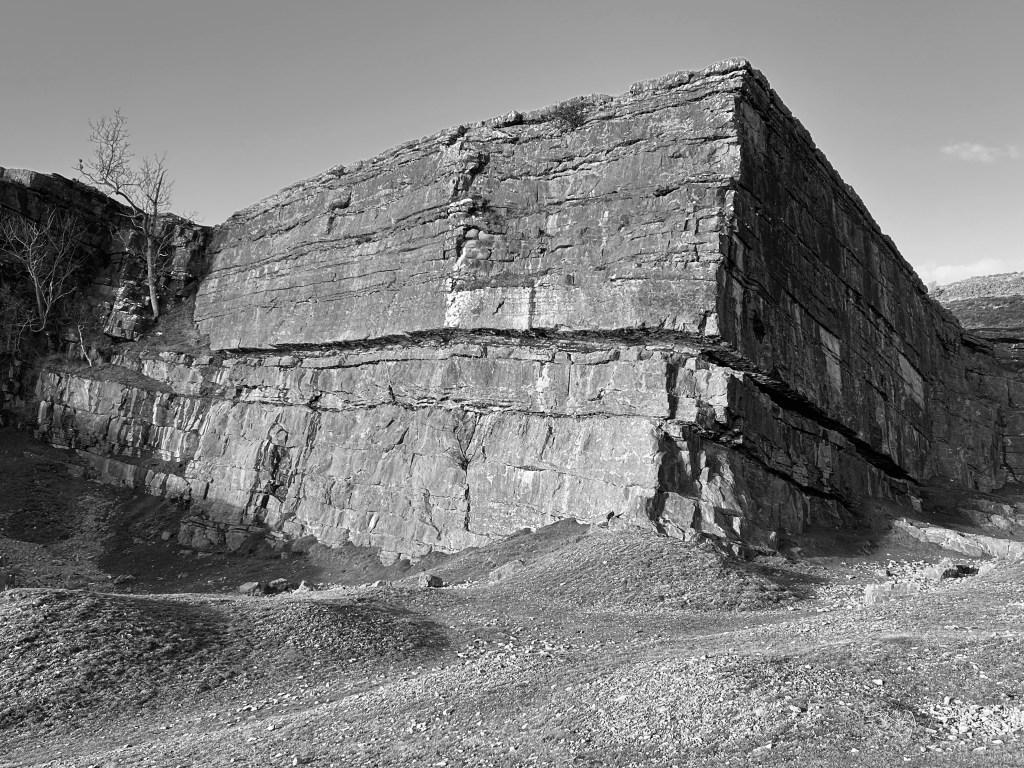
Out and about. Honestly, I’ve spent much of Christmas and New Year walking and wandering and wondering, rather than writing. The weather was cold and bright and sharp, so I took full advantage, spending many hours on the Panorama overlooking the Vale of Llangollen, measuring time by the numbness of my fingers and toes. I can’t see myself ever leaving the Vale – I can’t see it ever being possible. Sat atop the climbing rock, I watched the light change – I felt part of the land, at once smaller and greater than the mere sum of my parts. You’ll be perhaps, bored of me mithering on about the nature of connection, but I feel rooted here, and better for it. I wonder if others see what I see, and I’m certain that they do. You spend enough time up here, and you start to see the same people. A silent nod, a smile, a brief, tentative wave – you know they’re feeling what you’re feeling.

The Panorama ~ November 2024

And when I take photographs, I’m trying to capture the essence of a feeling – an emulsion of emotions. A camera captures light – thats all it really does. But the struggle is to wrestle it into capturing my συγκίνηση – how I was feeling when I looked through the lens. That’s my hope when I take photographs from the Panorama, that’s my ambition. I’m not saying I’m any good at it – but I’m trying.

The Climbing Rock ~ tapping into my would-be Ansel Adams

But that’s not to say I haven’t written at all – of course I have. Given that I’ve been bothering the Panorama on a regular basis, I’ve inevitably found my way into Llangollen – which is no mither at all. Coffee and books – the former from the Oggie Shop, the latter at Courtyard Books. And on standing on the Llangollen Bridge, shoulder to shoulder with tourists, tik tokkers and photographers, I thought it high time I looked at adding more information about this Wonder of Wales. I had a high spirited, swivel eyed moment where I considered clambering down onto the rocks amongst the flow to see if I could get some cracking photos – but then I remembered that I’m 54 and the winter rains and the snow melt had made that effort a likely news story. I shall have to wait until the Spring for that, and even then I shall have to be wary.

Llangollen Bridge

It’s a Wonder of Wales, you know (have I mentioned that?), one of the Tri Thlws Cymru and indeed, the Five Beauties of Wales. High praise indeed, and a little biased to the North, you might think, and you’d be right, of course. Can you see me shrug from there? Hiding a little smirk?

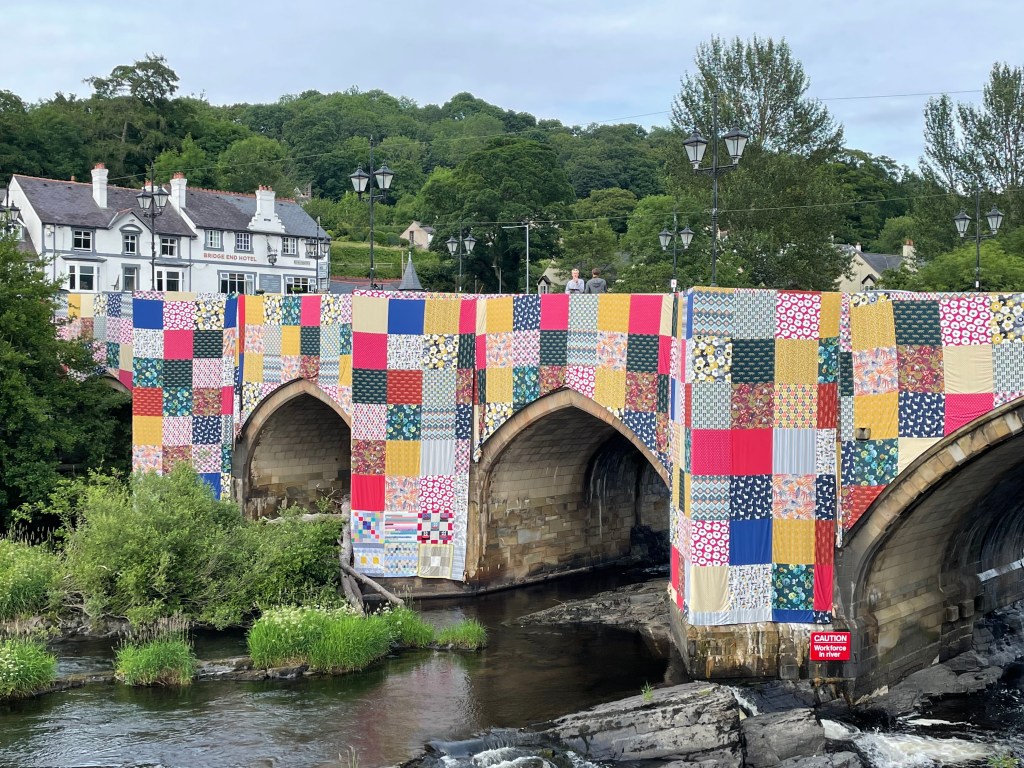
Luke Jerram’s fabric covered Bridge ~ July 2021, at the height of the Covid epidemic.

Its fame derives from its antiquity. It’s likely that there has been a bridge across the Dee at this very spot since the town’s foundation in the 6th century. Given that the River is, in fact, fordable in clement weather, I think we’re on sound ground to say that people have been crossing the waters of the sacred Dee here since Prehistoric times, fashioning bridges from wood and clapper stones. It’s thought that the first stone bridge across the Dee was built here, possibly in the 13th century – a note in the Patent Rolls of 1284 speaks of pontage here. But the bridge that you see today, much banged- about-with, dates no earlier than 16th century – which still predates any other bridge over the Dee that we have evidence of.

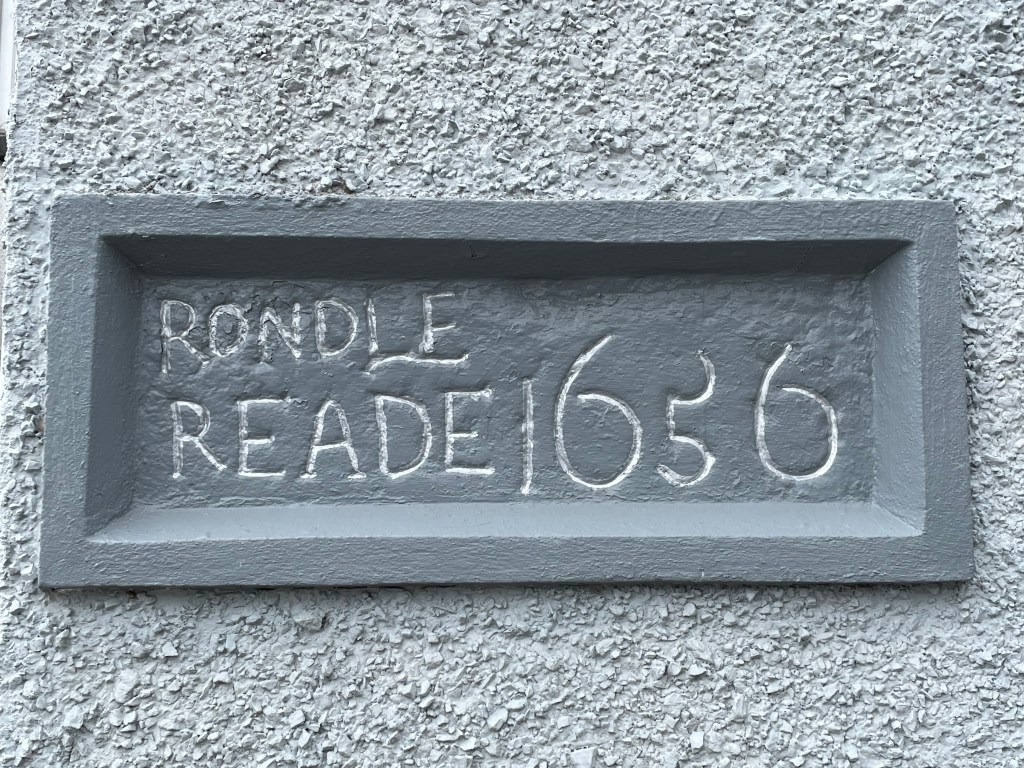
The Rondle Reade Stone ~ moved to Hall Street from the Bridge in the later 19th century.

We have records of the Bridge being restored, rebuilt, refurbished, extended, widened and built upon throughout the last several hundred years, and even have the name of the fella that would seem to have been in charge of the work in 1656. He left a plaque to himself built into the bridge, subsequently moved to Hall Street after the works of the later 19th century.

Anyways, have a read of the article and let me know what you think. I should mention, that I am always eager to know of any stories, however strange and curious, about the places I visit. If you have any pictures of the Bridge that you would like published on the Website, feel free to send them over to me, and I’ll post them – fully credited of course (unless they’re better than mine, in which case I’ll take the plaudits).*

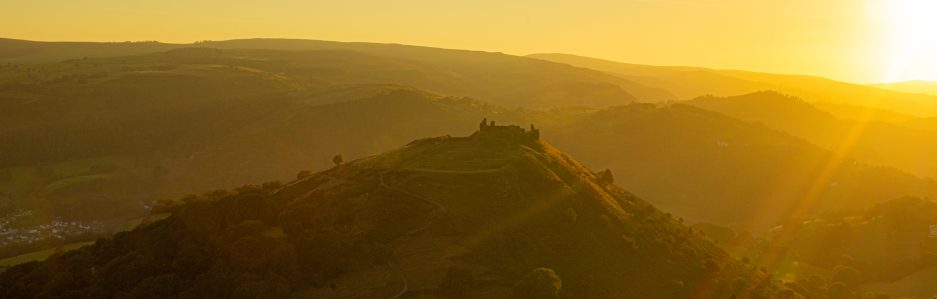
Caergwrle Castle

Caergwrle is quite the most curious of places. I’ve not long since posted a brief Facebook article on the Castle, and as I was writing it, I remembered that I used to call it Caerquirky. I think it’s fair to say that I loved the place from the off – when I first moved to North Wales some 30 years ago, now. My father-in-law was a bobby here and he has some stories – he’s the one who first mentioned the little ditty which most of those who are famliar with the area will know.

Live in Hope, Die in Caergwrle.

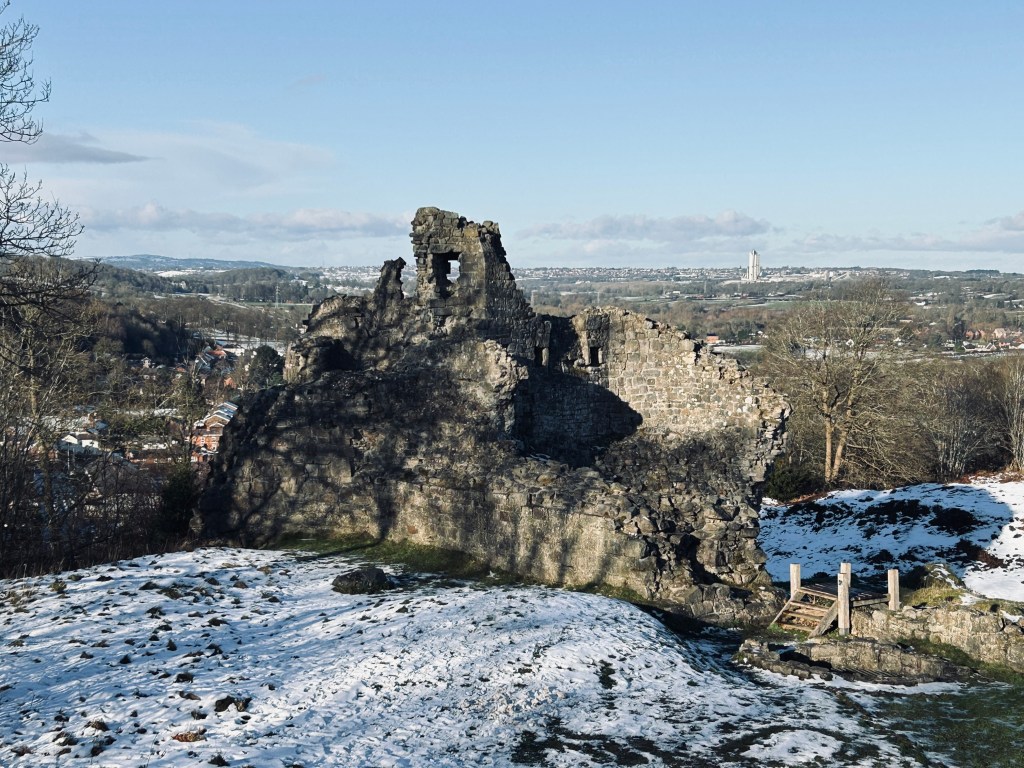
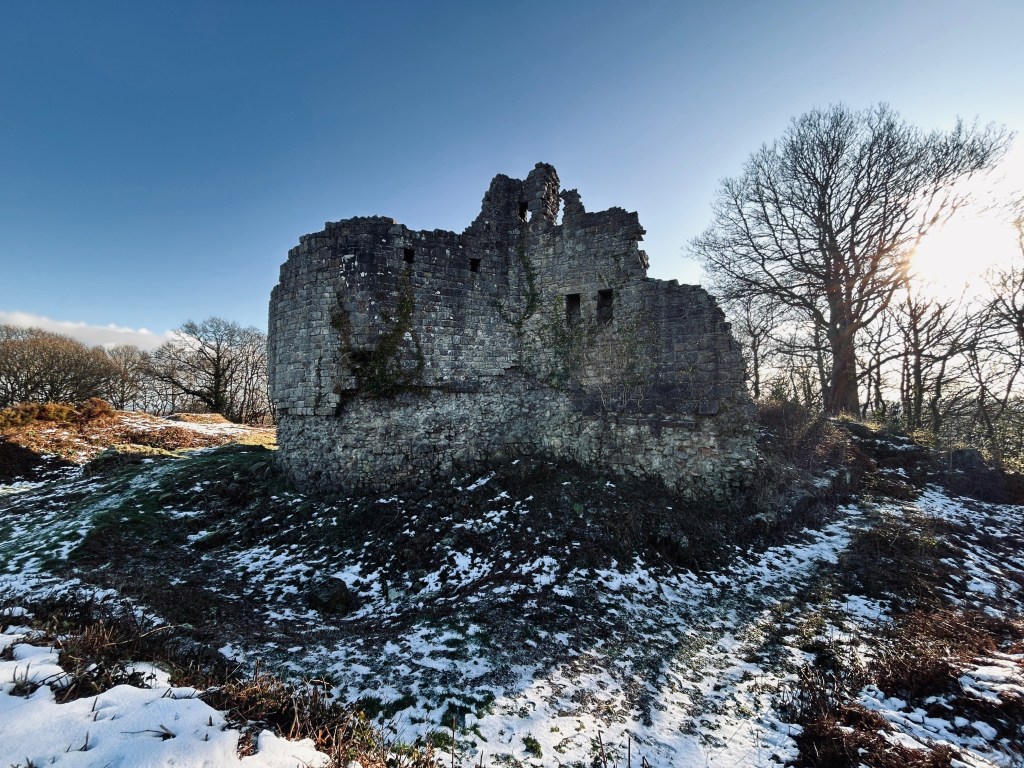
Caergwrle Castle, North Tower ~ January 2025

One of the very many curious aspects of Caergwrle is its origins. Because in fact, it seems it began life as a Mercian, Saxon settlement by the name of Corley ~ the Meadow of the Crane. As is the way of things here in the border areas, it became Cymricised (a bit like myself in fact) into Caergwrle, which then collected about itself a sheath of myth and legend, that of a giant that lived on the hill, by the name of Gwrle and who was subsequently buried at nearby Cefn-y-bedd within a cairn now known as, Arfedogaed y Wrach ~ the Apronful of the Hag.

The castle you see atop the hill was not, in fact the first structure to have been built there. It’s likely that the English workies that arrived here in 1278 to build Dafydd ap Gruffudd’s castle, were confronted with the remains of an early medieval business – perhaps the original settlement, perhaps a fortified structure of sorts. It’s impossible to tell. You can still see the remains of the embankments surrounding the 13th century stone massive. What was its relationship to nearby Wat’s Dyke? Questions, questions – but as yet, no answers.

The ruined north tower, viewed from the later barbican ~ January 2025

As I researched the castle, it really became a story of two brothers – Llywelyn and Dafydd ap Gruffudd, the last two Princes of Gwynedd. The complicated relationship between them, and on the side, the dynamics of the English, Welsh tensions of the time was fascinating. The problem with research is that you can often become dragged away down one line of theory, without noticing you’re actually being pulled away from something far deeper and meaningful. By focusing on the castle, I think I’ve been pulled away from the real story – that of the brothers. In revising the history of the castle, I think I owe it to them to do better. So, while I’ve added a little to my article on Caergwrle Castle, I think you’ll find that it won’t be long before I’m writing far more about Llywelyn and Dafydd.

What next..?

I’m approaching the time when the level of my procrastination is so terribly heavy, that I will simply have to get on and do the work – that of starting to focus on Wrexham. I’ve worked on Flintshire for several years now, and there is work still to be done. I have written absolutely nothing on Buckley, Connah’s Quay, Queensferry and I can only apologise to those of you who live there and have been wondering what on earth I have against you all. The answer is nothing – it’s just I don’t seem to have got around to it. I don’t now why – I shall do better.

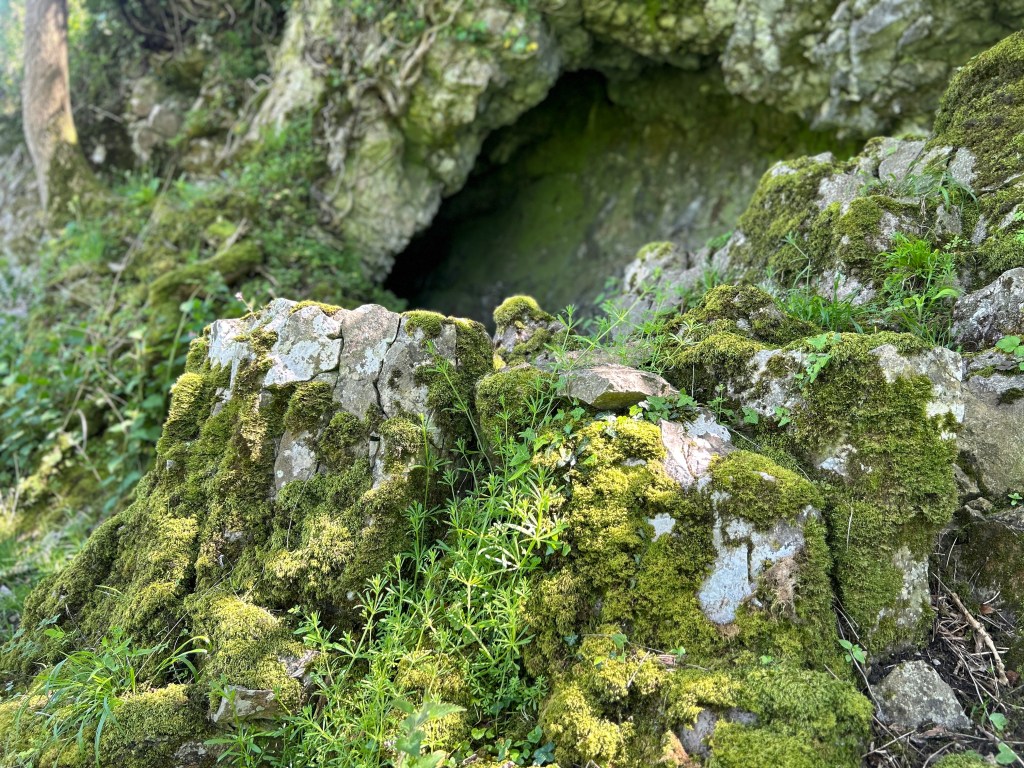
But first, I shall be doing some work on the Neolithic caves that are to be found here, following the limestone spine of Clwyd. I have made some initial, fairly brief visits to the Llandegla and Llanarmon areas, if only to face up to the challenge. There’s a substantial number, so it will be one of those articles that will be regularly added to as time goes on.

One of the several Llandegla Neolithic Caves ~ Autumn 2024

And I have plans. Plans to share this amazing bit of Wales with others – perhaps you in fact, if you’ve a mind to join me. Leading guided tours is not something I ever envisaged, you know, but I do like to talk about the places I visit. It strikes me I could be making an effort to help others connect with this environment that I so love. And that connection I often speak of, that sense of being in a spot and feeling like you’ve always been there, a jigsaw piece in a greater picture – an essential part of something far greater than you – pure therapy, it is. And that, I can tell you, is what I’d like to share. Contentment.

Let me know what you think of this, whether you would be interested. I must admit to being so very jaded and worn and weary with the drudgery of wading through the mundane. I want to breathe and I want to twist into the land (yes, I know what that sounds like). Fancy joining me? I imagine there will also be cake and tea.

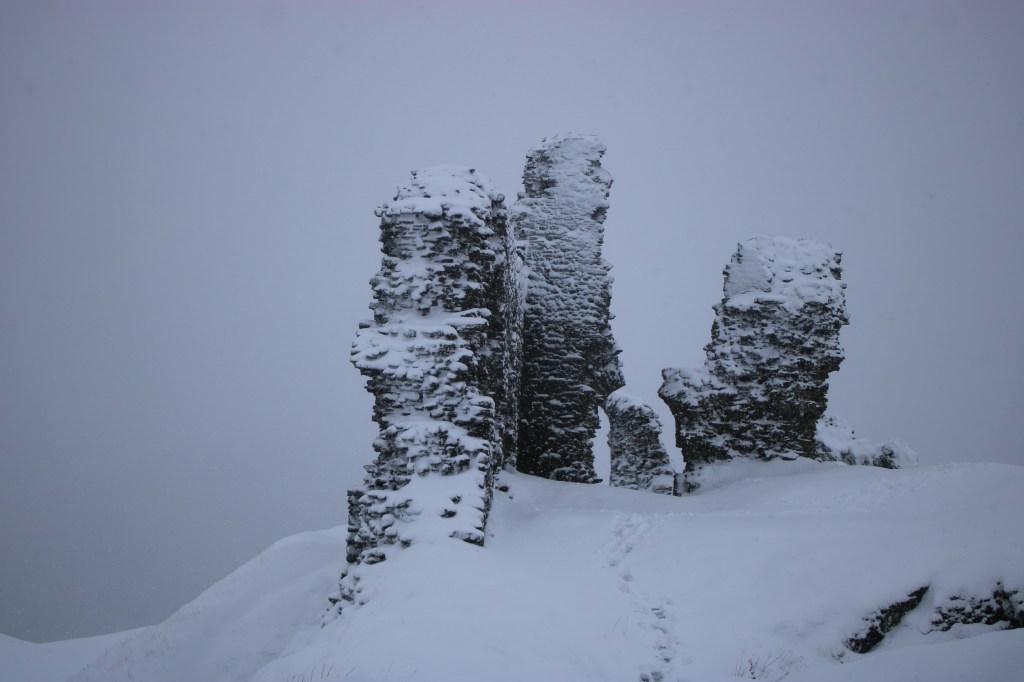
Castell Dinas Bran ~ November 2024 (those are my footprints…)

If you would like to support Curious Clwyd, there’s no need to do it for nowt. Some of the photos I take I’ve deemed worthy (you may have a different opinion) to sell – as prints and stuff. Pop along to my Picfair site and have a perusal. The support is appreciated.

Curious Clwyd Picfair

* I’m joking, of course…