March 2025
The little village of Llandrillo in the beautiful valley of Edeirnion is thrillingly, achingly ancient. I find myself returning to it often – haunting the chambered tombs and stones circles, raised in the hauntingly dim and distant past, in the valleys and on the slopes of the Berwyn Mountains. I have supposed to myself that it is the mystery of the place that brings me here – mysteries that gather in the valley, upon the heights and slopes of the mountains, and indeed in the streets of the village itself. For me, on visiting the village – that is to say, being present in the village for a length of time, the sense of the modern starts to fade, and if one is not altogether prepared for this vague bewilderment, a person can find themselves all out of kilter. If one was to simply drive through the village, perhaps on the way to an exciting elsewhere, you might find yourself glancing back at the place through the rear view mirror, perhaps with a frown. Llandrillo is really rather a place out of time – and perhaps all times.
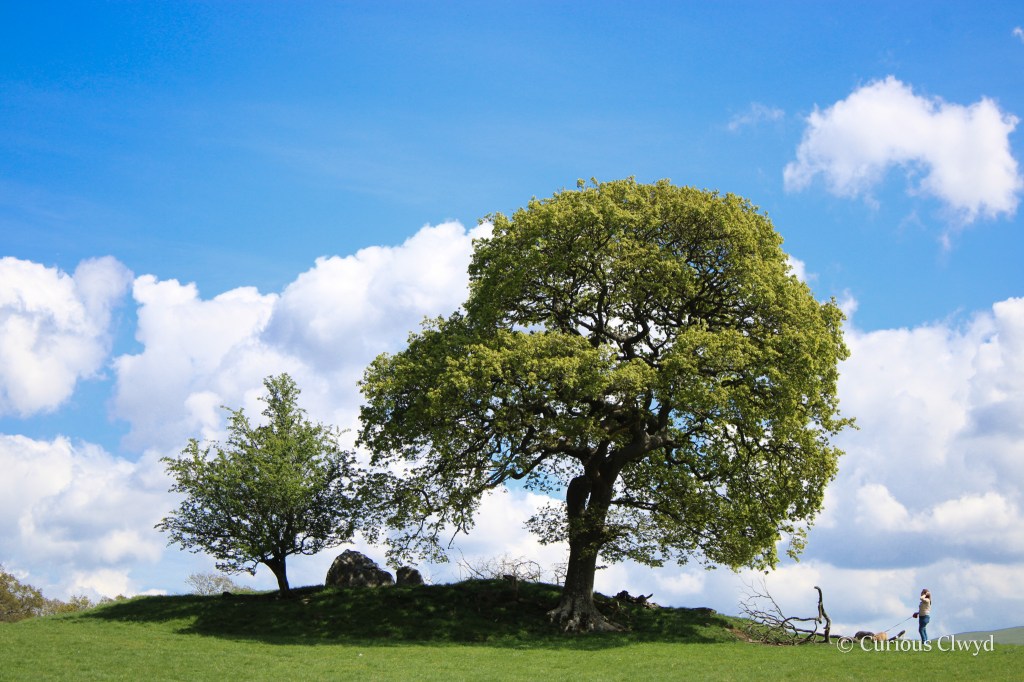
The Branas Uchaf Chambered Tomb ~ Llandrillo, Denbighshire.
They buried some, but not all of their dead here, at Branas Uchaf – who we cannot say. Were these individuals of some importance? Did they have a vital role in the communities of peoples that had settled in the valley? Were these chambered tombs the equivalent of the family vaults in churches, the chambers opened again in the many years following to add to their dark depths? Were they visited by loved ones, as we will visit the graves of our loved ones in the churchyards of this saint or that? Or were they forgotten? How long was it before people travelling through the valley on this errand or that, paused a while to look up at the weathering mound and wondered on the within – as we do today? And then there is this – where is everyone else? Where are those not deemed important enough to bury within these elaborate tombs?
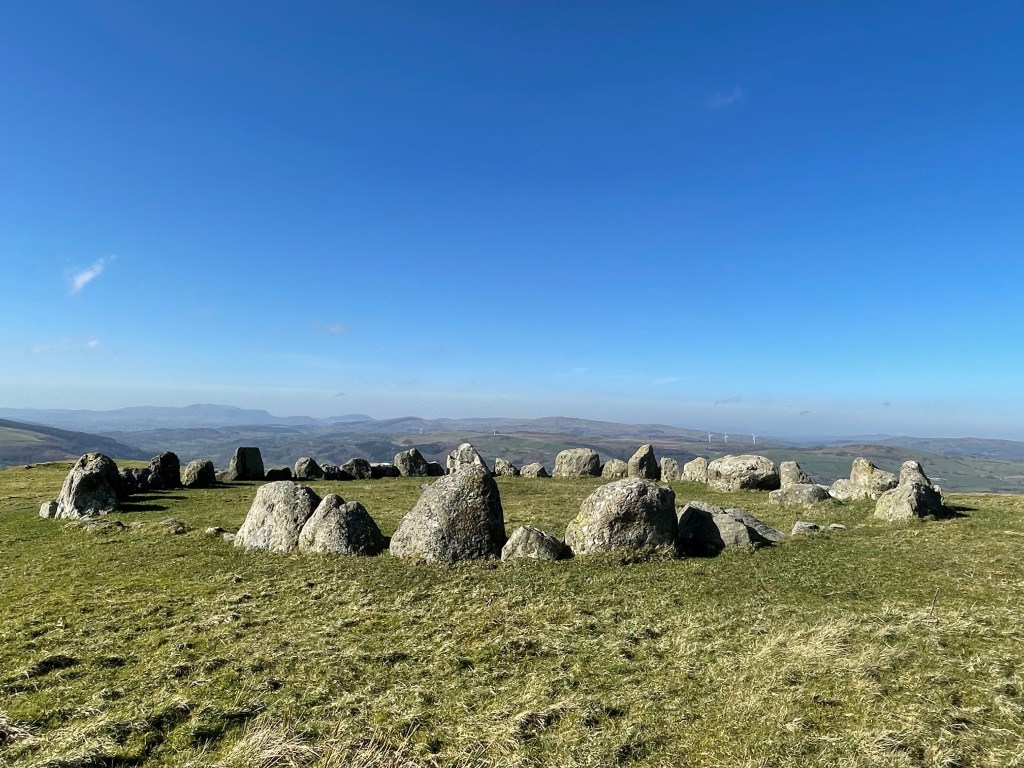
The Moel Ty Uchaf Stone Circle ~ Llandrillo, Denbighshire.
It’s an effort to get to – the Moel Ty Uchaf stone circle, certainly more so than Branas Uchaf. It’s a sort of pilgrimage, you could say, where the work of it is an essential part of the experience. But on taking the final rise, and seeing the stones for the first time, I felt the thrill in the tips of my fingers and the roots of my hair. Does everyone feel like this? Am I weird for this? This is what life should be, surely. Moments like this gather around me like bubble wrap, to counter the oomska of the world that weighs down on me. And when standing in the centre of the circle, I have the world before me, as did those that raised the circle at the point where the earth meets heaven. Our ancestors came here and felt the same, I’m sure of that. There’s a snippet of John Clare’s poetry that has stayed with me over the years, and returns to me when wandering on the breathless line of earth and sky.
So let me lie,
The grass below; above the vaulted sky.
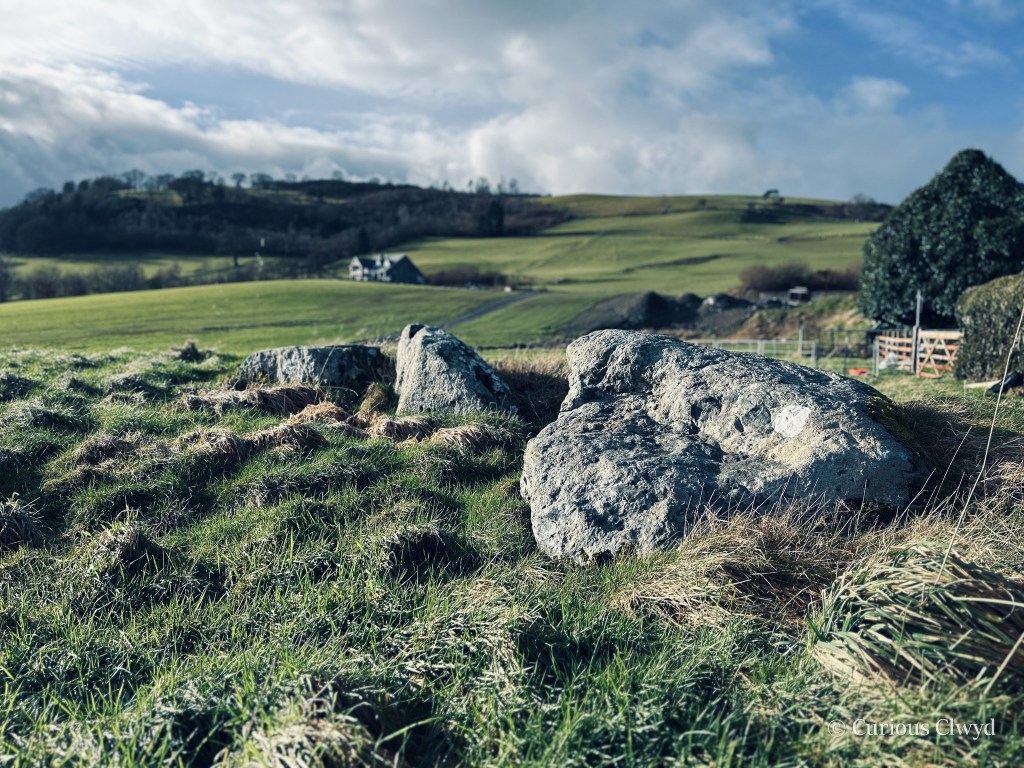
The Tyfos Stone Circle ~ Llandrillo, Denbighshire
I’m a little shy, in truth, so it took me a while to visit the Tyfos stone circle. While it can be seen quite clearly from the road, it’s actually on private property – the front garden of the farmhouse. No need to concern myself, however, since the farmer was a lovely fella. He seemed a little bemused at my wish to visit the stones – I imagine he’s had this conversation many times. But I like to be amongst the stones where I can, to be close to them. I’m not an Earth Magic kind of guy, mind you, though I have no beefs or squarks with those who are. I’m an Efrog still, at heart, a miner’s son who’s life still feels a little mapped by the coal blackened lay lines of my father’s skin, and a past lived in the dark of coal seams. No, I just want to be connected as far as I can be, to the peoples of the past. At Tyfos it’s no hard thing to sit within the circle and dream.
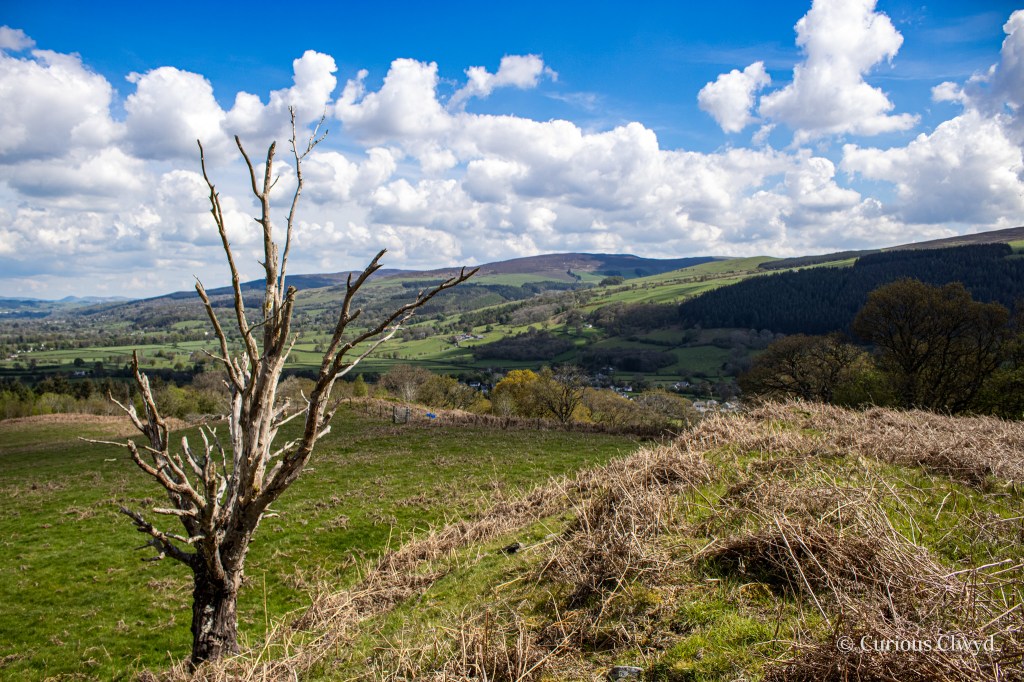
The Craig-yr-ychain hillfort and enclosure.
Llandrillo is a place out of time – I may have mentioned this before. From the Neolithic through the Bronze Age and to the Iron Age. Craig-yr-uchain is, it is thought, a hillfort and enclosure. I like a hillfort me, as you may be well aware since I don’t half go on about them. But Craig-yr-uchain is one of my little favourites. Oh, don’t get me wrong, I like the mighty fortresses of Pencloddiau and Moel Fenlli right well enough, but who doesn’t? But Craig-yr-uchain is so far away from everyone and everything, that it might have been put there solely for me and the We. I’m almost certain I could stay there all day and not see anyone else, and as much as I like a chat and that, I’m happy in my own company. As with all hillforts, its precise purpose is a bit of mystery. But that’s not really true, is it? See, we keep looking for a precise purpose, when really I don’t think there ever was a precise purpose. I believe they served all manner of functions, I fancy, of which defence was only one – an important one, no doubt, but just one. I know their purpose now, mind. Their function now is to raise me above myself, to lift me to a place where the light is brighter and the air cleaner and more rarefied.
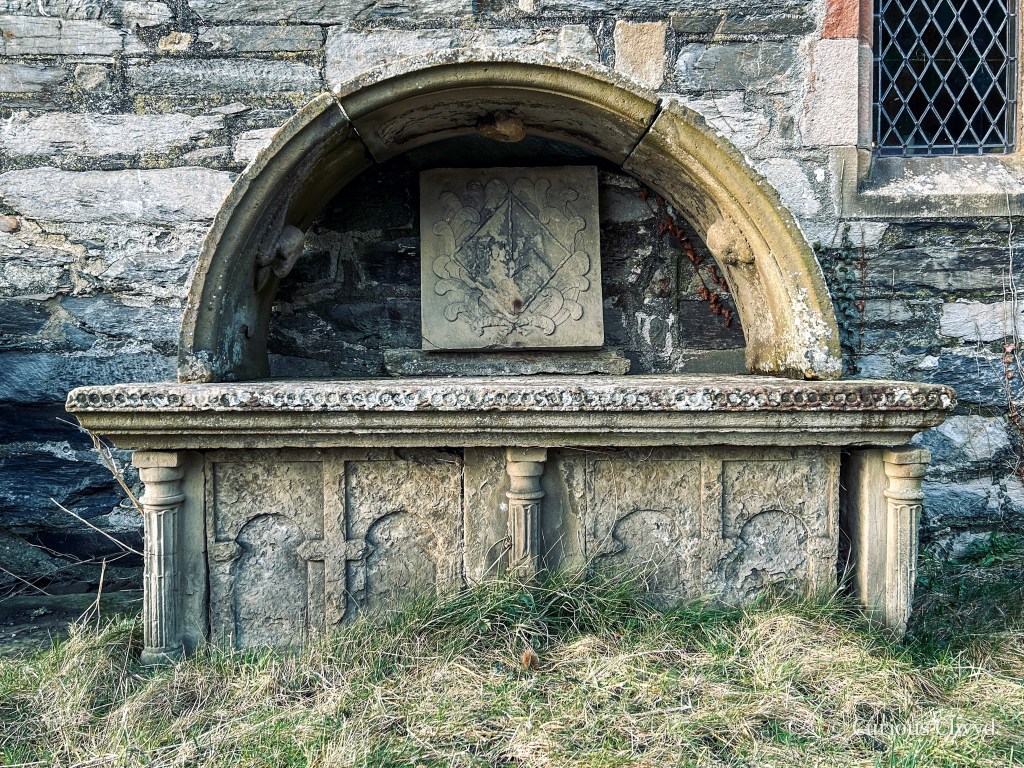
The hooded tomb of Katherine Wynne ~ St Trillo’s, Llandrillo, Denbighshire.
I live with a brain that aches with the stretch of reaching back into a past so very distant that whispers are all that may escape – and those barely heard and hard to grasp, wisps of meaning. And so sometimes I’m at risk of missing meaning in the more recent. I last visited Llandrillo in early March, and I’d tootled down to the village specifically to visit the Tyfos Stone Circle. The light was beginning to ebb at pace, and I’d popped in the local shop for a packet of mints, and left with a packet of mints and two bottles of ale. Wandering through the village on my way back to the car, I thought I’d pop into the church – a merry little bonus to what had been a successful trip. As I walked up the path towards the south door of the church, I saw a woman in the porch holding a mop. She glanced up at me, with a look which suggested,
tup thinks he’s walking mud in my church?
I chose instead on a tactful swerve to the right and a wander around the churchyard instead. I’m glad I did, since I might have missed the little wonder that is the hooded tomb of Katherine Wynne. These little gems are rare, and rarer still in good condition. The finest of these is undoubtedly the tomb of Grace Williams in the churchyard of St Mael and St Sulien’s in Cwm, but I’d forgotten that Llandrillo had its own, and so to unexpectedly come across it here, hit me like a freight train. I’m told they were a sort of compromise between the overtly ostentatious and the downright inconspicuous, and who am I to argue? But, I see something else. I don’t pretend to be a historian of any worth, and I know the truth of my failings here, since as I continue to wander and wonder, I find that I am increasingly allowing myself to give weight to how these lumps, bumps, ruins and remains make me feel – which is not proper form, for a historian. For all my Efrogesque (just get your head around that mashup of a mongrelised word) pragmatism, I do like the beauty of a hooded tomb. Yes, I must admit to that.
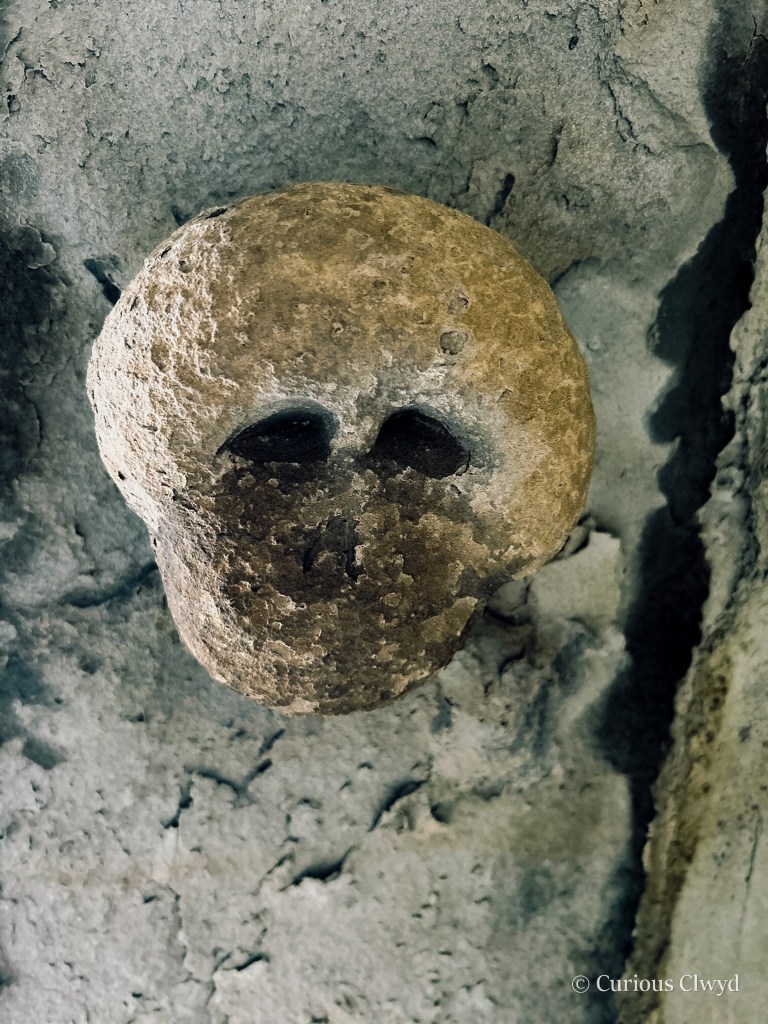
The much weathered remains of the skull and crossbones on the underside of the hood.
I shall visit Llandrillo again. Soon. I’m drawn to the Edeirnion Valley, I escape to the Edeirnion Valley. When the weight of things becomes too great, and I feel saturated with the ordinary awfulness of the world, I shall visit again and I will feel this burden scraped from my thinking. There are wonders to be visited again, and wonders to be yet found. I could spend what time I have remaining wandering along the mighty Berwyns and in the Valley itself, through the villages and blink-and-you’ll-miss-them hamlets, and it would be time best spent.
New Articles
The weather has been kind. This has been something of a surprise, since March is not to be trusted. March is the most perfidious of the months, in fact, liable to turn on one with a sudden rage. An appearance of the sun can suddenly be replaced with a return to winter – blizzards and gale force winds. Still, there have been entire days of brightness and some warmth, be praised. I caught the sun on the back of my winter whitened neck on a visit to Holt and a long walk by the Dee. It has meant that I have spent some wonderful days wandering and wondering. You will perhaps have read my mutterings above, of my most recent visit to Llandrillo, and my articles on the hooded tomb of Katherine Wynne and the Tyfos Stone Circle can be found on the Denbighshire page, but at long last I have begun work on Wrexham County. That’s not to say I shan’t return to articles on Denbighshire and Flintshire, of course, since there are glaring omissions that need to be addressed – Buckley, Connah’s Quay, Queensferry and so on. I shall get to them, I promise. But if I am to actually have a website that purports to give my readers a view of Clwyd before I die, then I must begin to write on Wrexham. And so it begins. It will take time, and patience, but it begins – with Gresford, Holt, Overton and Trevor.
The Gresford Wells
I think there’s a temptation to think that all wells must be holy, or miraculous or curative to be remembered and revered by the communities they are to be found within. Not so. While a well may be named after this saint or that saint or all saints, many are not known to be anything other than essential sources of fresh water to the peoples that relied upon them. And I would suggest that to these communities, fresh water would be considered miraculous, and certainly curative – just not by the definition that we have of those words today. But perhaps that too will change. In my article on the Gresford Wells, neither of them with a tradition, as far as I can tell, of miracles or saintly cures, I do rather go on a bit about how we should perhaps not take our water for granted. It does rather seem that the privatisation of the water companies has led to our rivers and seas becoming increasingly filthy and our bills ever increasing, all in the name of ever greater yearly dividend payments to ‘investors’, that we are expected to pour more and more taxpayers money into the insatiable maw of these rapacious companies if we are to expect clean water, and that we are, incredibly, expected to be understanding of their ‘plight’, to boot. How did we come to a place where the essential infrastructure of our Country was essentially given away to companies, many of whom have no care or connection to the communities they deem to serve, and to be so numbed and static to it all? Will we soon have to return to the same wells our ancestors relied upon to take the waters we need? An interesting thought.

All Saints Well ~ Gresford, Wrexham County
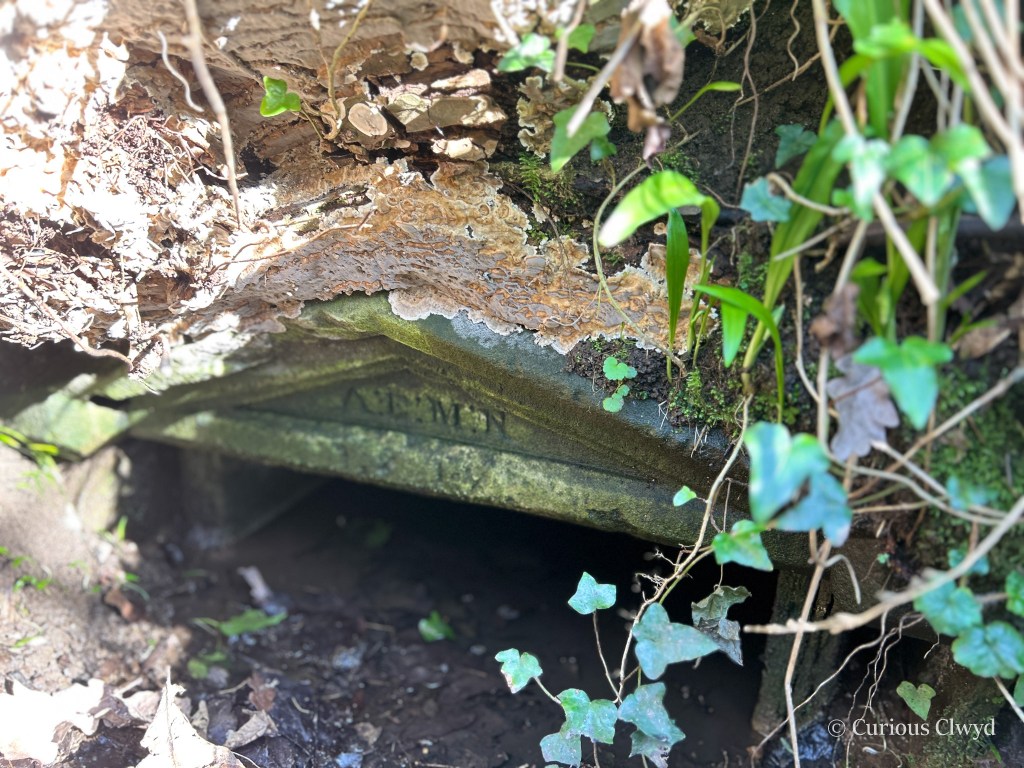
The Parsonage Well ~ Gresford, Wrexham County.
The Medieval Crosses of Gresford and Overton
There was a time when resplendent and magnificent crosses were a ubiquitous feature of the landscape. So common were they, that they became just that – common. Its curious and a little amusing that researchers and historians today struggle to find references to these medieval wonders, since it seems travellers and diarists and what have you simply took these architectural gems quite for granted. They would have been everywhere – crosses used to mark the ancient routes between this place and that, market crosses and churchyard crosses, all serving a purpose until the communities that lived about them chose other purposes for them. Wrexham, we are told had four – none of which would seem to be extant. Most were broken down or repurposed – largely in the 16th and 17th century religious vandalism otherwise known as the Reformation and the Puritan iconoclasm. But some remain – in varying states of preservation. You’ll often find them in churchyards still, an innocuous gnomon atop a stump, repurposed into a sundial. Some remain in something of their original glory – a Derwen, a Trelawnyd, a Tremeirchion. There are others where it takes just a twitch of imagination to see them as they once were – a Corwen, a Llanrhudd.
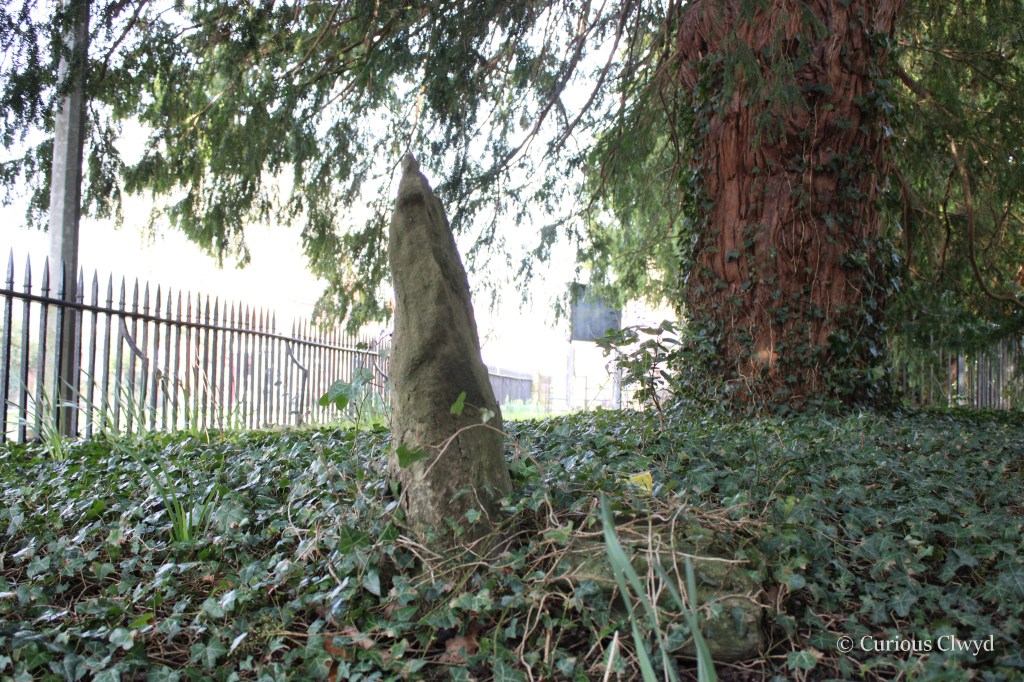
The worn and weary Overton Cross ~ Overton, Wrexham County.
But for every Derwen, there is an Overton – a worn weary stump of a thing, to the extent that there are many that believe it to be anything other than a cross – a whipping post even. The Gresford Medieval Cross has fared better, with the plinth, base stone and some chamfering evident still. It sits at a crossroads on the Wrexham, Chester road – a blink-and-you’ll-miss-it thing. From its remains, it was originally a massive cross, a true wonder. But, how the mighty have fallen. It was probably moved back in the day, from somewhere to elsewhere. Did it originally stand within the churchyard, perhaps where the rather lovely column now stands? Was it raised on the original crossroads by All Saints’ Church? Who knows? That would be no one, it seems.
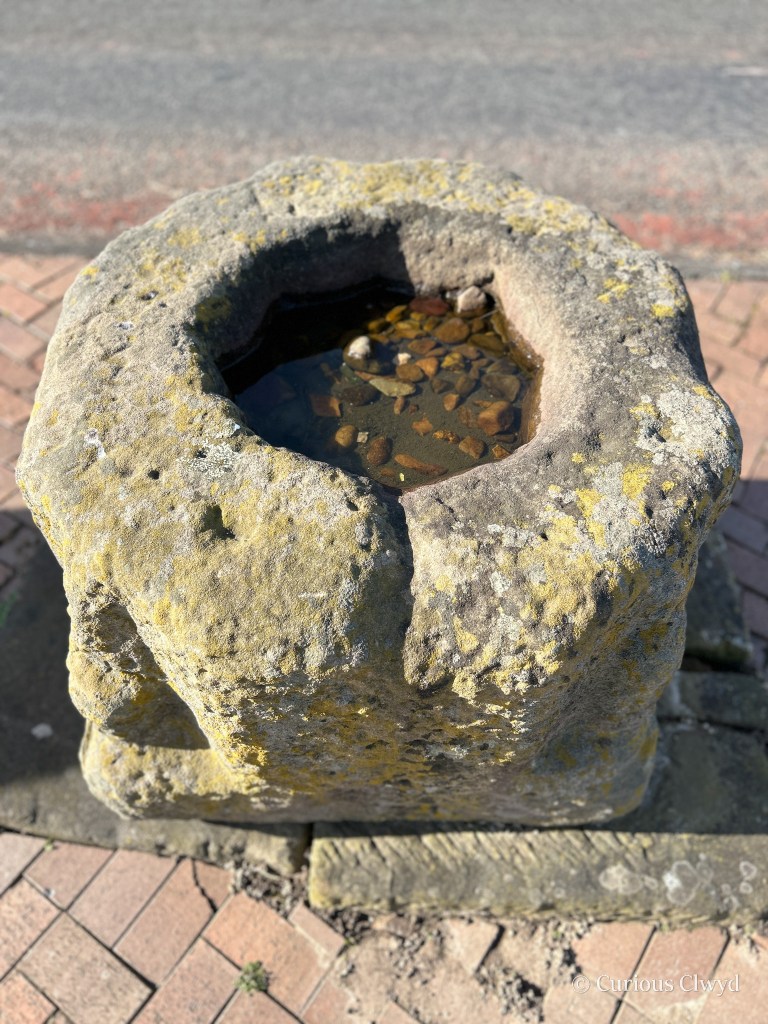
The remains of the Gresford Medieval Cross ~ Gresford, Wrexham County.
But I love them all – these medieval crosses. Whether it’s a Derwen or an Overton, I love to find them and when I do, I reflect. So, I suppose you could say, they serve their purpose still, however battered and broken they may be.
King William’s Tower ~ Trevor
Hidden away amongst the pines above the village of Trevor is King William’s Tower. No one stumbles upon the Tower – you need to know where it is. When I say it’s hidden, I’m of a mind to think it doesn’t want to be found, unless it chooses to make itself known. Silly, I know, but I’m at least 30% nonsense and wild blueberry muffin at the best of times. It is often described as a folly, but unless that describes the swivel-eyed, chest beating anti-Catholic sentiments of George Whalley, for whom it was built in 1827, then it isn’t really accurate. It was built as a hunting lodge, or perhaps a summer house for the Peterborough MP who happened to own Plas Madoc estate, long before it became a housing estate. There are, as you would expect, tales that cling to the place like lichen, but it is known that it was used for meetings of the Orange Order out of Liverpool. There is a 1862 record of a drunken march of Liverpool Orangemen leaving Ruabon to wander around the countryside, with banners and placards.
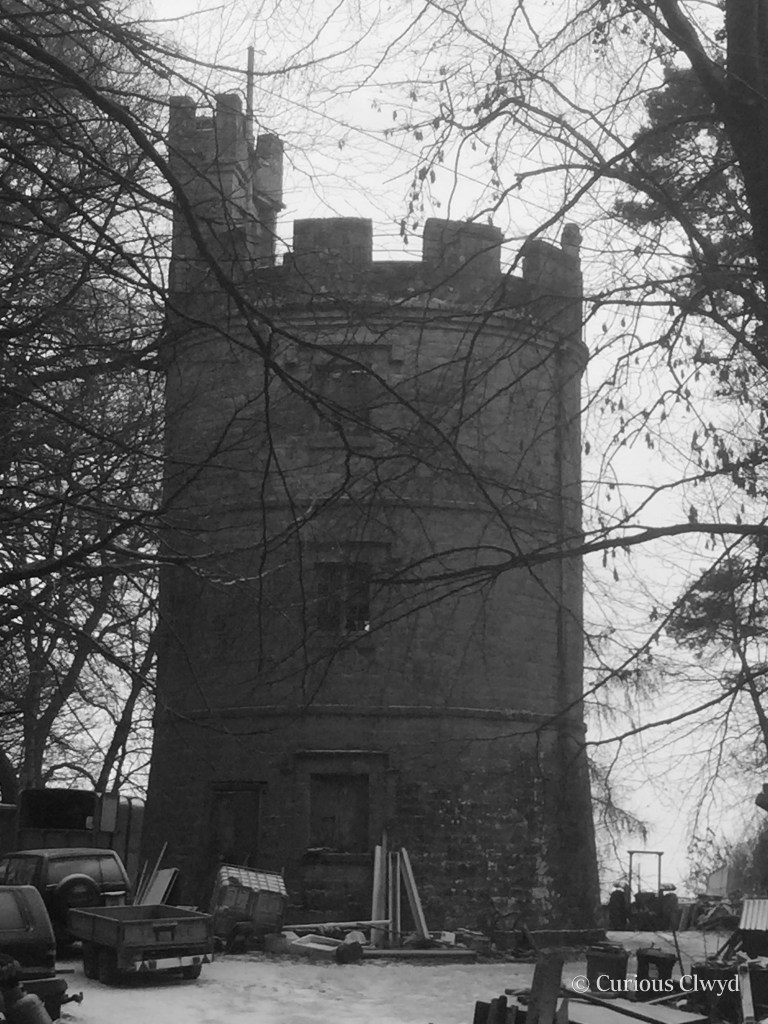
King William’s Tower, hidden away amongst the pines ~ Trevor, Wrexham County.
It’s still there, amongst the trees, if you know where to look.
Revised Articles
Just the one this month, reflecting my attempt to begin to focus on Wrexham County… and my terrible procrastination in working on the caves of Clwyd, Llandegla et al. I have begun to swap over the fonts of existing pages – I’m not sure whether I just fell out with Linotype Didot, or whether I just needed a change. Ho hum. Anyways, welcome to Clwyd, EB Garamond.
Also, if you have visited the website recently, you may have noticed that I have begun adding site maps to various pages – including the Home page and Collections. Hopefully these will help visitors find what they are interested in without having to trawl through pages and pages of material. Let me know what you think.
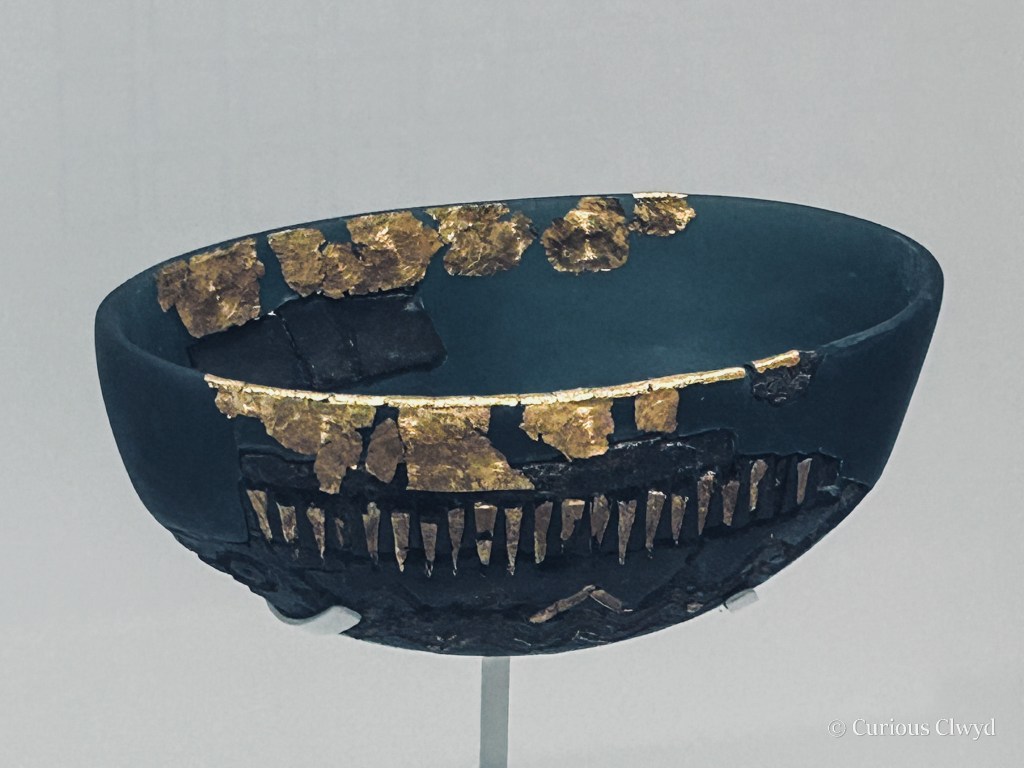
The Caergwrle Bowl
I’d been down to watch the Wales-England game in Cardiff on March 15th – meeting up with my best of friends. Two Welsh, two English – half of us thoroughly enjoyed the game. Making my way home of the Sunday, I thought I’d pop into St Fagan’s and have a wander. The Caergwrle Bowl is there you see, amongst other wonders from North Wales. Despite writing an article on the Bronze Age artistic representation of a boat, I’d never taken photos of it. Well, I remedied that. Every time I see it, I am amazed as to how small it is, how fragile – and how very beautiful.
Site Visits
The We and I spent a few days in Anglesey recently. I wanted to visit the Bulkeley Memorial near Beaumaris, since there’s a connection with the hooded tomb of Katherine Wynne. We decided to make it a short holiday of it. If you’d like to know how patient the We can be, imagine a 54 year old, eyes wide open Efrog, leaning out of your car window, gesticulating at some random lump and bump in the landscape, every few yards or so while you’re trying to drive. That’s the We on Anglesey. In a whirlwind circumnavigation of the Island I saw as much as I could, and little of what I should. Still, it were memorable and I shall return.
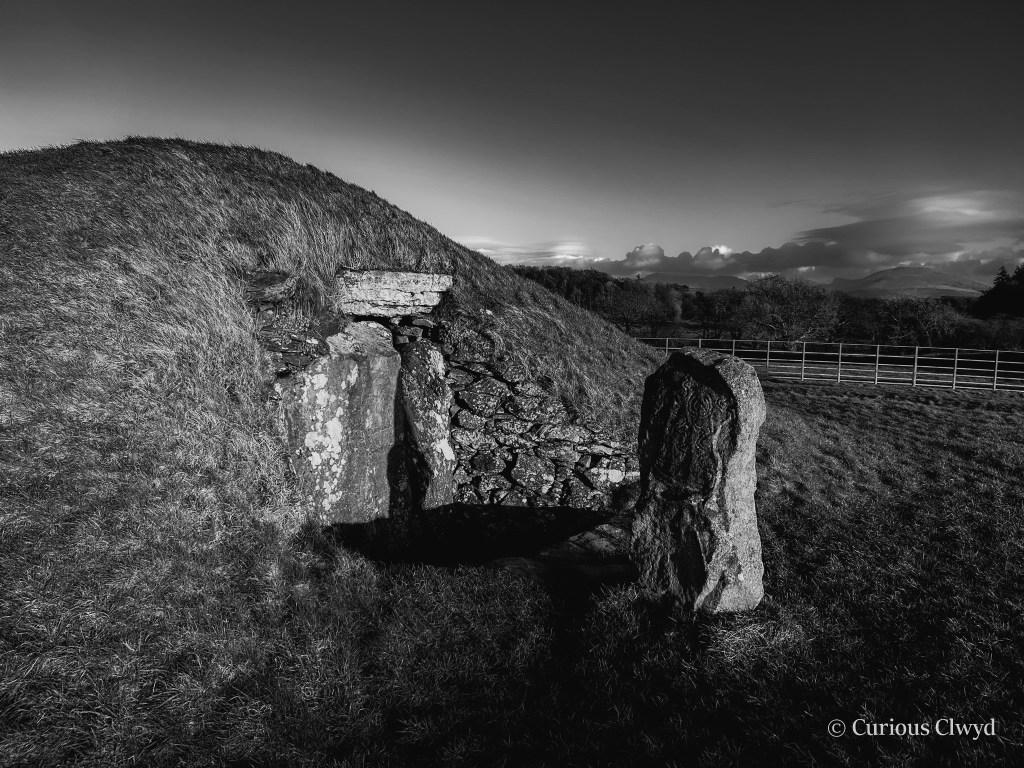
Bryn Celli Ddu ~ Anglesey.
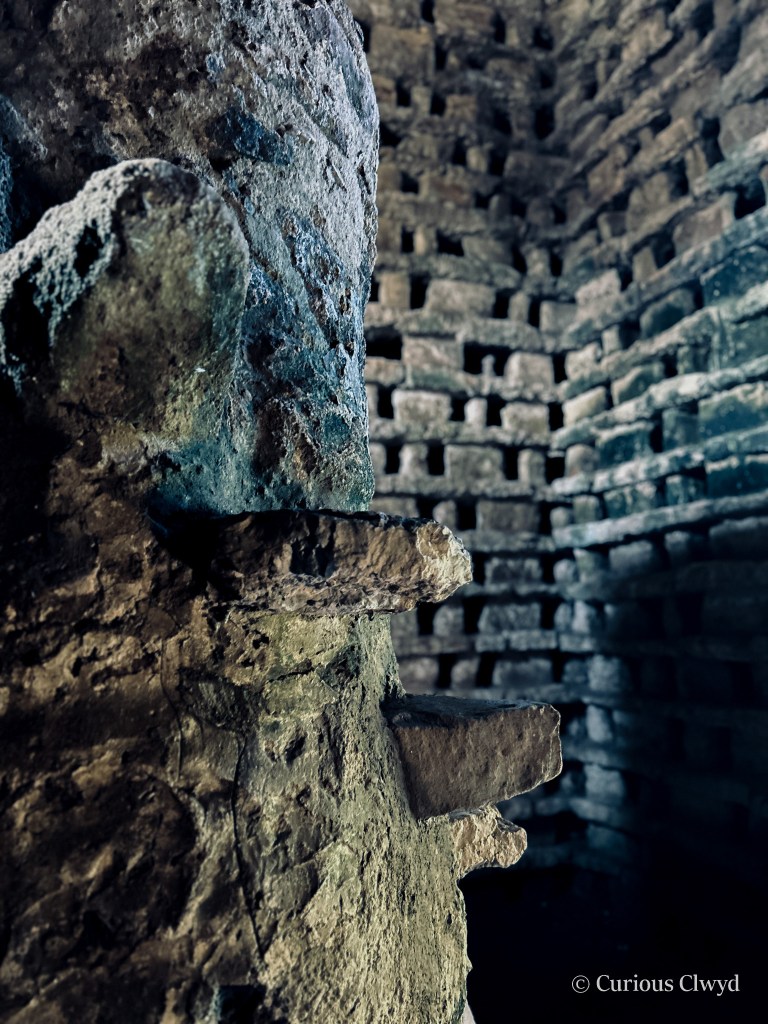
The inside of the 15th century dovecote at Penmon Priory ~ Anglesey.
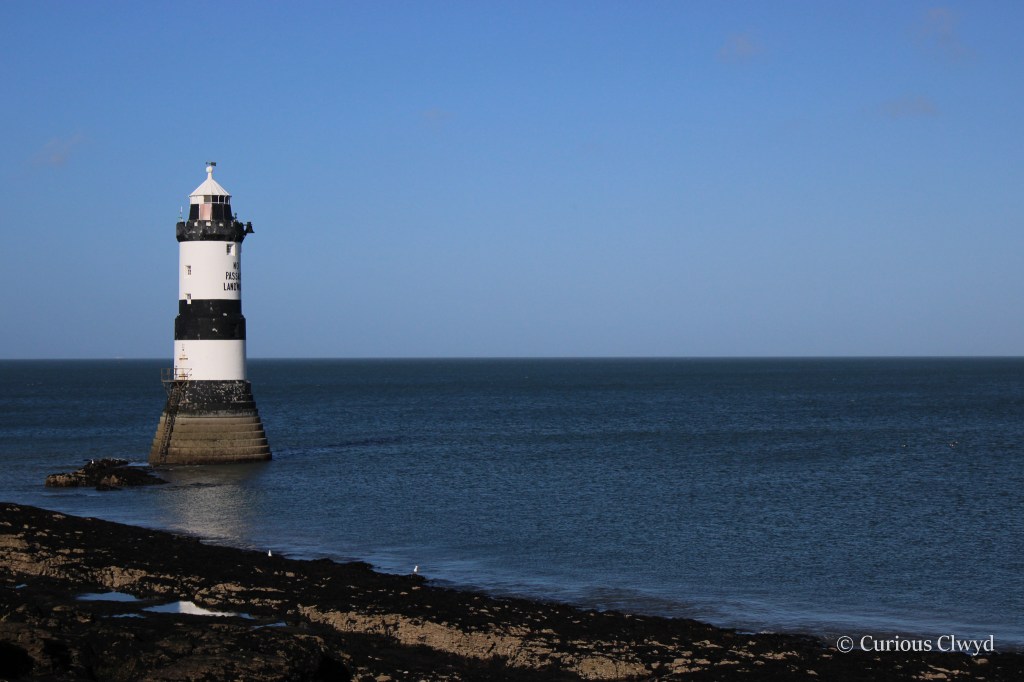
Trwyn Du ~ Anglesey.
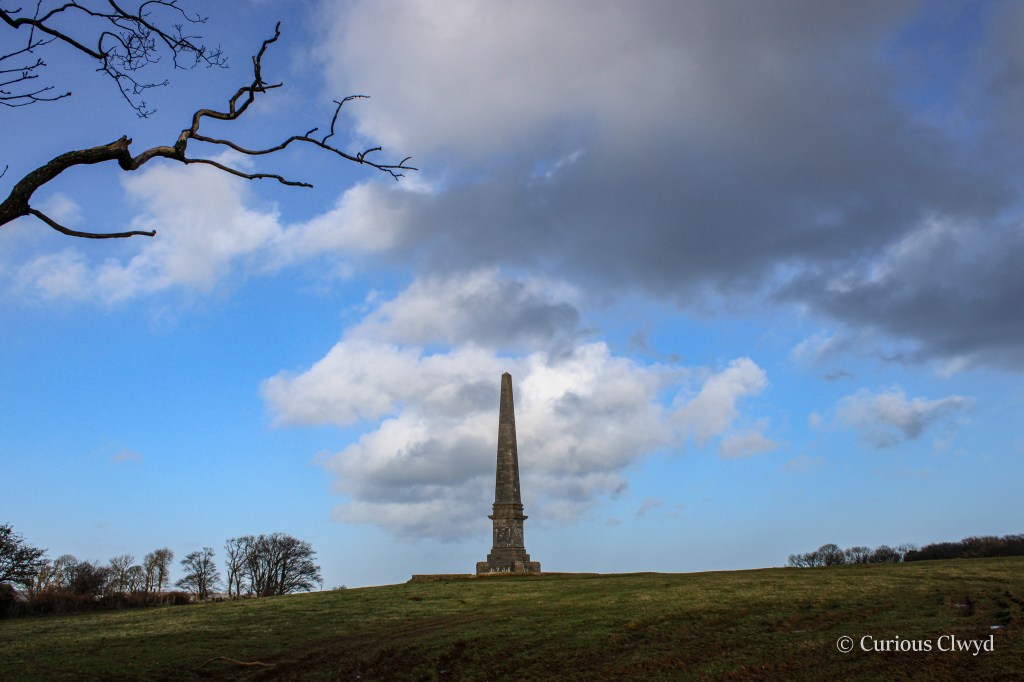
The Bulkeley Memorial ~ Anglesey.
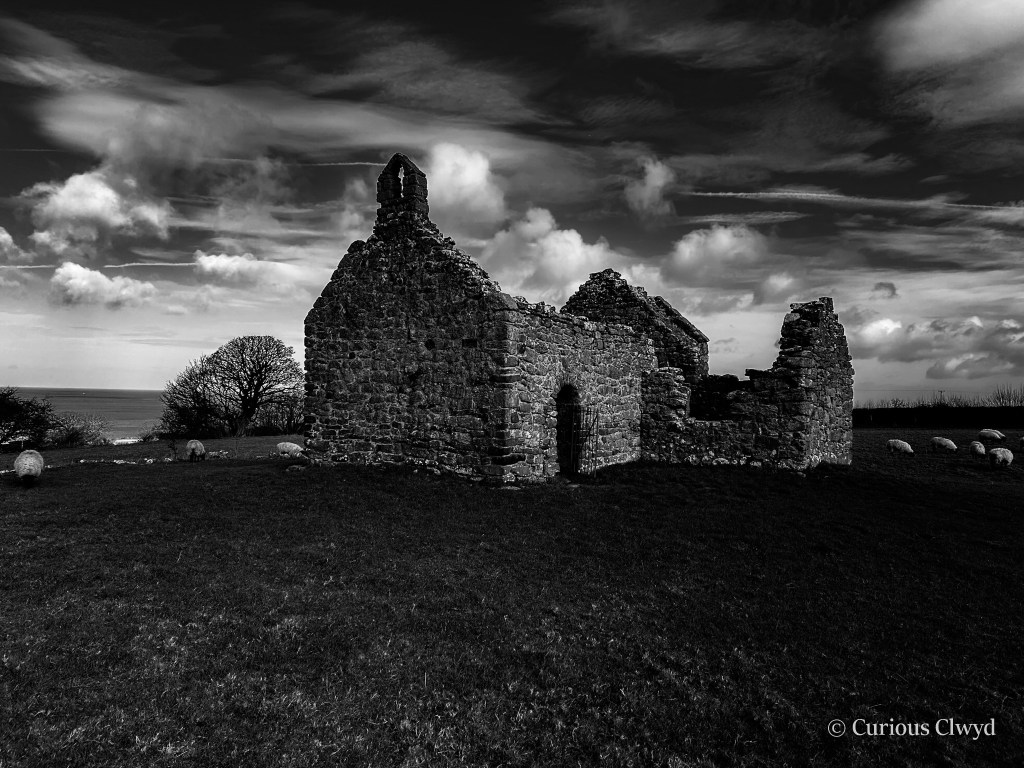
Capel Lligwy ~ Anglesey.
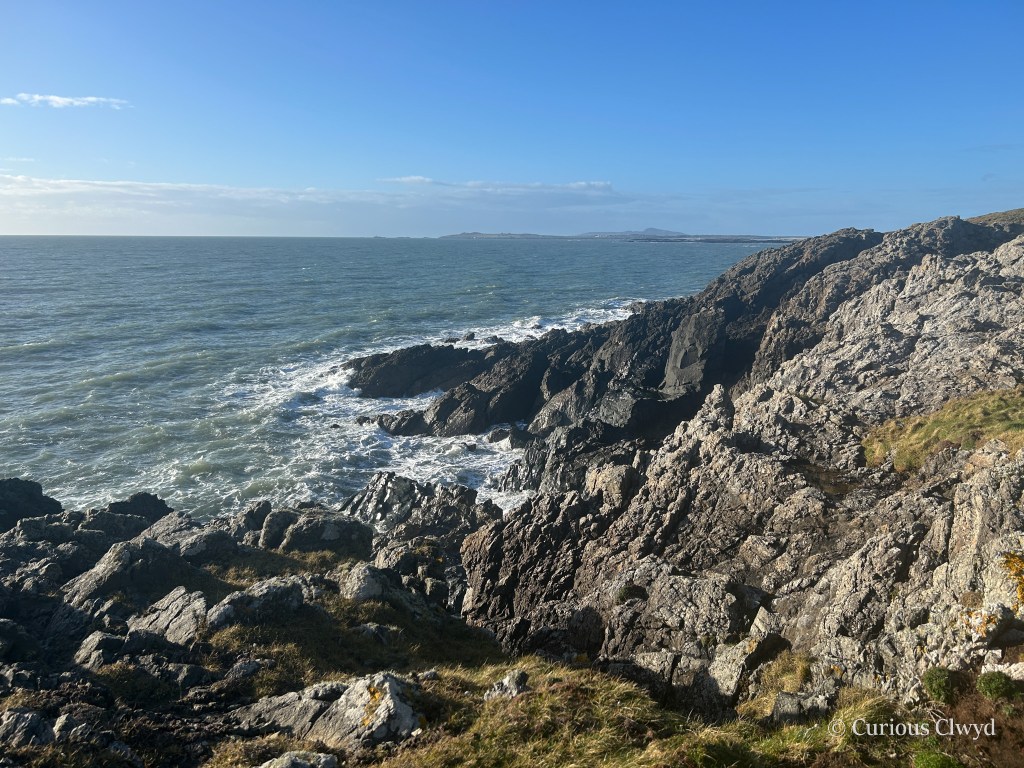
The coast at Barclodiadd y Gawres ~ Anglesey.
I think I mentioned that I visited St Fagan’s. They have lots and lots of Clwyd there – including the Caergwrle Bowl. I think most simply wander through the entrance and into the grounds, and quite right too, since the Denbigh Cockpit in all its splendour is there. But there’s plenty to see in the exhibitions.
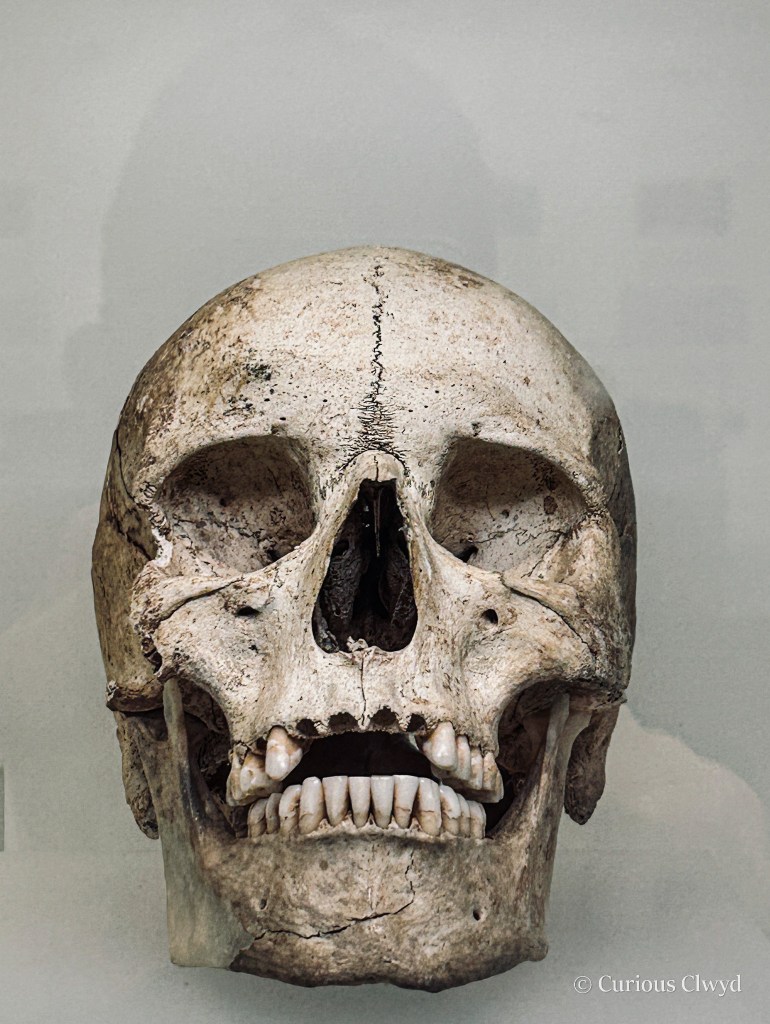
The skull from a Bronze Age Burial ~ St Fagan’s, Cardiff.
Closer to home, I have managed to spend a couple of days bothering Holt – mithering the Castle, the Bridge, the Roman Potteries and even the rather lovely Medieval Fishponds. And yes, I did manage to shoehorn in a full English and several coffees at the delightful Cleopatra’s in the Square. The Bridge is going to get it first – absolutely fascinating.
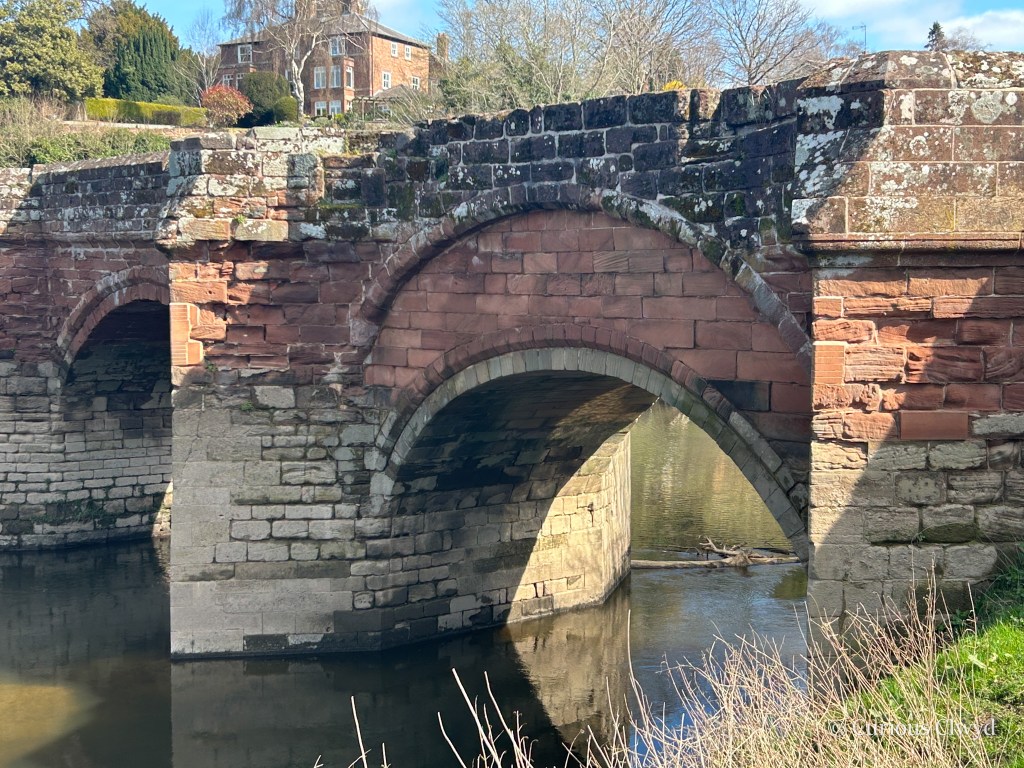
The Holt, Farndon Bridge, showing the reinforced arch for the tower demolished at the end of the 18th century ~ Holt, Wrexham County.
What next?
I would imagine I shall wander my way around Wrexham County, looking for the weird and the wonderful. For the sake of convenience, I shall be focusing on the wells, the crosses, the castles and bridges of the county, and of course, that means the the Pontcysyllte Aqueduct and the Cysyllte Bridge over the River Dee, just below Telford’s technological and architectural wonder. I’ve a mind to visit Ruabon. I lived there for a few years and what I don’t know about the place terrifies me. I shall start with the hillfort and the enigmatic lock-up, a rarity in Clwyd – look out for those in April.
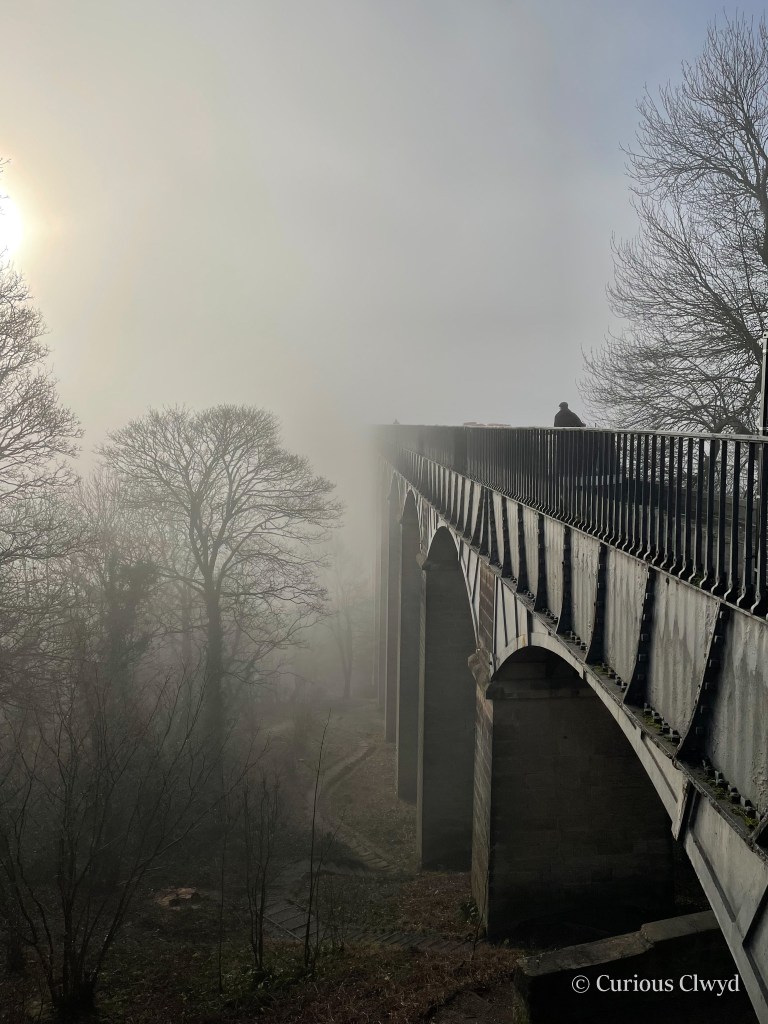
The Pontcysyllte Aqueduct ~ Trevor, Wrexham County
You may also be aware that I have had a couple of little articles published on the Bylines Cymru website, which is very exciting. What a wonderful and supportive community, Bylines is – an absolute delight and privilege to be part of this powerful journal, and a thoroughly fabulous read. I hope to have several more articles published in the future – I’ll keep you in the know. But do have a look and a read – you’ll not regret it.
If you would like to support Curious Clwyd, there’s no need to do it for nowt. Some of the photos I take I’ve deemed worthy (you may have a different opinion) to sell – as prints and stuff. Nothing there is going to break the bank. Pop along to my Picfair site and have a perusal. The support is appreciated.
Is there something we have forgotten? Some precious thing we have lost, wandering in strange lands?
Arna Bontemps
 Myths, Legends & Oddities of North East Wales